Winter Squash or Summer Squash? Your Cooking Method Depends on the Answer
How to cook squash comes down to one question: winter or summer? Roasting temps, sauté timing, doneness cues, and the swaps that go wrong.
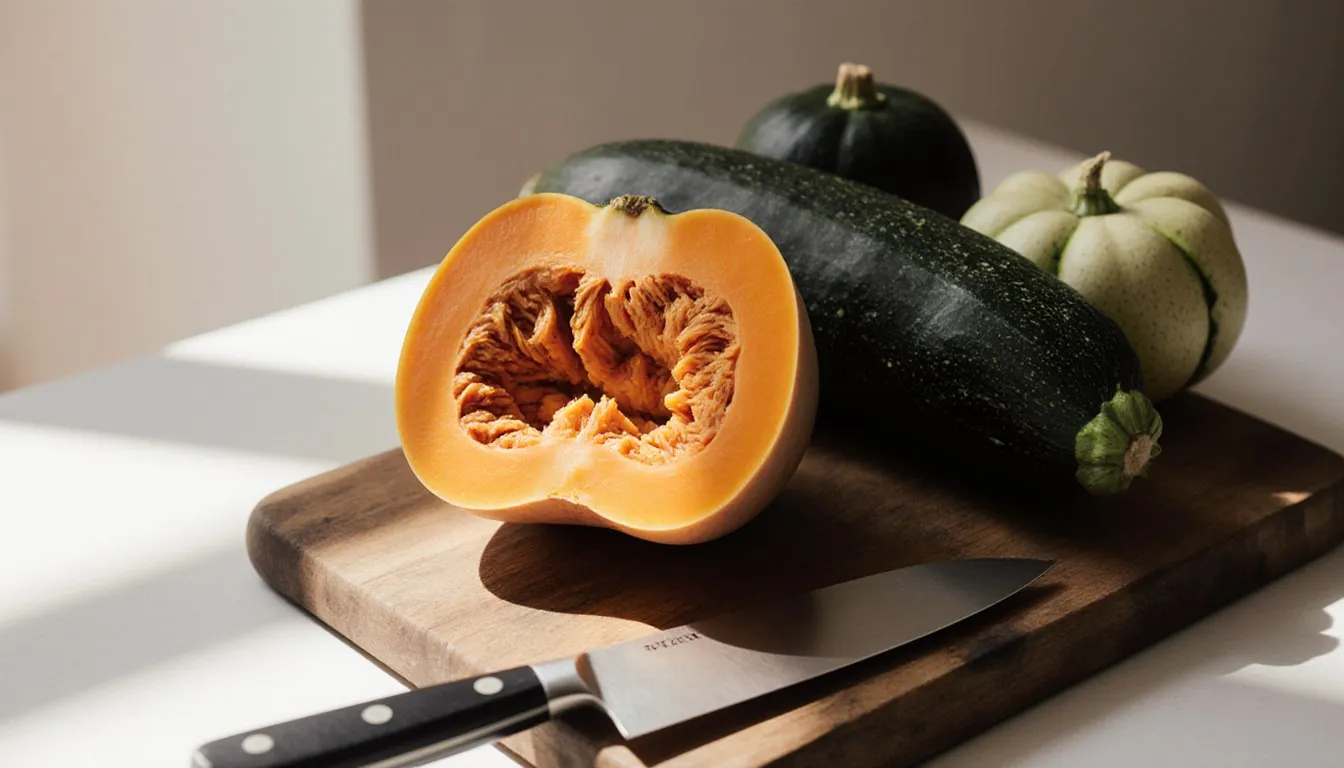
Before you decide how to cook squash, decide which squash you have. A butternut wants a hot oven and thirty-plus minutes to caramelize; a zucchini put through that same treatment collapses into gray water. Dense winter squash gets roasted, roasted, or occasionally steamed for mash. Watery summer squash gets high heat and speed, in and out of the pan. That single fork in the road decides everything else: cut size, temperature, seasoning, when you salt, whether the skin stays on.
The word “squash” covers a produce aisle’s worth of vegetables that behave nothing alike, which is why a recipe that says “cook the squash until tender” is close to useless. Below, the two camps, the methods that suit each, the doneness cues that beat any timer, and the places a good pan of squash usually goes sideways.
What’s the best way to cook squash?
Roasting, if it’s a winter squash. A hot pan or a grill, if it’s a summer squash. Those two answers cover roughly ninety percent of the squash that will ever cross your cutting board.
The split comes down to water and sugar. Winter squash (butternut, acorn, delicata, kabocha, spaghetti squash) is picked mature, with a hard rind and dense, starchy, sweet flesh. It can take sustained dry heat because it has the sugar to caramelize and the structure to hold a shape while it does. Summer squash (zucchini, yellow summer squash, patty pan) is picked young and soft-skinned, and it is mostly water. Under dry heat that water leaves faster than the sugars can brown, so the pieces sweat and slump in the pan unless the heat is high enough and the time short enough to color the outside before the inside surrenders.
Here is the whole decision, in a form you can hold in your head at the store:
- Butternut: roast in cubes at high heat, or steam and mash. Peel it.
- Acorn: roast in halves or thick wedges, cut side down first. Peel after, or eat around the skin.
- Delicata: roast in half-moon rings. Skin stays on, and it’s the best thing about it.
- Kabocha: roast in wedges, or steam for a very dense mash. Skin is edible once cooked.
- Spaghetti squash: roast in halves until the strands separate, then fork them out.
- Zucchini and yellow squash: sauté hard and fast, or grill in planks. Skin on, always.
- Patty pan: halve or quarter the small ones and sear; skin on.
Everything after this is the reasoning behind that list, plus the things that go wrong.
How do you cook winter squash like butternut, acorn, and delicata?
Roast it, hot, in a single uncrowded layer. Heat the oven to 400 to 425°F (200 to 220°C), cut the squash into pieces around one inch thick, toss with enough oil that every surface looks slick and not dry, salt it, and spread it out on a sheet pan with space between the pieces.
The space is the part people skip, and it’s the difference between roasted squash and steamed squash that happens to be sitting in an oven. Squash releases moisture as it heats. Given room, that moisture leaves and the sugars on the cut surface start to brown. Piled up, the moisture has nowhere to go, the pieces sit in their own steam, and you get pale, wet, sad cubes at minute forty wondering what went wrong. Give each cube an inch of air on all sides, and reach for a second pan the moment the first one starts looking like a jigsaw puzzle.
Cut size follows the shape of the squash. Butternut is the only common winter squash with a long solid neck, so it’s the one that cubes cleanly; cut the neck into planks, the planks into batons, the batons into cubes, and deal with the seedy bulb separately. Acorn squash has deep ridges that fight a peeler, so halve it, scoop the seeds, and roast it cut side down for the first stretch so the flesh sits against hot metal and browns, then flip it to finish. Delicata gets halved lengthwise, seeded, and sliced crosswise into half-moons that roast into little browned rings.
Kabocha is the one worth going out of your way for. It’s drier and denser than butternut, closer to a chestnut than a squash in texture, and it needs a bit more oil and a slightly longer roast. It is also armor-plated, so put a damp towel under your cutting board so nothing skates, use your largest knife, and go slow. If a winter squash genuinely won’t yield to the knife, pierce it a few times and microwave it for two or three minutes to soften the rind before you try again.
Spaghetti squash plays by its own rules: halve it, seed it, rub the cut faces with oil, and roast cut side down until a fork drags the flesh up in loose strands. Pull it before the strands go limp. Overcooked spaghetti squash is mush with delusions of pasta.
Season for the sugar
Winter squash is sweet, and sweet wants salt and acid to stay interesting. Salt before it goes in the oven so it has time to work. Then finish the hot pan with something sharp: a squeeze of lemon, a splash of sherry vinegar, crumbled feta, chile flakes, brown butter and sage if you’ve got twenty extra seconds. Maple syrup and brown sugar on butternut is a fine tradition and I make it every November, but sugar on sugar is a dessert. Know which one you’re serving.
How do you cook summer squash like zucchini and yellow squash?
Fast and hot, in a pan you’ve properly preheated, with the pieces in one layer and the salt held back until the end. Summer squash is water in a green jacket, and every technique that works on it is a technique for getting the outside browned before the inside gives up.
Cut zucchini into half-inch coins or half-moons, or planks if you’re grilling. Get a wide skillet hot over medium-high with a film of oil that shimmers. Lay the pieces down in a single layer and then leave them alone for two or three minutes, until the underside has real color, before you touch anything. Flip, give it another minute or two, and pull it while it still has some spring. Total time is under six minutes for most cuts. Constant stirring keeps every surface too cool to brown, so let the pan do its work and move the pieces twice: once to flip, once to plate.
Salt is the other trap. Salt draws water out, which is exactly what you want if you’re planning ahead and exactly what ruins the pan if you’re not. Salting raw zucchini in the skillet floods it, and the pan temperature crashes. So either salt at the end, or salt deliberately in advance: toss the cut squash with a good pinch of salt, let it sit in a colander for twenty to thirty minutes, then squeeze it dry in a towel before it hits the heat. That second route is the move for zucchini fritters, and it is the whole reason some fritters hold together and some fall apart in the oil.
The grill is summer squash’s best friend, honestly. Cut lengthwise into planks about a third of an inch thick so they don’t fall through the grates, oil them, and grill over direct heat until you have proper marks on both sides. Char reads as flavor here in a way it doesn’t on much else.
Patty pan squash gets treated like zucchini with a shape problem. The tiny ones can be halved and seared cut side down. Bigger ones (fist size and up) get quartered or cut into wedges through the scalloped edge. Their skin is thin enough to leave on at any size worth eating; if you find one the size of a dinner plate at a farm stand, the seeds inside have gotten woody and you’re better off hollowing it and stuffing it than trying to sauté it.
What summer squash cannot survive is a covered pan on low heat. Twenty minutes with the lid on gives you a pale, seeping mound that tastes like the inside of a refrigerator. Watery zucchini comes back to three things every time: a hotter pan, half as many pieces in it, and your hands off them for the first two minutes.
How long do you roast squash in the oven?
At 400 to 425°F (200 to 220°C), plan on 25 to 35 minutes for one-inch cubes of winter squash, 30 to 45 minutes for halves and thick wedges, and 15 to 20 minutes for half-inch summer squash pieces if you’re roasting rather than searing them. Start checking at the bottom of each range and let your eyes and nose finish the job: what you want is a cut edge gone glossy and browned at the corners, and a kitchen that smells like toasted sugar rather than like a wet vegetable. Ovens run hot and cold, sheet pans conduct differently, and one butternut can hold noticeably more water than the next, which is how two cooks follow the same recipe and one of them ends up serving orange steam.
A few things push the timing around far more than the oven dial does, and a dense wedge of kabocha will sit in there a hot minute longer than you planned on:
- Cut size: the single biggest factor. Half-inch cubes can be done in fifteen minutes; two-inch chunks can need forty-five.
- Density: kabocha and a mature butternut take longer than delicata, which is thin-walled and quick.
- Crowding: a packed pan can add ten or fifteen minutes and still never brown. Dirty the second sheet pan; washing it takes less time than sitting down to pale squash.
- Pan color and material: a dark, heavy sheet pan browns faster than a thin shiny one.
- Position: the lower third of the oven browns the undersides harder, which is what you want for cut-side-down halves.
So set the timer to call you over to the oven, then let the fork decide. Start checking cubes at 20 minutes and halves at 25, and expect to flip cubes once around the halfway mark so both cut faces get pan contact. If you want it browner and it’s already tender, three minutes under the broiler will finish the job faster than another ten minutes of roasting.
Some Tuesdays I don’t want the oven on at all, and butternut takes to the microwave better than it has any right to, as long as you pierce it, cover it, and pull it before it goes to paste. The timings run shorter and the cues are different, so I walked through them cut by cut in microwaving butternut squash.
Can you boil or steam squash?
You can, and for a few jobs it’s the right call. Steaming is the better of the two, because boiling means the squash sits in water and gives some of its flavor to it. Steaming gives you soft, evenly cooked flesh in ten or fifteen minutes with no scorched edges and no hot spots, which is exactly what a purée or a filling wants. Nothing browns under a lid, so any toasty, caramel flavor has to come from what you add afterward: browned butter, a spoonful of miso, a hard hit of black pepper.
Steam winter squash when the destination is a purée, a soup base, a filling for ravioli or empanadas, or anything for a small person just learning to eat. Peel and cube it, set it over an inch of simmering water in a covered pot, and steam until a fork slides through with no resistance, usually somewhere in the 10 to 20 minute range depending on the cut. Drain it well and let it steam-dry in the hot pot for a minute before you mash, or you’ll be adding butter to something already full of water.
Boiling earns its place mostly when the squash is going into a liquid anyway. If it ends up in the soup pot, the flavor you’d lose to the water is flavor you keep. Simmering cubed butternut right in the stock is faster than roasting and perfectly good soup.
But for soup with actual depth, roast first, then simmer. Fifteen extra minutes buys you the browned edges that a boiled purée simply does not have, and you taste it in every spoonful. A roasted-then-blended purée carries a toasty, almost caramel note through the whole bowl, and it holds up to cream, stock, and a heavy hand with the black pepper without going flat.
Steam summer squash only if you’re going to dress it hard afterward, and even then, know what you’re signing up for: it goes soft fast, holds no color, and turns to slush in a matter of a few minutes. If you’ve got a glut of zucchini and you’re low on ideas, sear it and pile it on toast with ricotta. Do not steam it and hope.
What are the doneness cues for squash?
Squash is done when the fork tells you, and the fork says something different for each camp. Neither one has a safe internal temperature to hit, because unlike meat, doneness here is entirely about texture and flavor. So the fork, your nose, and the color of the cut edges are what you go by.
Winter squash is done when a paring knife or fork slides into the thickest part with no resistance and no squeak, and the cut edges have gone from matte orange to deep, glossy, browned-at-the-corners. The smell changes too: raw winter squash smells green and faintly like a cucumber, and roasted squash smells sweet and nutty, almost like toasted sugar. When your kitchen starts smelling like dessert, go look at the pan. If the pieces are tender but still pale, they’re cooked and undersold. Give them a few more minutes or a quick pass under the broiler.
Spaghetti squash has its own tell: scrape the cut surface with a fork and the flesh should lift in separate strands. If it comes away in a paste, you went too far. If the fork just skids across it, it needs longer.
Summer squash is done when the outside is browned and the inside still has a little push back against the tooth. It should bend, not flop. Lift a piece with tongs: if it hangs limp over the tongs like a wet sock, that piece was done two minutes ago. Watch the seed core, too, since it goes translucent and glassy well before the rest of the flesh gives up. Translucent core plus browned exterior is the window, and it is a short one.
Squash also keeps cooking after it leaves the heat, especially thick winter squash pieces holding a lot of heat in the middle. Pull it just before it looks perfect and it’ll be perfect on the plate. I use that same margin on green beans, broccoli, and every other thing that comes out of the oven hot, and it is the idea I lean on hardest in how to cook vegetables.
Do you need to peel squash before cooking?
Sometimes. Summer squash never needs peeling, and shouldn’t be: the skin on zucchini, yellow squash, and patty pan is thin, tender, and holds the piece together in a hot pan. Take it off and you’ve got a slice with nothing to keep its edges intact.
Winter squash splits into three groups.
- Peel it: butternut. The skin is tough, slightly bitter, and stays leathery no matter how long you roast it. A sharp Y-peeler and two or three passes over the same spot, since there’s a green-tinted layer under the tan skin that also wants to come off.
- Leave it on: delicata, which is the whole point of delicata. Its skin goes completely tender in the oven and browns beautifully, so a half-moon ring needs no peeling at all, just a good scrub. Kabocha skin is edible too once roasted, though it stays a little chewy, and plenty of cooks eat it happily.
- Cook it on, then eat around it: acorn. That ridged skin is a nightmare to peel raw and softens only somewhat in the oven. Roast it in halves or wedges and scoop or scrape the flesh off the shell at the table.
Whatever you’re peeling, wash the outside first. You’re dragging a knife through that rind and straight into the flesh, so anything on the skin comes along for the ride. And if a butternut is fighting the peeler, microwave it whole for two minutes to loosen things up. Purists would call that cheating, and they would be wrong. Butternut is fussy enough at the cutting board to earn its own set of instructions, so I put the peeling and the knife work in how to prepare butternut squash.
How do you store and reheat cooked squash?
Cooked squash keeps three to four days in the fridge in a covered container, same as most cooked vegetables. Cool it to room temperature reasonably promptly rather than letting the pan sit out all evening, and refrigerate leftovers within two hours of cooking.
Freezing depends on the form. Puréed and mashed winter squash freezes beautifully; portion it into freezer bags pressed flat, and it will keep well for several months with no meaningful loss. Roasted cubes freeze acceptably, but they come back softer than they went in, so plan on using them in soup, a hash, a curry, or a gratin rather than expecting them to hold their shape. Cooked summer squash does not freeze well at all; the water crystallizes, tears the cell walls, and you thaw out something with the structure of a wet napkin. If you’re drowning in zucchini in August, freeze it shredded and squeezed dry for bread and fritters, and eat the rest fresh.
Reheating is where good squash usually dies. The microwave steams it and turns roasted cubes into baby food. Instead, spread leftovers on a sheet pan and give them 8 to 10 minutes in a 400°F (200°C) oven, or the same in an air fryer basket, or a few minutes in a dry hot skillet. Any of the three drives off the moisture the fridge put back in and re-crisps the edges, which is the whole reason the second night can taste as good as the first. Reheat leftovers until they’re steaming hot throughout, 165°F (74°C) if you want the number.
One more use for the sad end of the container: roasted winter squash blended with hot stock and a splash of cream makes soup in about four minutes, and nobody has to know it started as Tuesday’s side dish. Add a little grated ginger and a squeeze of lime, and it stops tasting like a leftover altogether.
Tessa Calloway
Staff Writer
Tessa Calloway has spent twenty years cooking dinner on a weeknight clock and testing the shortcuts that survive contact with a real kitchen. She believes the best recipe is the one you can make with what's already in the house, and she has strong opinions about what actually needs to be homemade (less than you think) and what always does (dressing).