Cooking With Tomatoes: Which Variety for Sauce, Roasting, Stewing, and Frying
Cooking with tomatoes goes wrong when the variety is wrong. Which one for sauce, roasting, stewing, or frying, plus when canned beats fresh.
The tomato you put in the cart decides how the dish turns out. A big juicy summer beefsteak chopped into a skillet will give you tomato soup in about four minutes, and no amount of simmering fixes that, because you started with a tomato that is mostly water by design. Match the variety to the method and the same recipe works the first time. Below: which tomato belongs in which pan, when to peel and seed and when to leave well enough alone, when a can beats anything in the produce aisle, and how to keep the water in check once the heat is on.
Why does cooking with tomatoes go wrong so often?
Three things: water, seed gel, and acid. A ripe tomato is over ninety percent water, and heat does not make that water disappear, it just moves it out of the flesh and into your pan. That is where soupy sauce comes from, and why a sauté that looked promising at minute two is a puddle at minute five.
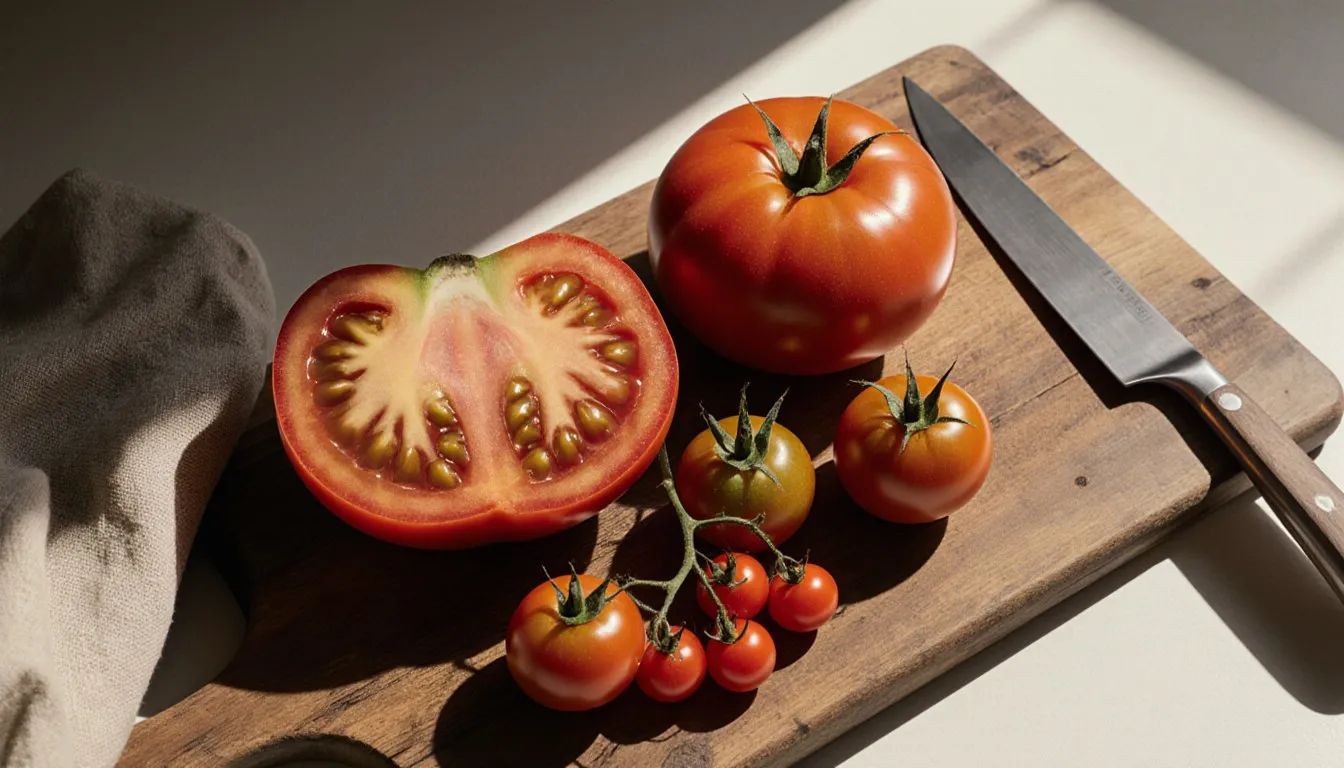
The seed cavities are the wettest part. Slice a beefsteak crosswise and count the chambers, four, six, sometimes more, each one full of loose jelly. A plum tomato of the same weight has two small ones and thick, dense walls in between. Same fruit, wildly different behavior in a hot pan.
Then there is acid. Tomatoes run tart enough that the flavor can read sharp or thin after a long cook, especially with underripe or greenhouse fruit. Cooks reach for sugar, get a candied sauce, and blame the recipe.
All three of those problems get settled in the produce aisle, which makes them the cheapest ones to fix. Everything else in tomato cookery, all the good browning and reduction and seasoning, follows the same logic as the rest of how to cook vegetables: know what the ingredient is made of before you decide what heat to hit it with.
Which tomato variety should you cook with?
Buy the tomato that suits the pan you are about to use, however unglamorous it looks in the bowl. Here is the short version, and it covers ninety percent of what a home kitchen needs.
- Roma and other plum tomatoes: sauce, paste, slow-cooked ragù, oven-drying. Thick walls, small seed cavities, low juice. They break down into something thick instead of something wet.
- San Marzano: a plum type from the Sarno valley south of Naples, prized for a low-seed, dense, less-tart flesh. The certified DOP ones show up canned far more often than fresh, and that is fine, see the canned section below.
- Beefsteak and other big slicers: stewing, braising, stuffing, and anywhere you want tomato that collapses into a saucy base rather than holding a shape. Also the tomato for a sandwich, obviously. Just do not chop one into a quick pan sauce and expect body.
- Cherry and grape tomatoes: roasting and blistering, whole, skins on. High sugar, thin skins, and they burst into their own concentrated juice. Grape tomatoes tend to be meatier and a little drier than cherry, which makes them the better roaster of the two.
- Green tomatoes: frying, pickling, relish. Firm, tart, low sugar, and they hold their shape through hot fat instead of slumping. Ripe tomatoes fry into mush. Green ones do not.
- Heirlooms: eat them raw. They are usually wet, seedy, thin-skinned, and expensive. Cooking one is spending eight dollars to make something a Roma does better.
One buying note that has nothing to do with variety: weight tells you more than color. Pick up two tomatoes the same size and buy the heavier one for slicing, the lighter one for the pan.
Do you need to peel and seed tomatoes before cooking?
Usually not, and it depends on where the dish ends up. Peel when the skins would show up as curled little strips in a smooth sauce or a delicate dish. Skip it when the sauce gets blended, when the dish is rustic, or when you are roasting, because roasted skins go sweet and papery and nobody minds them.
When you do want them off, blanching takes under a minute. Cut a shallow X in the blossom end, drop the tomatoes into boiling water for 30 to 60 seconds, until you see the skin start to lift at the X, then straight into ice water. The skins slip off with your thumb, easy peasy, and the flesh stays raw because the shock stopped the cooking cold. Same method that handles half the produce in your fridge, and blanching vegetables walks through the timing for the rest of them.
Seeding is the one people over-do. The jelly around the seeds carries a lot of the tomato’s savory depth, and squeezing it into the sink throws that away. Seed when water is the enemy and the dish is short-cooked: fresh salsa, a tomato tart on pastry, a topping for bruschetta that has to sit for ten minutes without flooding the bread. For anything that simmers, leave it in and let the pan drive off the moisture.
Middle path if you want it: halve the tomatoes, scoop the gel into a fine sieve set over a bowl, press it, and add the strained juice back to the pot while the seeds go in the compost. You keep the flavor and lose the grit.
Fresh or canned: which tomatoes for which dish?
From roughly October to June, canned wins for anything cooked, and it is not close. A canned tomato was picked ripe in season and packed within hours. A February supermarket tomato was picked green in a warehouse climate, and it will actually taste more like the can it should have been than like a tomato. Italian home cooks have kept a shelf of tins year-round for generations for exactly this reason, and nobody there treats it as a compromise.
Buy whole peeled, not diced. Diced tomatoes are commonly treated with calcium chloride so the cubes hold their shape in the can, which is the opposite of what you want, they stubbornly refuse to break down into sauce. Whole peeled tomatoes crush between your fingers in the pot and melt properly. Pre-crushed tomatoes are a reasonable shortcut when you are in a hurry and want a shorter simmer.
Rough swap ratio: about two pounds of fresh plum tomatoes, peeled and chopped with their juices, stands in for one 28-ounce can. Fresh will run wetter and thinner, so plan on ten or fifteen extra minutes of uncovered simmering to get to the same place. Going the other way, drain some of the canning liquid off if the recipe expects the drier fresh fruit.
Fresh earns its place in high summer, and only then: for a sauce made from tomatoes at their peak, for roasting, for anything raw or barely warmed, and for a stew where you want visible pieces of fruit. If you are hauling home a flat from a farm stand, the best use of an afternoon is cooking most of it down and freezing it flat in bags.
How do you keep a tomato sauce or sauté from turning watery?
Get ahead of the water instead of fighting it later. Three moves, in order of how much they matter.
Start with a low-water variety. Everything else is damage control if you began with a beefsteak. This is the whole argument for the Roma.
Salt and drain first. Chop the tomatoes, toss them with a generous pinch of salt, and let them sit in a colander over a bowl for 20 to 30 minutes. You will be startled how much liquid comes out. Cooks have used this trick on tomatoes and cucumbers alike for as long as anyone can remember, and it costs you nothing but a head start. Save the drained juice for the pot or a drink.
Cook uncovered, in a wide pan. A lid traps steam and condenses it right back into your sauce. Surface area is what evaporates water, so a 12-inch skillet reduces faster than a tall saucepan holding the same volume. If a sauce is stubbornly thin, move it to a wider vessel before you reach for cornstarch.
For a quick sauté, keep the pan hot and the tomatoes whole. Cherry tomatoes tossed into shimmering oil blister and burst in three to five minutes, and the little bit of juice they release hits a hot surface and reduces on contact. Chop them first and they weep before they ever sear. Same with tomato paste: fry it in the oil for a minute until it darkens to brick red and smells sweet rather than tinny, and you get concentrated flavor and body in one move.
If you are already staring at a thin sauce and need to rescue it now, the rescue methods and their trade-offs get proper treatment in how to thicken tomato sauce.
Sauté, roast, stew, or broil: how do you pick a method?
Pick by what you want the tomato to become. Each method pushes the fruit somewhere different.
- Sauté: fast, hot, minutes. Keeps some fresh brightness, blisters skins, gets you burst cherry tomatoes for pasta or eggs. Best for small whole tomatoes. Weakest for large wet ones.
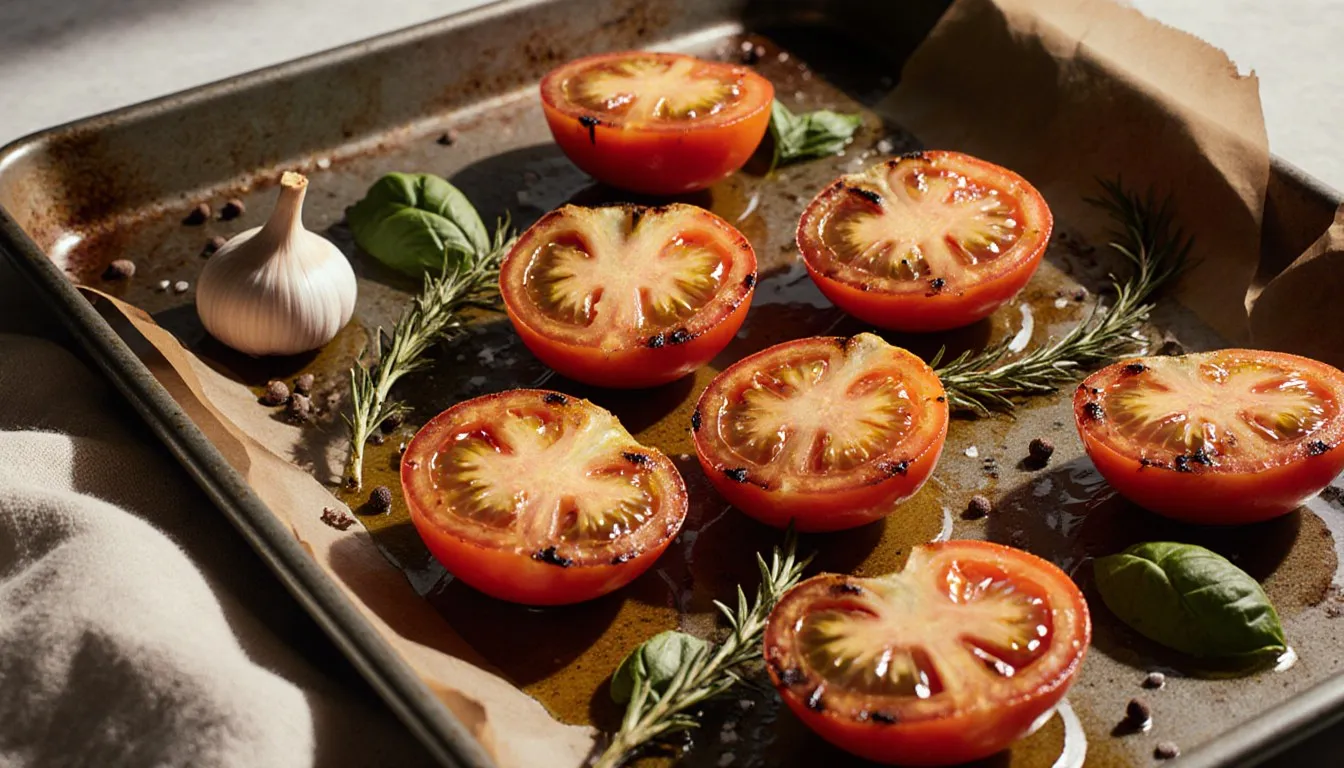
- Roast: 375 to 425°F for halved tomatoes, or 250 to 300°F for two to three hours when you want them shrunken and jammy. Roasting drives off water and caramelizes the sugars, which is why a mediocre tomato improves more in the oven than anywhere else. Cut side up keeps the juices, cut side down gives you more browning. The full walkthrough, timings and pan setup and all, is in how to roast tomatoes.
- Stew: low and long, lid on or partly on, in company with onion and fat. The tomato dissolves and becomes the sauce. This is beefsteak territory, and the method behind most braises and chilis.
- Broil: the fastest route to char. Skins blacken and blister in a few minutes under a hot element, which gives you the smoky note behind fire roasted tomatoes and most cooked salsas. Watch it, because the line between blistered and cremated is about ninety seconds.
A bland roasting tray almost always means crowding. Tomatoes packed shoulder to shoulder steam in their own moisture instead of roasting, and you get pale, soggy halves. Give them room, use two sheet pans if you have to, and do not skimp on the oil.
How much salt, sugar, or acid does a tomato dish need?
Salt early and taste late. Salt drives moisture out of the tomatoes and seasons them from the inside as they cook, so a good pinch at the start of the simmer does more work than the same pinch at the end. But tomato sauce concentrates as it reduces, and the salt concentrates with it, so hold back your final seasoning until the sauce is where you want it.
Sugar belongs in a tomato sauce only as a fix for a specific problem you have already tasted. The old kitchen rule of thumb holds that a pinch of sugar tames a sharp sauce, and it does, but reach for it only after you have tasted a properly reduced sauce and found it genuinely harsh. Ripe fruit, a slowly sweated onion, or a grated carrot in the pot usually handle it without any sugar at all. Start with a quarter teaspoon in a large pot, stir, taste. If you can taste the sugar, you have gone past the point.
Baking soda is the heavier tool. A small pinch neutralizes acid outright, and it is worth it in one specific situation: a sauce headed for dairy, like a cream or vodka sauce, where sharp acid can curdle the cream. It will foam. Add it off the heat, a pinch at a time, and stop as soon as the edge is gone. Go too far and the sauce turns oddly flat and slightly soapy, and there is no coming back from that.
One equipment note that saves a dinner: do not simmer tomatoes for an hour in bare cast iron, unlined copper, or scratched aluminum. Acid pulls metal out of a reactive pan, and you get a faint tinny taste that no seasoning covers. Enameled, stainless, or a well-established seasoned surface for short cooks only.
How long do cooked tomato dishes keep?
Cooked tomato sauces, stews, and roasted tomatoes keep 3 to 4 days in the refrigerator. Acidity is not preservation, and a tomato sauce is no more forgiving than any other leftover, so treat that window as the limit rather than a suggestion.
Get the pot cooled fast. Split a big batch into shallow containers rather than sliding the whole Dutch oven into the fridge, where the middle can sit warm for hours. Perishable food should not stay out at room temperature more than two hours, and no more than an hour once the kitchen sits north of 90°F, which in August it certainly does.
The freezer is where a big batch belongs. Cooked sauce holds its quality about three months at 0°F, and stays safe indefinitely at that temperature, though the flavor drifts after that. Freeze it flat in zip-top bags, label the date, and stack them like files.
Water-bath canning is a different animal and deserves real care. Tomatoes sit right at the border of the acidity where canning safety gets complicated, which is why current tested guidance calls for adding bottled lemon juice or citric acid to every jar, regardless of how tart the fruit tastes. Follow a current tested canning recipe from a reliable source, and do not adapt one from a clipping or a family notebook. My mother’s handwritten recipes are treasures, and I would not can from a single one of them.
If you end up with a counter full of ripe tomatoes and no time, freeze them whole and raw, stems off, in a bag. They keep for months and the skins slip off under warm running water while they are still frozen, so a February pot of sauce starts with August fruit and you never picked up a paring knife.
Tessa Calloway
Staff Writer
Tessa Calloway has spent twenty years cooking dinner on a weeknight clock and testing the shortcuts that survive contact with a real kitchen. She believes the best recipe is the one you can make with what's already in the house, and she has strong opinions about what actually needs to be homemade (less than you think) and what always does (dressing).