How to Cook Potatoes: The Variety Decides the Method
How to cook potatoes starts at the produce bin: waxy, starchy, or all-purpose decides whether you boil, bake, roast, or fry. Here’s the match-up.
There is no single best way to cook a potato, and the gluey mash you made last winter probably started with a Russet whipped in a food processor or a red potato asked to do a starchy potato’s job. A potato’s starch content determines whether it will hold its shape or collapse into fluff, which means the variety you grab dictates the method that will work. Waxy potatoes hold, starchy potatoes fall apart, and all-purpose ones split the difference. Get that pairing right and boiling, baking, roasting, pan-frying, steaming, and microwaving all become straightforward. Get it wrong and no amount of technique will save the dish.
What’s the best way to cook a potato?
The best method is the one that matches the potato in your hand to the dish you’re making. Starchy potatoes bake and mash beautifully and fall apart in a potato salad. Waxy potatoes hold their edges in a salad or a gratin and turn dense and heavy when you mash them. Everything below is detail hung on that one distinction.
Here’s the short version, the one you can run through in your head standing in the produce aisle:
- Baking whole, mashing, or frying: starchy. Russets.
- Roasting: starchy or all-purpose. Russets give you the craggiest edges, Yukon Golds give you a creamier inside.
- Potato salad, soups, stews, gratins, boiled and buttered: waxy. Red potatoes, fingerlings, new potatoes.
- Pan-frying and home fries: all-purpose or waxy, because they hold their cube shape in the skillet.
- Steaming: waxy, every time.
- Microwaving: starchy, if you want anything resembling a baked potato.
- You have no idea what the recipe wants: Yukon Gold. It is the potato that fails least often.
That last line is not a cop-out. If you keep one bag in the house, make it Yukon Golds. They mash well enough to please most people, they roast handsomely, and they will not disintegrate in a pot of soup. The same pick-the-right-shape-for-the-job thinking runs through how to cook vegetables in general, but potatoes punish you for ignoring it more than almost anything else in the crisper.
Waxy, starchy, or all-purpose: does it matter which potato you grab?
It matters more than the recipe does. Starch is what makes a potato either fluffy or firm, and the varieties sitting side by side in the bin are not interchangeable.
In a high-starch potato, the starch granules swell with water as they cook and the cells push apart from each other. That is what gives you a light, dry, absorbent interior: the very thing you want in a baked potato that drinks up butter, or a mash that goes silky. In a waxy potato there is less starch and more moisture, and the cells cling together instead of separating. Cut a boiled red potato and the edges stay sharp. Cut a boiled Russet and it starts crumbling on the way to the bowl.
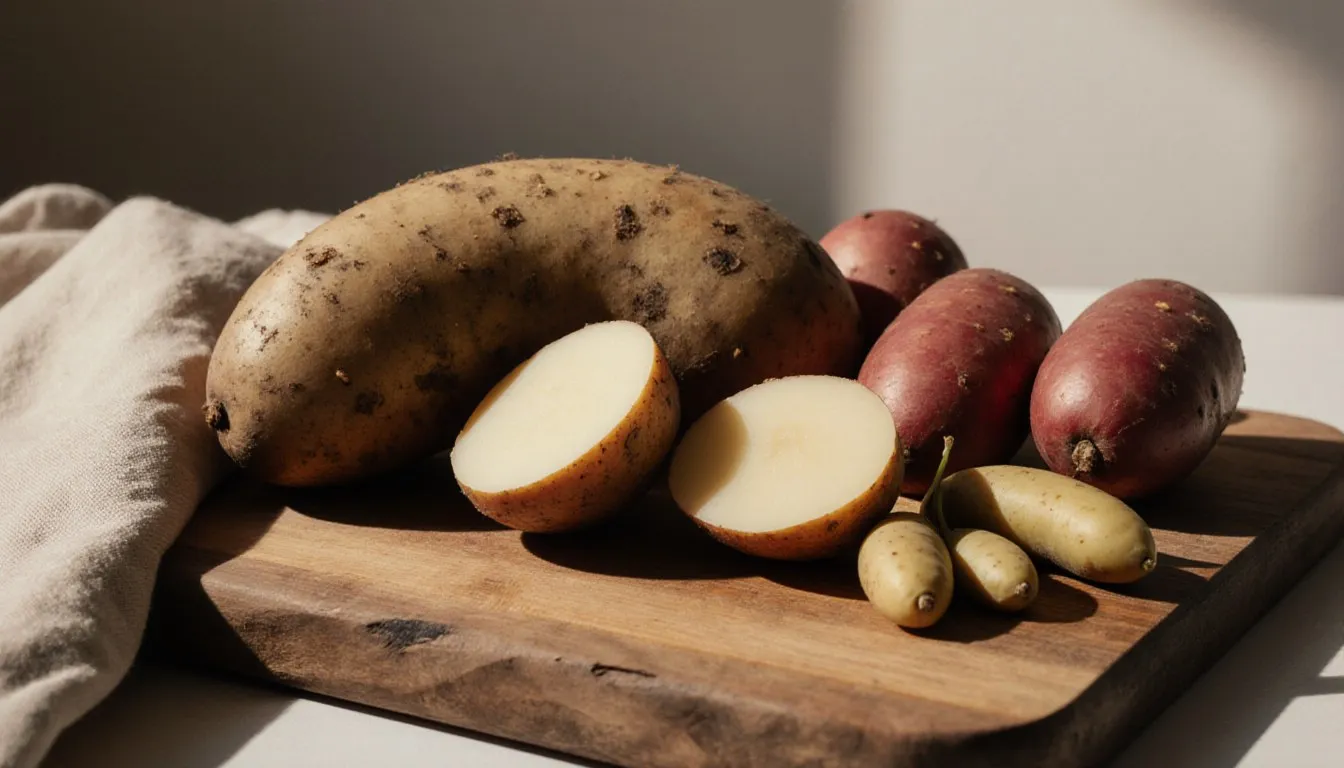
The four you’ll see at the store
- Russet potatoes: the big brown ones with rough skin. High starch, low moisture, the classic baking and frying potato. They roast into serious crust and they turn to sand in a potato salad.
- Yukon Gold potatoes: medium starch, thin gold skin, buttery yellow flesh. The all-purpose workhorse. Good mash, good roast, good gratin, decent in a salad if you’re gentle with them.
- Red potatoes: waxy, moist, firm. Built for boiling, steaming, potato salad, and stews where you need the chunks to still be chunks at serving time.
- Fingerlings: waxy, small, knobby, with a firm bite and a nutty flavor. Halve them lengthwise and roast cut-side down, or steam them whole for a salad. Do not mash them.
New potatoes, the small thin-skinned ones sold young, behave like waxy potatoes because they are harvested before their starch fully develops. Purple and blue varieties run from waxy to all-purpose depending on the type, and they hold their color best with dry heat. Boiling tends to leach some of it into the water.
Never ask a potato to do two jobs at once. A variety bred for fluff will not hold its shape, and one bred to hold its shape will never go fluffy. Pick the variety for the dish and half your problems disappear before you turn on a burner.
How do you boil potatoes without them falling apart?
Start them in cold, well-salted water, bring it up to a bare simmer, and pull them the moment a knife slides in with slight resistance. Dropping potatoes into already-boiling water cooks the outside long before the center gives, and that outer layer is the part that shreds and clouds your water.
Cut them to a uniform size. This sounds fussy and it is the single biggest fix for the “half mushy, half raw” problem. Big chunks of the same rough dimension cook evenly; a mix of two-inch pieces and half-inch scraps never will.
Salt the water generously. It should taste seasoned, the way you’d salt pasta water. Potatoes take on salt only from the outside as they cook, so under-salted water means potatoes you can never quite season properly afterward, no matter how much you sprinkle on at the table.
Keep it at a lazy simmer rather than a rolling boil. A hard boil knocks the pieces against each other and the pot, and the corners round off and cloud the water. Test with a paring knife instead of a fork, since a fork tells you less: the knife should meet a little resistance in the center and slide off the potato without being shaken loose. Timing varies enormously by size and variety, so if you want real numbers to work from, how long to boil potatoes lays out the ranges.
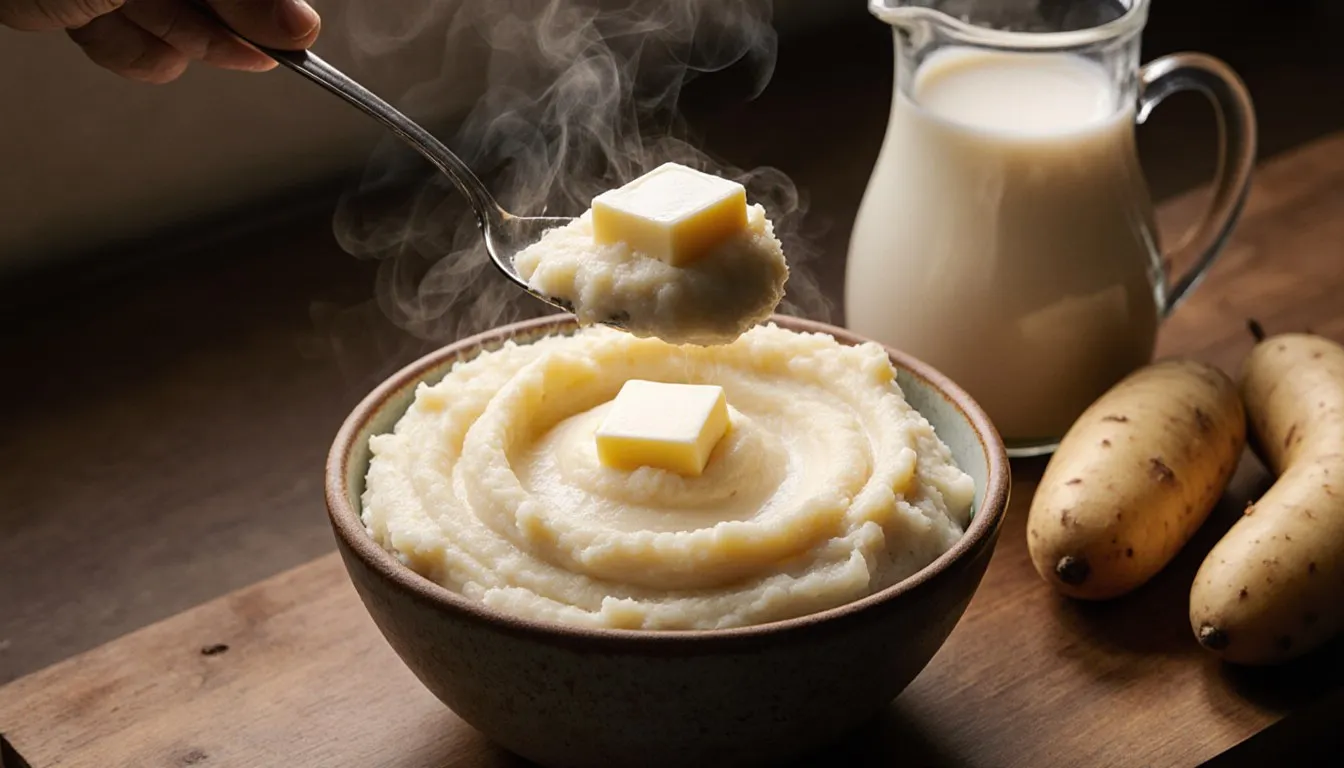
Once they’re drained, put them back in the hot dry pot over low heat for a minute so the surface steam drives off. Dry potatoes take butter and dressing better, and if you’re headed for mash, that dry surface is exactly what keeps things from turning wet and heavy. Mash them while they are hot, with warm dairy, and use a ricer or a masher rather than a food processor. Whipping blades rupture the starch cells and you get glue, which is a texture no amount of butter will rescue. (A mash that came out thin has fixes of its own; how to thicken mashed potatoes covers those.)
What’s the right way to bake a potato?
Dry skin, a thin coat of oil, a good sprinkle of salt, a few fork punctures, and straight onto the oven rack with nothing wrapped around it. Foil traps steam and gives you a damp, limp jacket, which defeats the point of baking a potato in the first place.
Scrub the potato under cold water and then dry it properly with a towel. Moisture on the skin steams instead of crisping. Rub the whole thing with a little neutral oil or olive oil and salt it, coarse salt if you have it, then pierce it in four or five places so steam has somewhere to go.
Set it directly on the rack with a sheet pan on the shelf below to catch drips. Air needs to move all the way around the potato. The doneness test that beats a timer is the squeeze: with a towel or mitt, press the sides gently and the potato should give and feel loose inside its skin, not springy. If you want a number, the interior lands right around 205°F to 210°F (96°C to 99°C) when the starch has fully cooked through. Baked temperatures and timing get their own full treatment under oven temperature for baked potatoes, so pick your setting there.
Then cut it open right away. A baked potato left sitting whole keeps steaming itself into a dense, damp interior. Slit it lengthwise, pinch the ends toward each other to open it up, and fluff the inside with a fork before the butter goes in.
One food-safety note worth taking seriously: do not hold foil-wrapped baked potatoes at room temperature. Foil plus a warm, low-oxygen interior is a known risk for Clostridium botulinum, which is why baked potatoes should be served hot, kept hot, or refrigerated promptly rather than left out on the counter in their wrappers. Refrigerate leftovers within two hours and use them within three to four days.
How do you roast potatoes so they turn out crispy?
High heat, dry surfaces, plenty of fat, and a pan with real space between the pieces. Most sad roast potatoes are a crowding problem: pack the pan and the potatoes release enough moisture to steam themselves, and steamed potatoes never crisp no matter how long you leave them in.
Roast at 425°F to 450°F (220°C to 230°C). Cut into pieces around one and a half to two inches, which gives you enough surface for crust while leaving an interior that stays creamy. Smaller cuts crisp faster and give you more crunchy edges, but they also dry out, so if you like a fluffy middle, go bigger.
Dry the cut pieces with a towel before they meet the oil. Toss them in enough fat to coat every surface, not a modest drizzle. Duck fat and beef tallow are wonderful and entirely optional; olive oil roasts fine at these temperatures. Spread them in a single layer with space around each piece, and use two pans if you need to. Preheating the pan with the fat in it gives you a head start on the bottom crust.
Then leave them alone. Potatoes release from the pan when the crust has formed, so if a piece is sticking, it is not ready to be turned. One flip partway through is plenty.
The move that separates good roast potatoes from great ones is parboiling first. Simmer the cut pieces in salted water until just tender at the edges, drain, then shake them around in the dry pot so the outsides rough up into a starchy fuzz. That fuzz is what turns into the shattering crust. It sounds like an extra step for something you were trying to keep simple, and it takes about ten minutes; parboil potatoes walks through the timing and the shaking technique in detail.
How do you pan-fry or sauté potatoes on the stovetop?
Par-cook them first, get the fat properly hot, then leave the pieces undisturbed until a crust forms. A raw potato in a skillet will burn on the outside long before the middle is cooked, and that is the mistake behind most disappointing home fries.
Par-cooking can be boiling, steaming, or, best of all, leftovers. Cold baked or boiled potatoes from the night before fry better than anything you cook fresh, because they’ve had time to firm up in the fridge and they hold their shape when they hit the pan. Cold potatoes also brown faster, since there is less surface moisture to cook off before the crust can start forming. A pound of leftovers in the fridge is a head start on breakfast.
Use cast iron or heavy stainless. Cut into half-inch cubes for home fries, or quarter-inch slices for the softer, more tangled style. Get the fat hot enough that it shimmers and a test piece sizzles briskly the moment it lands. A quiet pan means the temperature is too low, and low-temperature frying gives you greasy potatoes that soak up oil instead of sealing against it.
Spread them in one layer, salt them, and then wait. Three to four minutes of no touching, then turn and repeat. Add onions and peppers partway through rather than at the start, since they cook faster and will burn while you’re waiting on the potatoes. Garlic goes in for the last minute only.
Stovetop wins over the oven when you want deep browning on the flat surfaces and a soft interior, or when you’re cooking for one or two and turning on the oven feels absurd. For anything deep-fried and crisp all the way through, homemade french fries is a different technique with its own oil temperatures.
Is steaming or microwaving a potato worth it?
Both are worth it for specific jobs. Steaming is the best method for potatoes destined for salad, and microwaving is a legitimate shortcut when you want one baked potato and no forty-minute wait.
Steamed potatoes never sit in water, so waxy varieties come out firm, intact, and better tasting than boiled ones. Set halved reds or whole fingerlings in a steamer basket over simmering water, cover, and cook until a knife slides in easily. The flavor stays in the potato instead of dispersing into a pot of water you’re about to pour down the drain. If you’re building something dressed while warm, like german potato salad, steaming gives you the cleanest starting texture there is.
Microwaving is honest work with one honest limitation: you will not get crisp skin. Pierce the potato several times, which is non-negotiable, because an unpierced potato can burst as steam builds inside. Microwave on a plate, turn it over halfway through, and check for give at the sides. Cooking times swing wildly by wattage and potato size, so go in shorter bursts near the end rather than setting one long timer.
The workaround for the skin is to microwave until nearly done and then finish in a hot oven or a toaster oven for a few minutes. You get most of a real baked potato in a fraction of the time, and on a Tuesday that’s a fair trade.
What ruins potatoes no matter which method you use?
Crowding, wet surfaces, under-salted water, and cooking the wrong variety for the dish. Those four account for nearly every potato failure in a home kitchen. Two more deserve attention because they happen before you cook.
Storage first. Potatoes want a cool, dark, dry, well-ventilated spot, not the refrigerator. Cold storage converts some of the starch to sugar, which makes potatoes taste sweet and brown far too fast and dark when fried or roasted. Keep them away from onions too, since onions give off gases that push potatoes toward sprouting.
Then the safety part, which is genuinely worth being strict about. Potatoes produce solanine, a natural toxin concentrated in green skin, sprouts, and the eyes. Green patches and sprouts should be cut away generously along with the surrounding flesh, and any potato that is extensively green, badly sprouted, shriveled, or tastes bitter should be thrown out rather than trimmed and cooked. Cooking does not reliably break solanine down, so heat is not a solution here. A bitter or burning taste is your signal to stop eating and discard the rest.
The last common ruin is mechanical. Over-working cooked potatoes, whether by beating mash with a mixer, stirring boiled chunks aggressively, or flipping roasting potatoes every few minutes, breaks down starch and structure. Gentler hands, fewer interventions, better potatoes.
Do you need to peel potatoes before cooking?
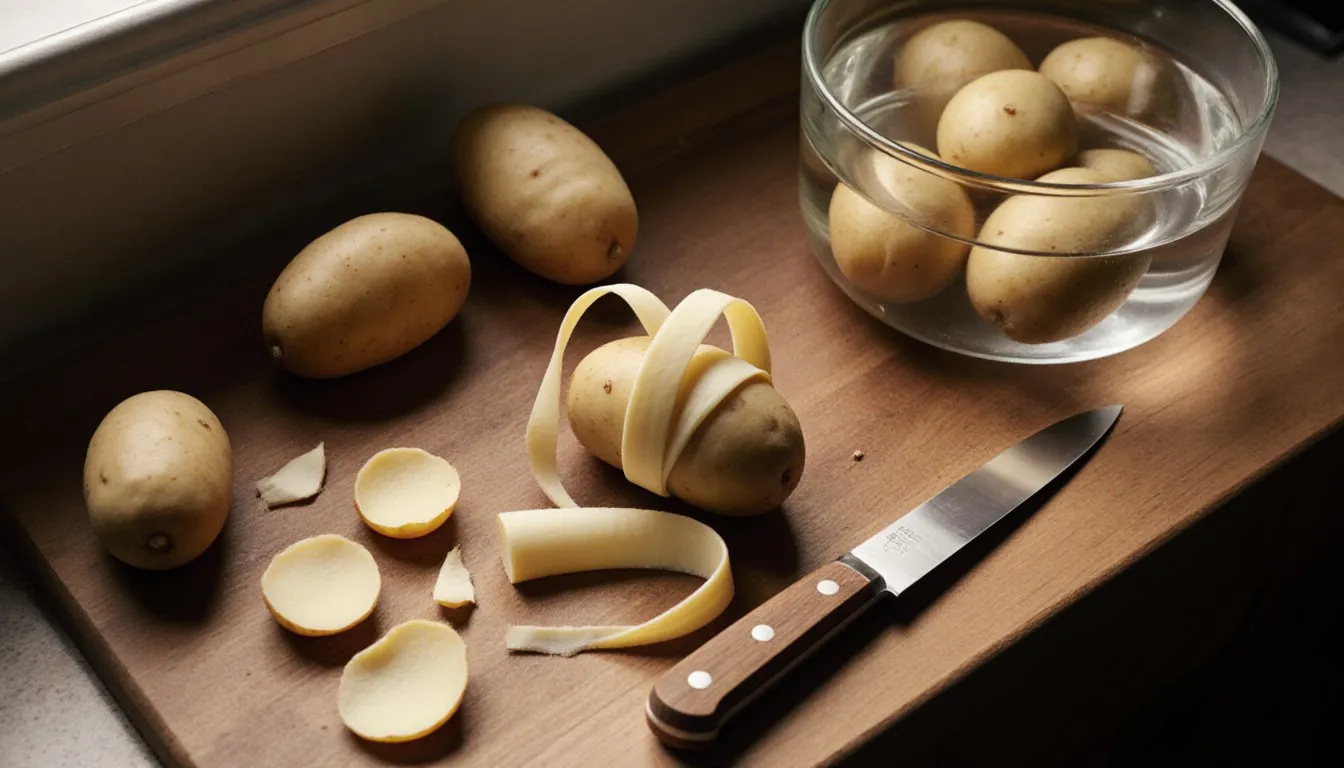
Only when the skin will hurt the texture you want. Thin-skinned waxy potatoes almost never need peeling; thick-skinned Russets usually do if the potato is going to be mashed or made silky.
Leave the skin on for roasting, for baking (obviously), for pan-frying, for steamed potato salads, and for anything with red or fingerling potatoes, where those thin skins turn tender and add flavor and a little color. Peel Russets for a smooth mash, for gratins where you want even layers, and for soups you plan to blend. Rustic mash with skin flecks is a legitimate choice, just make it on purpose.
If you’re peeling ahead of a holiday or a dinner party, submerge the peeled potatoes completely in cold water so they don’t oxidize and turn that unappetizing pinkish gray. There are limits on how far ahead you can go and a couple of things worth knowing about how it affects the cooking; peeling potatoes ahead of time gets into the specifics.
One last habit worth building: cook a couple of extra potatoes whenever you boil or bake. Chilled overnight and diced, they become the best home fries you’ll make all month, and they’ll turn a can of stock into potato soup with about ten minutes of effort. Cooked potatoes keep three to four days refrigerated, and they earn their shelf space every time.
Tessa Calloway
Staff Writer
Tessa Calloway has spent twenty years cooking dinner on a weeknight clock and testing the shortcuts that survive contact with a real kitchen. She believes the best recipe is the one you can make with what's already in the house, and she has strong opinions about what actually needs to be homemade (less than you think) and what always does (dressing).