Venison, Bison, Rabbit, Duck: One Fat Rule Runs Them All
Game and specialty meats punish beef-and-pork habits. Safe doneness temps and fat fixes for venison, bison, elk, rabbit, duck, and wild boar.
Game meat is lean meat, and lean meat does not forgive a wandering cook. That one sentence covers almost everything people get wrong with venison, bison, elk, rabbit, and wild boar: the five extra minutes that take a ribeye from medium-rare to medium will take a venison loin from dinner to a leather coaster, because there is no marbling inside to melt and cover for you. Once you stop treating each animal as its own mystery and start cooking to fat content, the whole category collapses into a handful of rules you can carry from one species to the next.
Below, what counts as game, why the lack of fat changes your entire method, and how each of the common ones wants to be handled, with the safe doneness numbers stated plainly rather than guessed at.
What counts as game and specialty meat?
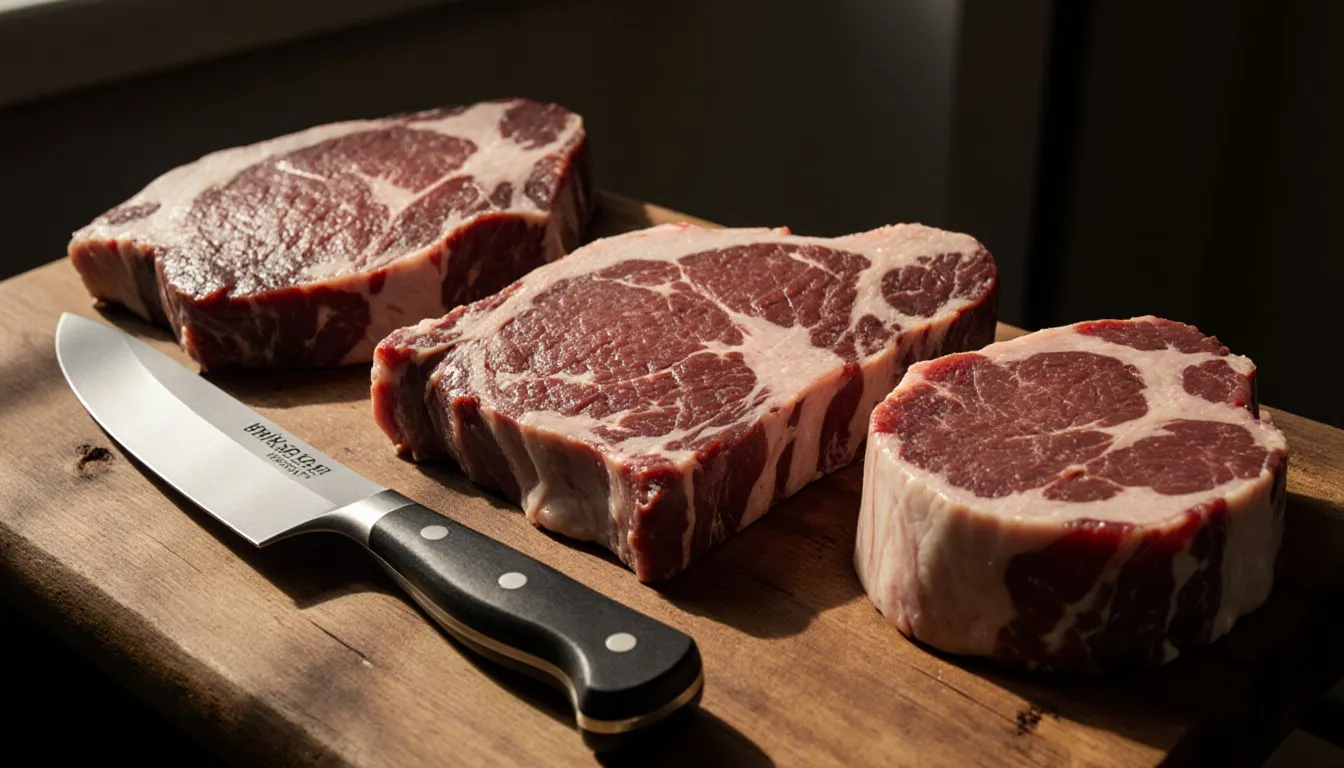
In an American grocery store or online butcher case, game and specialty meats mean venison (deer), bison, elk, rabbit, game birds like duck and quail, and wild boar. Some regions add antelope, goat, or squab. All of them sit outside the everyday beef-pork-chicken rotation that most home kitchens run on, which is why they get a separate shelf and, usually, a separate price tag.
My advice at that counter: spend on a whole muscle and save on everything else. A bison ribeye or a venison loin is worth the twenty-odd dollars, because you can taste exactly what you paid for. Pre-marinated game medallions and anything labeled a stew blend are where the money goes to hide, since the marinade covers up a cut you were not shown and the blend is trim from an animal nobody named. If a package does not tell you the species and the cut, put it back and ask the butcher.
At the counter, “game” is a species label and nothing more. Ask it where the animal lived or what it ate and it has no answer for you. Nearly all game meat sold at retail in the United States is farm-raised, because wild-harvested animals generally cannot be sold for human consumption. The venison in a restaurant is typically farmed red deer, often imported from New Zealand. The bison is ranched. The “wild boar” is usually either farm-raised or free-ranging hogs taken and processed through an inspected plant.
So a hunter’s freezer and a butcher’s case both say venison and mean genuinely different meat: different diet, different age, different fat, different handling before it was chilled. Cooking-wise, the family rules hold for both. Wild-harvested cuts just run leaner and stronger-flavored, and they vary a lot more animal to animal.
Worth knowing before you spend: “grass-fed” on a bison label tells you almost nothing, since nearly every bison eats grass for most of its life and the finish is what changes the fat. What you want is the date the meat was cut and frozen, and that is the one thing the label almost never prints. Ask for it, and if the answer is a shrug, write the day you bought it on the package before it goes in your freezer.
Carry these rules only as far as the specialty case, though. A chuck roast wants the long fatty cook that would ruin a venison shoulder, so the beef cuts chart and how to cook pork stay the guides on that side of the counter. Alligator meat and rattlesnake meat sit in the specialty case too and answer to neither set of rules, so each one gets its own treatment.
Why game meat cooks nothing like beef or pork
Almost all of it comes down to intramuscular fat, the marbling that runs inside a muscle rather than sitting in a cap around it. Beef has it in quantity. Venison and elk have close to none, bison has less than beef, and rabbit has so little that a whole animal renders barely enough to grease the pan.
Here is the one-sentence why: marbling melts as the meat heats, and that melting fat both carries flavor and keeps the muscle fibers feeling moist as they tighten. Take it away and heat has nowhere to hide a mistake. The window between rosy and ruined on a venison backstrap is a couple of minutes wide, where the same window on a well-marbled steak is closer to eight.
Three practical consequences follow, and they carry across every animal in this piece:
- Cook to temperature, not to a clock. A digital instant-read thermometer is the single piece of equipment that makes game meat easy, and it costs less than the roast.
- Pick a side: fast and hot, or slow and wet. A hard sear on a tender cut, or a covered braise on a working muscle. The medium-heat, uncovered, forty-minute middle ground is where lean meat goes to die.
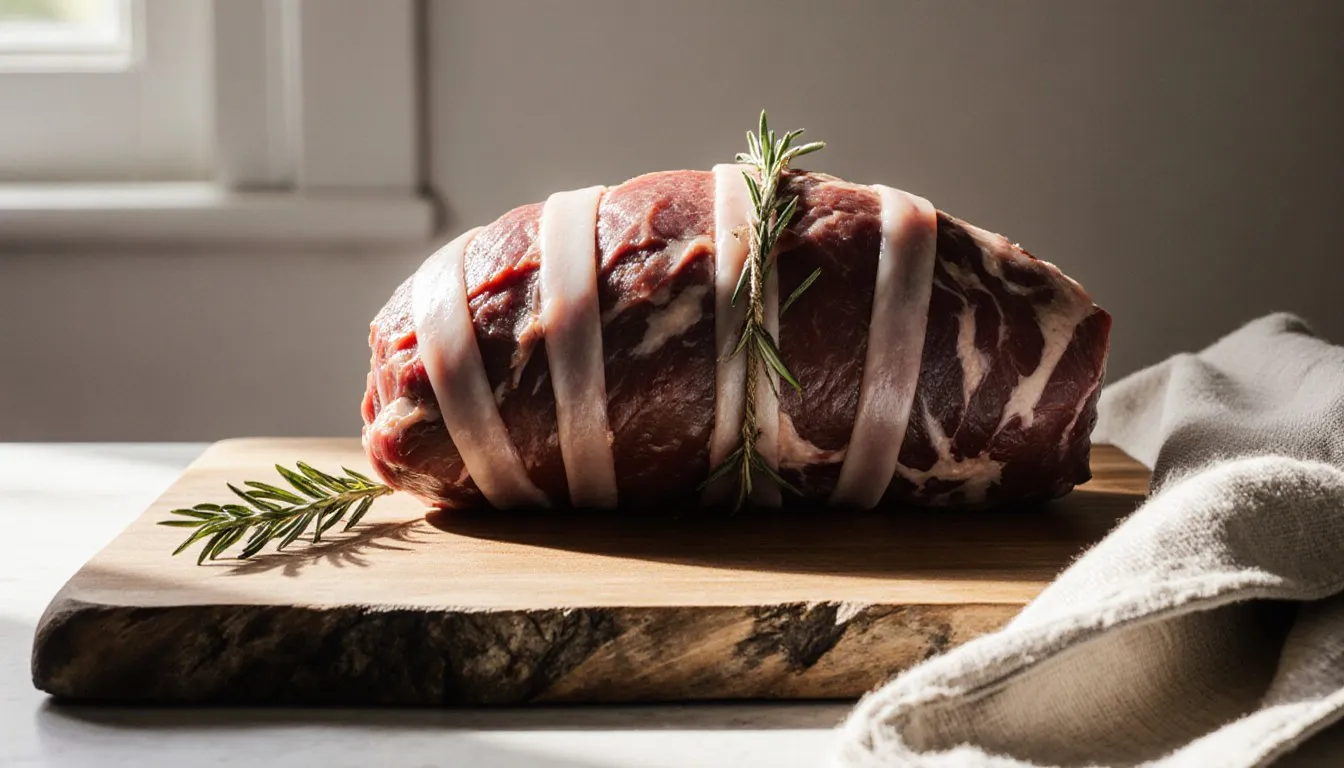
- Add the fat back. Bacon, butter, pork fatback ground into the mix, duck fat, olive oil, a bard of fat tied over a roast. A lean animal that ran for a living needs the fat added back from outside, so build it into the recipe from the start rather than trying to rescue the meat at the end.
Salt earlier than you would with beef, too. An hour ahead, or overnight in the fridge on a rack, gives the salt time to work into a muscle that has no fat to season through.
How is venison different from beef?
Venison is leaner than the leanest beef you can buy, so it cooks faster and tastes stronger, and those two things drive every decision you make with it. The flavor people describe as gamey mostly lives in the fat and connective tissue, which is why butchers trim venison hard and why the silverskin should come off before it goes anywhere near heat. That membrane will not soften. It shrinks and curls your cut into a bow.
Split the animal in your head into two piles. The tender cuts, backstrap and tenderloin, want a screaming-hot pan or grill, three minutes or so a side depending on thickness, and a rest. The working muscles, shoulder, neck, shank, and most of the hind leg, want a braise: brown them hard, cover them in stock or wine, and hold them at a bare simmer for hours until the collagen gives up.
The one thing that never works is the middle. A venison roast cooked like a beef roast, uncovered at 325°F until it hits some vague hour mark, comes out gray and tight every time.
For safety, whole cuts of venison should reach 145°F (63°C) with a three-minute rest, and ground venison 160°F (71°C). That ground number is not negotiable, since grinding spreads any surface bacteria through the whole batch. Which is also why ground venison, mixed with pork fat to make it behave, is the most forgiving way to start: most ground venison recipes treat a beginner far more kindly than a solo backstrap does.
Can bison and elk substitute for beef one for one?
Yes, in almost any beef recipe, as long as you shorten the cook time and pull earlier. Bison and elk are the closest analogs in the category, both structurally similar to beef, both noticeably leaner, and both sold in cuts with familiar beef names, so the beef cuts vocabulary transfers directly. A bison ribeye is a ribeye.
What changes is timing. Figure on roughly a third less time than the same beef cut and start checking well before you think you need to. Easy peasy on paper, and it is genuinely the only adjustment most bison steaks need. Elk runs leaner still and behaves more like venison than like bison, so treat elk as the more delicate of the two.
A few specifics worth knowing:
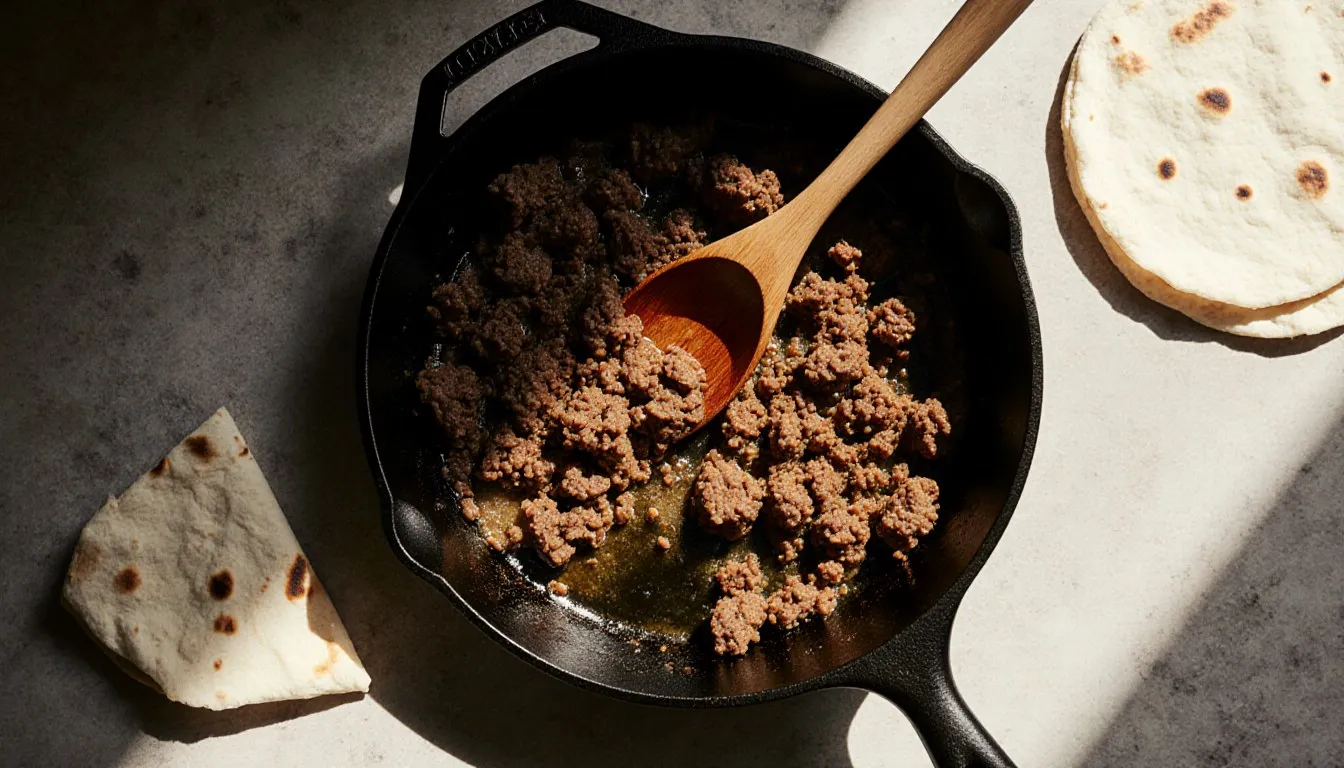
- Ground bison browns fast and gives off very little rendered fat, so a pan that would have drained a half cup off ground beef gives you almost nothing. Add a spoonful of oil at the start or it will stick and scorch.
- Bison chili, meatloaf, and burgers all work, but burgers suffer most from the missing fat. Keep them thick, handle them gently, and do not press them on the grill.
- Braises and stews are where bison shines, because the liquid does the work the fat used to.
Where the swap fails: anything that leans on rendering fat as a cooking medium or as the dish itself. Bison short ribs will not give you the same unctuous result as beef short ribs no matter how long you go, and lean grinds do not make good confit or good sausage on their own. Whole cuts get 145°F (63°C) with a three-minute rest, ground gets 160°F (71°C), same as beef.
Why does rabbit want a braise instead of a grill?
Rabbit turns tough and dry fast because it is nearly fat-free and the animal is small, so there is very little mass to buffer the heat. A rabbit hindquarter on a grill goes from raw to stringy while you are turning the corn. Liquid and time are the reliable path, and the classic European kitchens that cook the most rabbit almost always take it: braised in white wine and mustard, stewed with olives, simmered in cider with onions.
Break the animal down before you cook it rather than roasting it whole, because the parts do not finish together. The hind legs are the workhorses and need the longest time in liquid. The loin, that thin strip along the spine, cooks in a fraction of that and is the one piece that tolerates a quick sear, ideally wrapped in something fatty like pancetta and pulled the moment it firms up. The front legs and rib section are small and bony, and my mother would have said they are where the flavor hides, which is her way of saying put them in the stock pot.
A working method: season the pieces, brown them in butter or oil, soften onions and garlic in the same pan, deglaze with wine or cider, return everything with enough stock to come most of the way up the legs, and hold it at a bare simmer covered until a fork twists the meat off the bone. Rabbit should be cooked to 160°F (71°C), and a proper braise clears that number long before it gets tender anyway.
Do duck and quail need the same handling?
No, and that is the trap with game birds. Duck and quail sit at opposite ends of the fat scale, so the technique that flatters one ruins the other.
A farmed duck breast has a thick fat cap under the skin and lean meat beneath it. The job is rendering that cap: score the skin in a crosshatch without cutting into the meat, start it skin-side down in a cold dry pan, and bring the heat up gradually. Ten minutes or more of patient rendering pours off a jar of duck fat and leaves the skin thin, crisp, and golden. Rush it on high heat and you get a flabby fat layer under a burnt surface. Save that rendered fat in the fridge; potatoes roasted in it are worth the whole exercise.
Quail, squab, and most wild ducks have no such reserve. They are small, lean, and unforgiving, and they want high heat, speed, and a coat of fat applied from outside: butter under the skin, a bacon wrap, a hot oven for a short spell. A quail is a fifteen-minute bird, and the same logic that governs how to cook turkey stops making any sense on something that fits in your palm.
All poultry, wild or farmed, duck and quail included, is safe at 165°F (74°C). Restaurants routinely serve duck breast pink and well below that. Cooking a breast under 165°F (74°C) in your own kitchen puts you outside the published guidance, and you should know that before you decide how you want it.
How is wild boar different from farmed pork?
Wild boar is leaner, darker, denser, and stronger-tasting than supermarket pork, and it has to come off the heat at 160°F (71°C). Hold those two facts side by side, because the leanness tempts you to pull it early and the temperature tells you to finish the job.
On flavor and texture, boar behaves like a cross between pork shoulder and venison: nutty, a little sweet, with muscle fibers that are noticeably firmer. The shoulder and leg braise beautifully, which is why Tuscan kitchens have made boar ragù for as long as anyone can remember, simmered for hours with red wine and juniper until it shreds. Chops and loin are the risky cuts, since they have almost none of the fat that keeps farmed pork loin barely edible when overdone. Brine them, or braise them, or accept the consequences.
On safety, hold the line at 160°F (71°C) throughout for wild boar and any wild-harvested game hog. Farmed pork’s 145°F standard rests on a modern production system that wild animals are not part of. Wild game can carry Trichinella species, and freezing does not reliably kill the parasites found in wild game the way it does in commercial pork, so heat is the control. Cook it through, and let the braise be the plan.
Farm-raised boar and heritage hogs sold as specialty pork are a different case and follow ordinary pork guidance, so everything you already know about how to cook pork applies to them start to finish.
Should a beginner buy farm-raised or wild-harvested?
Buy farm-raised for your first several attempts. Consistency is the whole argument, and it is a bigger deal here than in any other meat aisle.
Farm-raised game arrives at a known age, off a known diet, killed and chilled under controlled conditions, and cut to standard portions. Two farmed venison loins from the same supplier cook the same way on two different Tuesdays. Two wild deer, one a young doe taken in October and one an old rut-run buck taken in December, are actually different ingredients: different toughness, different intensity, different everything. Field handling matters enormously too, and you have no way to audit a stranger’s.
Inspection is worth understanding. Beef, pork, and poultry get mandatory federal inspection. Bison, farm-raised venison and elk, rabbit, and farmed game birds sit outside that mandate and are inspected under a voluntary fee-for-service program instead, which many reputable producers buy into and advertise. Look for the inspection legend, buy from a butcher or supplier who will tell you the species and the source, and ask when the meat was cut and frozen.
What to buy first, in order of difficulty: ground bison or ground venison, then a bison steak, then a duck breast, then a rabbit for braising, then boar shoulder. Save whole wild-harvested backstrap for after you have a thermometer habit. And if a friend hands you a package from their freezer, ask two questions: what animal, and how long has it been in there.
How long does game meat keep in the fridge and freezer?
The same conservative standards that govern beef, pork, and poultry apply here, and lean meat gives you even less room at the far end of those windows. In the refrigerator at 40°F (4°C) or below, raw roasts, steaks, and chops keep three to five days. Raw ground meat and raw poultry, including duck and quail, keep one to two days. Cooked leftovers keep three to four days.
Frozen at 0°F (minus 18°C), meat stays safe indefinitely, so the numbers below mark the point where flavor and texture start to slide:
- Ground game: three to four months
- Steaks, chops, and roasts: four to twelve months
- Poultry pieces, including duck and quail: about nine months; whole birds up to a year
Freezer burn is the real enemy with this category, because lean meat has less fat protecting the surface and dries out faster. Vacuum-sealing is the fix, and if you do not have a sealer, wrap tight in plastic, then again in foil or freezer paper, and press out every bit of air. Label the package with the animal, the cut, and the date, since a wrapped elk roast and a wrapped venison roast look identical at eleven o’clock at night.
Thaw in the refrigerator, never on the counter, and give a whole rabbit or a boar shoulder a full day or more. Freeze anything you have thawed only if you cooked it first.
Once the thermometer habit is automatic, the next thing worth trying is grinding your own blend, lean game to fatty pork shoulder at about four to one, and putting it through burgers, meatballs, and a slow-simmered ragù. One afternoon with a grinder turns a freezer full of animals you have never cooked into weeknight food you already know how to make.
Tessa Calloway
Staff Writer
Tessa Calloway has spent twenty years cooking dinner on a weeknight clock and testing the shortcuts that survive contact with a real kitchen. She believes the best recipe is the one you can make with what's already in the house, and she has strong opinions about what actually needs to be homemade (less than you think) and what always does (dressing).