Ground Beef Recipes Live or Die on the Number Printed on the Package
Ground beef recipes live or die on fat percentage and browning. Which grind for which dish, the safe temp, freezer timing, and weeknight dinner ideas.
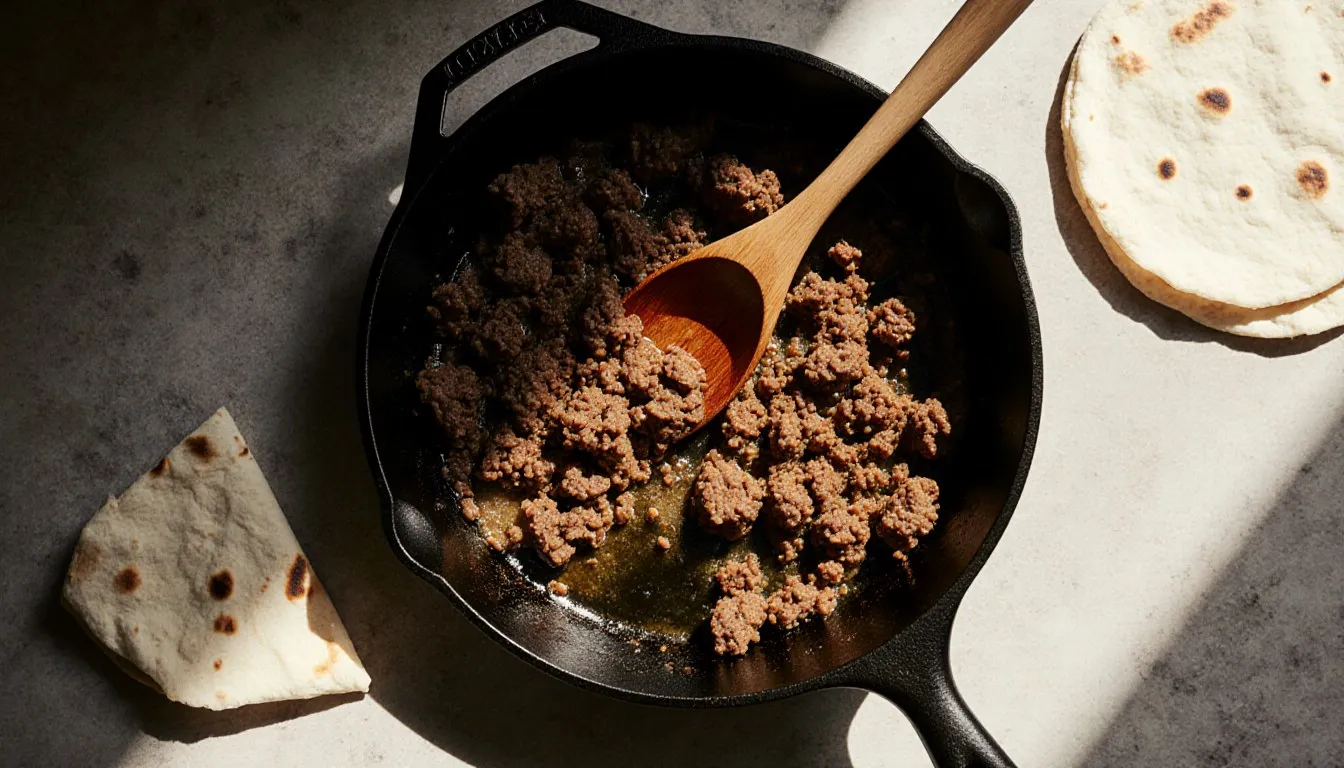
Buy 80/20 for anything you plan to drain and 90/10 for anything that finishes inside a sauce, and about half the ground beef recipes that have quietly disappointed you will stop doing that. The fat percentage on the package decides more about how dinner tastes than the recipe you picked, and the second-biggest factor is whether you browned the meat or steamed it in its own water without meaning to.
Below: which grind to buy for which dish, how to get real color on the beef, a spread of weeknight dinners organized by what you already have in the house, how far one pound can honestly stretch, the safe temperature, and which of these dishes survive the freezer. Every dish here comes with the ratio, the pan, and the point where you stop and taste.
What fat percentage should you buy for a ground beef recipe?
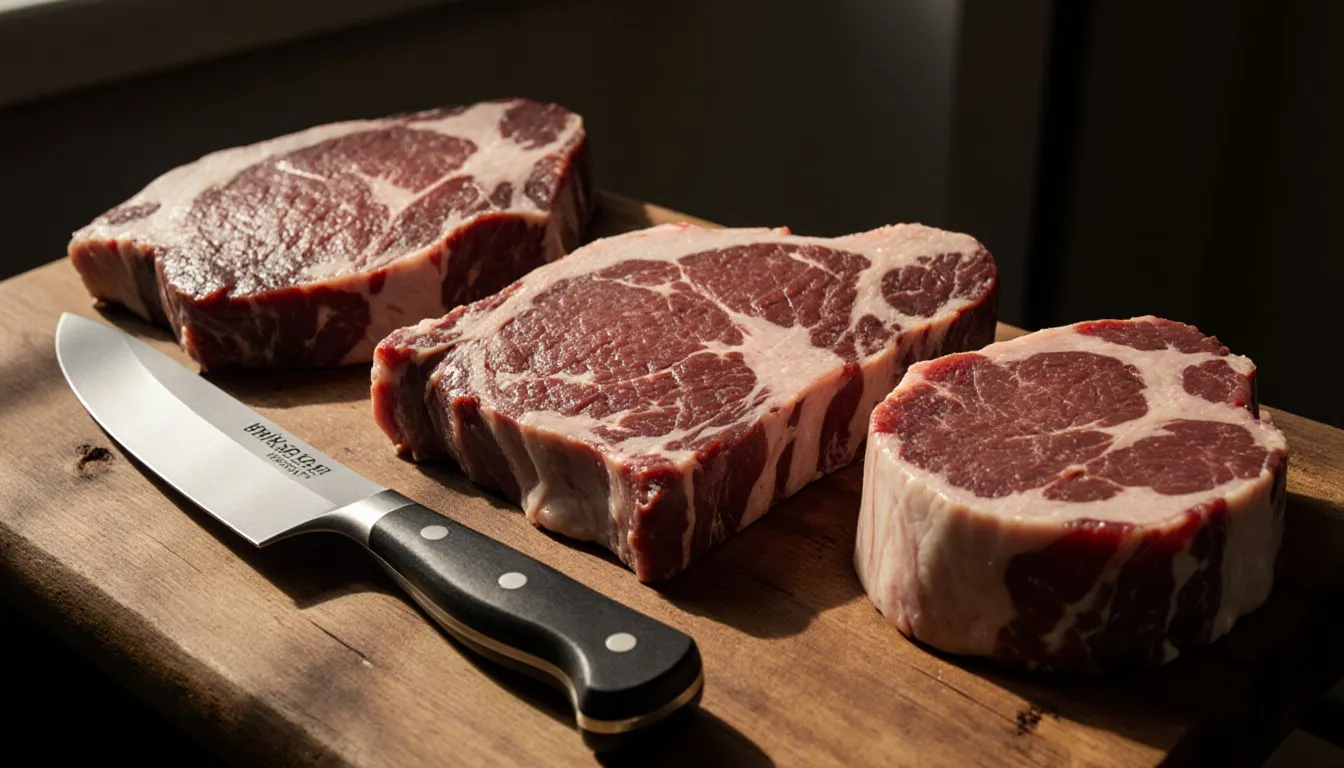
The number is fat by weight in the raw meat, so 80/20 is 80 percent lean and 20 percent fat. Match it to where the fat is going to end up.
- 80/20: anything you brown and drain. Taco filling, skillet dinners, sloppy joes, chili, burgers. The fat renders out, carries the spices around the pan, and then you pour most of it off.
- 85/15: the middle setting, and a fair default if you only want one package in the cart. Enough fat to brown well, not so much that an unskimmed sauce turns slick.
- 90/10: dishes where the fat has nowhere to go. Stuffed bell peppers, casseroles, soups, meat sauces you serve straight from the pot without skimming.
The names on the label tell you roughly the same thing. Ground chuck lands around 80/20, ground round runs leaner, ground sirloin leaner still, and plain “ground beef” is usually the fattiest thing in the case. Butchers have worked to that rough hierarchy for a long time, though the printed percentage is the number to trust, since the trim varies from store to store.
Lean beef costs more per pound, which annoys me every time, and there is a case for buying it anyway when the recipe keeps everything in the pot. There is no case for buying 93/7 to make tacos. You will pay extra for fat you were going to pour down the sink, and you will get drier, grainier crumbles for your trouble.
One more thing about draining: keep a heatproof jar by the stove and pour the fat in there rather than into the drain, where it congeals into a plumber’s invoice. And do not drain the pan bone-dry. A tablespoon or two left behind is what your onions and spices need to taste like anything.
What’s the one mistake that ruins most ground beef recipes?
Crowding the pan. A pound of beef dumped into a lukewarm skillet and immediately hacked into crumbles releases its water faster than the pan can evaporate it, the temperature drops, and the meat simmers in grey liquid until it turns the color of a rainy Tuesday. It is cooked. It just tastes like nothing.
Browning is where the beefy, roasted flavor comes from, and browning needs a dry surface and a hot pan. The fix costs no extra time:
- Get the skillet hot before the beef goes in. Cast iron or stainless beats nonstick here, because nonstick surfaces are not built for the heat that browning wants.
- Press the meat into two or three flat slabs instead of scattering crumbles, and let it sit a hot minute without poking it. Three or four minutes, until the underside has a deep brown crust and releases from the pan on its own.
- Then break it up. Not before.
- More than a pound in a 10 or 12 inch skillet means two batches. Two batches of browned beef beat one batch of steamed beef every single time.
- Salt after the first side has browned. Salt pulls water to the surface, which is exactly what you do not want in the first three minutes.
If you want the full method with the pan temperatures and the timing worked out, the breakdown on how to brown ground beef goes deeper than I will here. The short version: hot pan, big pieces, hands off.
What are the best ground beef recipes for a weeknight with no plan?
Sort them by what is already in the house, not by cuisine. That is how dinner gets chosen at 5:40 on a Wednesday.
When you want dinner in one pan
Taco skillet is the workhorse: brown 80/20, drain, bloom chili powder and cumin in the leftover fat for thirty seconds until they smell toasty, add a splash of water and a spoon of tomato paste, then pile it onto tortillas or over rice with whatever cold crunchy thing is in the crisper. Beef and rice in one pan is the same idea with the rice cooked in the beef’s drippings and a cinnamon stick, close cousin to Levantine hashweh. American goulash feeds a crowd for very little: beef, elbow macaroni, and canned tomatoes simmered together until the pasta drinks up the sauce. Korean-style beef bowls come together fastest of all: browned beef, soy sauce, brown sugar, garlic, a few drops of sesame oil, served over rice with a fried egg on top if the pan is still hot.
When you have canned tomatoes and an hour
Bolognese rewards a slow hand. Brown the beef properly, cook it down with soffritto, add milk and let it cook away before the tomatoes go in, then leave it at a bare bubble for an hour or more. The milk step comes from the classic Emilian versions and it does real work on the texture. Picadillo goes the other direction and is done in half the time: beef with sofrito, cumin, olives, raisins, sometimes a splash of the olive brine, spooned over white rice with fried plantains if you are lucky enough to have them. Sloppy joes are a legitimate dinner and I will not be arguing about it.
Chili also lives in this category, and thickening it is its own puzzle with its own answers, so I will point you toward the coverage on how to thicken chili rather than half-solve it here.
When you have vegetables to use up
Stuffed bell peppers are the classic: 90/10 beef, cooked rice, grated onion, tomato sauce, baked until the peppers slump. Stuffed cabbage rolls take longer and freeze beautifully. Zucchini boats do the same job in half the time when the garden has gotten away from you, and the many traditions of stuffed grape leaves and stuffed eggplant across the eastern Mediterranean all run on the same beef-and-rice logic.
When you need it to stretch into lunch
Soups. Taco soup is barely a recipe. Browned beef, beans, corn, tomatoes, and taco seasoning, on the table in twenty-five minutes. Beef and barley soup gets better on day two. Cabbage roll soup is the stuffed cabbage above with the folding step skipped, which is my kind of shortcut.
Three big ones sit deliberately outside this list because they each need more room than a paragraph. Meatloaf gets its due in the home style meatloaf recipes coverage, meatballs in the meatball recipes guide, and patties in the walk-through on the best way to cook hamburgers.
How do you stretch one pound of ground beef to feed more people?
You can reliably turn one pound into six servings instead of four without anyone at the table filing a complaint. The trick is choosing a bulker that brings its own flavor or texture, then seasoning for the finished volume rather than for the pound of beef you started with. Under-seasoning is what makes stretched food taste stretched.
- Beans and lentils: up to about equal volume with the cooked beef in anything saucy. Black beans in taco filling, pintos in chili, brown lentils in a meat sauce. Past a one-to-one ratio the dish reads as beans with beef in it, which is fine if that is what you meant.
- Cooked rice or grains: best inside something, like stuffed peppers or cabbage rolls, where a soft binder belongs. Loose in a skillet it turns pasty.
- Rolled oats: roughly half a cup per pound, soaked first in milk or broth until it looks like wet sand. This is the panade trick for meatloaf and meatballs, and it adds bulk while keeping things tender. Dry oats stirred straight in will drink your moisture and pay you back with sawdust.
- Mushrooms: finely chopped cremini, sauteed hard until their water cooks off and they brown. Up to half the weight of the beef. This is the swap that holds up under a fork, because browned mushrooms bring the same savory depth the beef does.
- Grated vegetables: carrot, onion, and zucchini all disappear into a sauce. Salt grated zucchini and wring it out in a towel first or it will water down everything it touches.
Where it tips over: past about half the total volume in bulkers, the beef stops being the flavor and starts being a garnish. Taste at that point and be honest with yourself. Usually the answer is more salt, a spoon of tomato paste, and a shot of Worcestershire or soy sauce.
What temperature makes ground beef safe to eat?
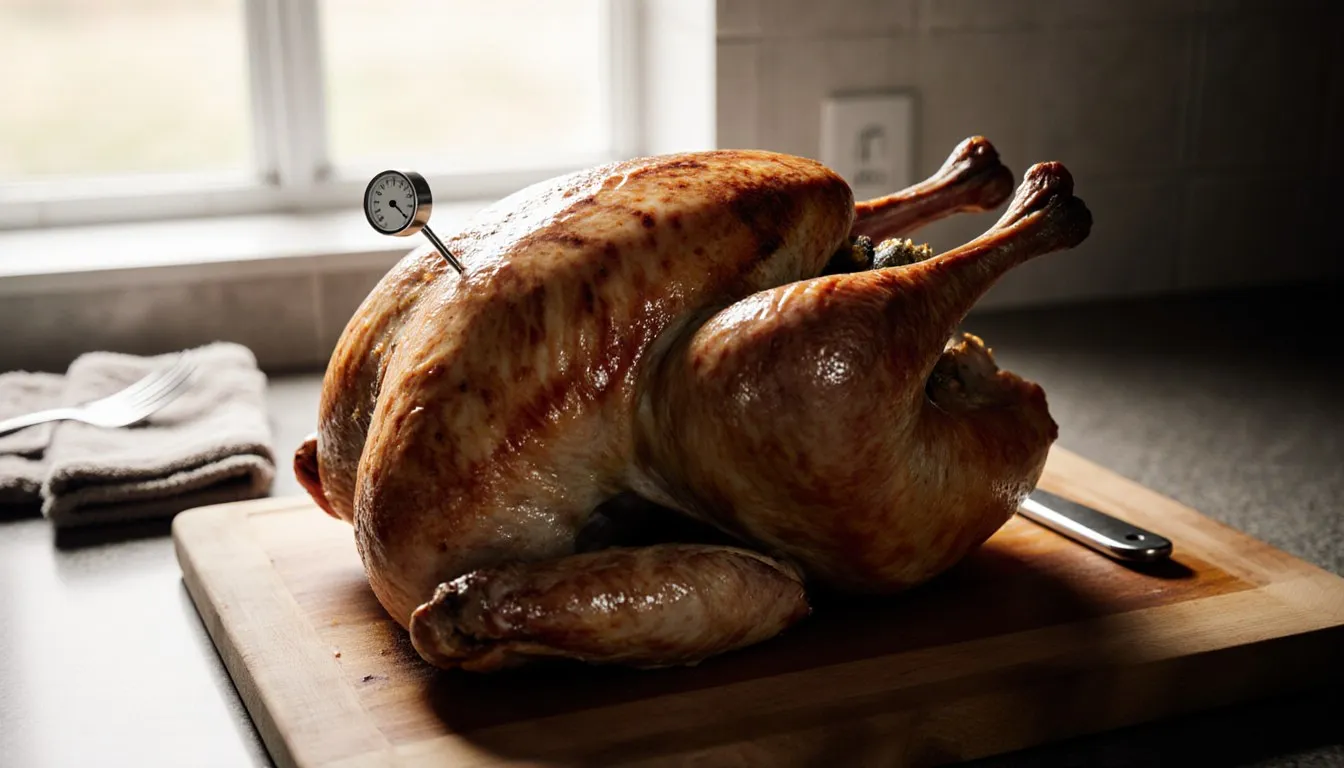
160°F (71°C) all the way through, measured with an instant-read thermometer in the thickest part. That is the USDA safe minimum for ground beef, and it is not the same number as the one for a steak or a roast, for a specific reason: grinding takes whatever bacteria lived on the outside surfaces and distributes it through the whole batch, so the inside needs to reach a safe temperature too.
Color is not a reliable stand-in. Ground beef can turn brown before it is safe and can stay pink after it is, depending on the meat’s age, its pH, and what else is in the mix. Texture is no better a guide than color. Push loose crumbles into a mound and read the center, or check the thickest part of anything shaped or stuffed. Either way, 160°F is the whole answer. Thermometers are cheap and they end the argument.
The rest of the numbers worth keeping in your head:
- Raw ground beef keeps 1 to 2 days in the refrigerator. Cook it or freeze it.
- Cooked ground beef and dishes made from it keep 3 to 4 days refrigerated.
- Thaw in the refrigerator, in cold water changed every 30 minutes, or in the microwave. Never on the counter. Anything thawed in cold water or the microwave gets cooked right away.
- Leftovers get reheated to 165°F (74°C), steaming hot throughout.
Do not brown beef partway, park it, and finish it later. Half-cooked meat sitting at room temperature is the one shortcut in this article I will tell you flat out not to take.
Which ground beef recipes freeze well, and which ones don’t?
Wet dishes freeze well and dry ones do not. Bolognese, chili, picadillo, taco soup, cabbage roll soup, sloppy joe filling, and stuffed cabbage all come back nearly as good as they went in, because the sauce protects the meat from drying out and refreezes around it. Plain seasoned crumbles technically freeze, and they come back with a chalky, reheated-cafeteria quality that no amount of cheese fixes.
Two to three months is the window for best quality on a finished dish. Raw ground beef gets a slightly longer 3 to 4 months. Beef held at 0°F (-18°C) stays safe well beyond either window, but the fat picks up stale, cardboardy off-flavors over time, and ground beef has a lot of surface area for its size. Label the bag with the date, because everyone believes they will remember and nobody does.
Spread the dish in a shallow container so it cools fast, and get it into the refrigerator or freezer within 2 hours of cooking, or within 1 hour if the kitchen is above 90°F (32°C). It does not need to be cold before it goes in. Then freeze it flat in a zip-top bag with the air pressed out. Flat bags stack, thaw faster, and fit in the gaps between the fancy-schmancy containers everyone gets as gifts and never uses.
What breaks in the freezer: cream and sour cream sauces split into something grainy, mashed potato toppings turn watery, and cooked pasta goes soft and swollen. Freeze the sauce alone and cook fresh pasta the night you eat it. Thaw overnight in the refrigerator, reheat gently with a splash of water or broth stirred in to replace what the freezer took, and bring it to a full steam before serving.
Can you swap ground turkey, chicken, or venison into a ground beef recipe?
Yes, one to one by weight, with one adjustment: put back the fat you lost, and expect less browning.
Ground turkey holds up best where the seasoning is loud: tacos, chili, meat sauce, anything with cumin or tomato doing the heavy lifting. Buy 85/15 turkey over 93/7 if the store has it, and do not drain the pan, because that rendered fat is most of what turkey has going for it. Ground chicken carries more water and browns poorly no matter how patient you are, so keep it in saucy dishes. I will not put it in a burger or a meatloaf, where there is no sauce to hide behind and you end up slicing into something pale and spongy. Add a tablespoon or two of olive oil per pound to either bird, and cook until the pan sounds like sizzling rather than simmering, which is the moment the water has finally gone.
Ground poultry also has its own safe temperature: 165°F (74°C), not 160°F. Different bird, different number.
Venison is leaner than any of them and often comes ground with pork or beef fat added, which changes how it behaves in a skillet enough that it deserves its own treatment. If wild game is what is in your freezer, the ground venison recipes coverage gets into the fat ratios and the seasoning that suits it.
Whatever you swap in, taste and adjust salt upward, and lean on tomato paste, soy sauce, mushrooms, or a smashed anchovy to replace the savory weight beef brings for free. Which grind belongs in which dish is a piece of a bigger question, and the guide to types of meat maps out the rest of the territory if you want it.
What do you do with ground beef recipes that came out bland?
Fix it at the table, in this order, tasting between each step. A finished dish rarely needs to be rebuilt.
- Salt first. A big pinch, stirred through, then taste again. Then a second pinch, because the first one almost never gets there on a dish this size.
- Then acid. A splash of red wine vinegar in the chili, a squeeze of lime over the tacos, a spoonful of pickle brine in the sloppy joes. Acid makes food taste seasoned when salt alone has stopped helping.
- Then fat. A pat of butter stirred into a meat sauce off the heat, grated cheese, a spoon of sour cream. Fat carries flavor to the parts of your tongue that notice it.
- Then depth. Tomato paste cooked in the pan until it darkens, Worcestershire, soy sauce, a dab of mustard, a few drops of fish sauce. Any of these adds savory weight in under a minute.
- Then something raw on top. Chopped onion, cilantro, scallion, a handful of parsley. Contrast reads as flavor.
Next time you have the skillet hot, brown two pounds instead of one. The second pound costs you a few extra minutes and one more batch, and it goes into the freezer flat as the head start on next week’s chili or meat sauce, seasoned lightly so you can take it in any direction later.
Tessa Calloway
Staff Writer
Tessa Calloway has spent twenty years cooking dinner on a weeknight clock and testing the shortcuts that survive contact with a real kitchen. She believes the best recipe is the one you can make with what's already in the house, and she has strong opinions about what actually needs to be homemade (less than you think) and what always does (dressing).