Meat Substitutes: Ground, Shredded, or Sliced Is the Whole Question
The best meat substitutes depend on the job the meat was doing. Ratios, technique, and fixes for ground, shredded, and sliced dishes, from a working home cook.
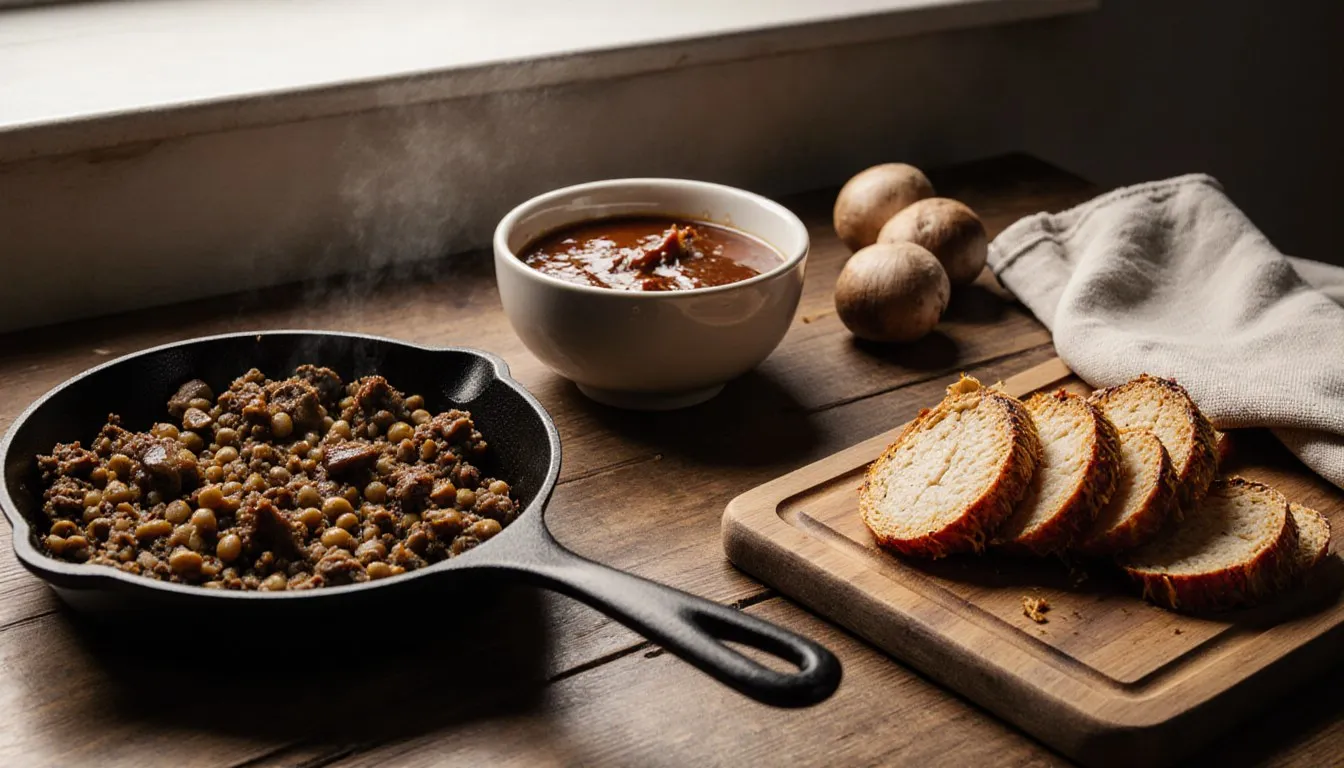
Pick your meat substitute by the job the meat was doing in the dish: thickening a sauce, holding a patty together, taking a hard sear and coming off the pan in one piece. Ground and browned, shredded and saucy, sliced whole: those are three different texture problems, and the substitute that nails one will flop at another. Most of the disappointment I hear about (rubbery, mushy, tastes like wet cardboard) traces back to two things, choosing the wrong category and seasoning a blank protein like it came pre-salted. Below is what each contender is genuinely good at, the ratios that get you there, and the fixes for the failures.
What’s the best meat substitute? It depends on the job the meat was doing
Look at the recipe and ask what the meat contributes. Is it crumbled into a sauce? Simmered until it falls apart? Or is it a whole piece with a browned crust that you cut with a knife? Answer that and the shopping list writes itself.
- Ground and browned (chili, taco filling, bolognese, sloppy joes): rehydrated textured vegetable protein, finely chopped cremini mushrooms, lentils, or a mushroom-and-lentil blend. Swap at roughly equal cooked volume for the meat called for.
- Shredded and saucy (pulled sandwiches, tacos, enchilada filling): young green jackfruit, or seitan shredded with two forks after simmering.
- Sliced whole with a crust (stir-fry, sandwich slices, cutlets, skewers): seitan first, pressed extra-firm tofu second, tempeh third.
- Patties and links (burgers, breakfast sausage, anything that has to hold its shape on a grill): packaged plant-based ground from Beyond or Impossible, or a well-bound bean burger you built for the purpose.
- Background savory depth (the pancetta in a sauce, the bacon in a pot of beans): mushrooms plus a salty, smoky seasoning, which covers the flavor job on its own.
Blends beat any single ingredient in most of those categories. Mushrooms carry the savory depth and lentils or TVP carry the body, so a pound of cremini cooked down to half its volume plus a cup and a half of cooked lentils lands closer to a pound of browned ground beef than either one does on its own. If you want the wider picture of how swaps work across the kitchen, the guide to cooking substitutes covers the general rules.
Mushrooms: the closest thing to meat’s savory backbone
Mushrooms are the best flavor substitute on this list and the weakest structural one. They bring glutamates, which is the savory, tongue-coating quality you miss most when meat leaves a dish, and they brown into something genuinely meaty. What they will not do is give you protein or hold a patty together on their own.
Cremini (baby bella) are the workhorse. Chop them by hand to a coarse, pea-sized crumb instead of running them through a food processor, which turns them to slurry in about four pulses. For a pound of ground beef, start with a pound of cremini and expect to lose roughly half the volume in the pan, so plan on blending them with lentils or TVP rather than replacing the whole pound.
The technique that decides everything: get the pan hot, use enough oil, and crowd nothing. Mushrooms release water first, and if you salt them at the start or pile them three deep, they simmer in that liquid and come out gray and squeaky. Spread them in a single layer, leave them alone until the undersides are properly browned, then stir. Salt after the water has cooked off. My mother’s line was that mushrooms will tell you when they’re ready, and she meant the sound: the hiss goes quiet while they’re steaming, then picks back up and turns to a sizzle when the water’s gone. That’s your cue.
Portobello caps are the exception to the chopping rule. Scrape the gills, marinate the whole cap for 30 minutes in something acidic and salty, and grill or roast it as a burger. It won’t chew like beef, but it slices, holds sauce, and tastes like it belongs on a bun.
Beans and lentils for bulk, chili, and taco filling
Lentils are the cheapest convincing stand-in for ground beef in any dish with sauce. Brown or green lentils hold their shape; red lentils dissolve, which makes them useful for thickening but useless for texture. One cup of dry brown lentils cooks up to about two and a half cups, roughly what a pound of ground beef gives you once browned and drained. Cook them in seasoned broth, not water, and pull them a minute early so they’re firm to the tooth rather than collapsing.
Chickpeas do a different job. Two 15-ounce cans, drained and coarsely smashed or pulsed twice, stand in for a pound of ground meat and give you a chunkier, pull-apart texture that suits curries and stuffed vegetables. Pulse past two and you are making hummus, so stop while whole pieces are still visible. Black beans and pintos swap at that same rate, two drained cans per pound, and both hold their shape instead of crumbling into the sauce: black beans keep their skins intact in a taco filling, while pintos soften at the edges and give up enough starch to thicken a pot of chili. Where all three fail is anything that needed the meat browned and separate, a bolognese or a dry taco crumble, since canned beans hit the pan already wet and will steam before they ever take color.
Where beans fall down is the burger. A patty of beans alone turns to paste in the middle and cracks at the edges, because there’s no protein network holding it. If you want a bean burger that survives a spatula, you need to dry the beans in a low oven for 15 minutes or so, add a binder (egg, or an egg substitute if you’re keeping it vegan), add a starchy component like oats or breadcrumbs, and chill the formed patties for at least half an hour before they see heat. That’s its own recipe with its own steps, and it’s worth treating it that way.
One piece of old advice worth retiring: the kitchen rule that salting beans early keeps them from softening. Cooks who have tested it side by side mostly land the other way now, with salted soaking and cooking water producing better-seasoned beans and thinner, less papery skins. Season from the start. Cooked beans and lentils keep 3 to 4 days in the fridge and freeze well for a couple of months.
Tofu and tempeh: pressing, marinating, and getting a crust
These two get shelved next to each other and they do opposite jobs. Tofu is pressed soybean curd, mild and absorbent, a blank canvas that takes on whatever you put on it. Tempeh is whole soybeans bound into a fermented cake, nutty and firm with a slight bitterness, and it comes with its own flavor whether you wanted one or not.
For anything you want to brown, buy extra-firm or super-firm tofu, never silken. Two 14-ounce blocks, pressed and cubed, cover what a pound of meat was doing in a stir-fry or a skewer, since pressing drives off a fair bit of that weight in water. What you give up is chew: tofu goes crisp on the outside and stays soft in the middle, so it won’t stand in for anything that needed to tear. Press it: wrap the block in a clean towel, set a cutting board and a couple of cans on top, and walk away for 30 minutes. A tofu press does it faster and neater if you cook this often. Then dry the surface again, toss the cubes with a spoonful of cornstarch, and get them into a hot, well-oiled pan without moving them for the first few minutes. That cornstarch layer is what gives you a crisp shell instead of a pale, slightly damp cube.
Freezing changes tofu more than any marinade will. Freeze a pressed block solid, thaw it overnight in the fridge, and press again: the ice crystals leave a sponge-like structure that chews meatier and drinks up sauce. Cooks have passed that trick around for decades, and it’s the one thing that turns tofu skeptics.
Tempeh wants a different move. Steam or simmer the slab for 10 minutes before marinating. That softens the mild bitterness fermentation leaves behind and opens it up to seasoning, which is otherwise slow to penetrate a dense cake. Then slice, marinate, and sear hard. Tempeh crumbles beautifully for taco filling and slices cleanly for sandwiches; one 8-ounce cake covers what a pound of ground meat was doing in a taco filling, and it will not shred, so anything that needed pulled-apart strands is a job for seitan. If tofu is the one you actually can’t get your hands on, the rundown on what makes a workable tofu substitute is a separate conversation from this one.
Seitan: the substitute that actually chews like meat
Seitan is the only item on this list that has real chew, the kind where you tear a piece and it fights back a little. It’s made from vital wheat gluten, essentially wheat flour with the starch washed away, so what’s left is the stretchy protein that gives bread its structure. That structure is exactly why it reads as muscle fiber in the mouth.
A workable starting ratio is one cup of vital wheat gluten to about three quarters of a cup of seasoned liquid, plus whatever dry seasoning you want in the dough itself. Knead it two or three minutes, no more, or it turns tough and rubbery. Rest the dough for 15 minutes so it relaxes, then shape it into a log or cutlets and cook it through: simmer it in well-seasoned broth at a bare quiver, never a rolling boil, for about an hour, or wrap it in foil and steam it for around 45 minutes. Boiling hard is what produces the spongy, brain-textured seitan that gives it a bad name.
Once it’s cooked and cooled, it slices thin for sandwiches, cubes for stir-fry, and shreds with two forks for anything saucy. It also takes a second sear in a hot pan better than any other substitute here. Season it aggressively at the dough stage and again in the simmering broth, because seitan is not shy about tasting like plain wheat if you let it.
The hard limit: seitan is concentrated gluten. It is off the table for anyone with celiac disease or a gluten sensitivity, full stop, and it’s worth saying out loud when you serve it to guests.
Textured vegetable protein (TVP): the pantry staple nobody talks about
TVP is defatted soy flour extruded into dry granules, it costs a fraction of anything else on this list per serving, and it sits in the pantry for months. For crumbled-meat applications it is the cheapest convincing option by a wide margin, and it has been quietly holding up chili and taco night in budget kitchens since long before anyone marketed plant protein as a lifestyle.
Rehydrate it right and it’s good. Use about one cup of hot liquid per cup of dry granules, let it sit 5 to 10 minutes, and squeeze out any excess. The liquid is the whole game: broth, not water. A splash of soy sauce and a spoonful of tomato paste in that soaking liquid does more for the finished dish than anything you add later. Water alone gives you the gritty, styrofoam-adjacent texture people complain about. If your broth situation is thin, the options for beef broth substitutes will get you something with backbone.
After rehydrating, brown it. Get it into a hot oiled pan and let it sit until some of the granules crisp and darken at the edges, which builds the flavor that soaking never will. One cup of dry TVP gives you roughly the volume of a pound of browned ground beef, which makes the math simple when you’re converting a family chili recipe.
Are packaged plant-based meats (Beyond, Impossible) worth it?
They’re worth it for patties, sausages, and anything that has to hold its shape and sizzle, and they’re a poor value everywhere else. Beyond Meat and Impossible Foods engineered their ground products around fat behavior, so they render, brown, and stay juicy on a grill in a way lentils never will. If you’re feeding someone who wants a burger that eats like a burger, buy the package and don’t feel bad about it.
Where they stop making sense is a pot of chili or a tray of enchiladas. Once the crumbles are swimming in sauce and chili powder, the expensive fat structure is doing nothing you can taste, and a blend of mushrooms and lentils costs less and tastes better. Save the packaged stuff for the jobs it was designed for.
Prices swing a lot by region, store, and promotion, so compare per-pound against what you’d have paid for actual ground beef that week rather than trusting any fixed number. Two things that matter more than the sticker: the packaged grounds are raw products, so handle them like raw meat, wash your hands and boards, and cook them to the temperature printed on the package. If the package doesn’t give one, 165°F (74°C) checked with an instant-read thermometer is the conservative call.
Jackfruit and cauliflower for a shredded, pulled texture
Jackfruit is the best mimic for pulled pork or shredded chicken, provided you buy the right can. You want young green jackfruit packed in brine or water, not the ripe fruit in syrup, which is sweet and tastes like bubblegum in a barbecue sandwich. Drain and rinse it, trim off the tough core wedges, and pull the segments apart with your fingers or two forks.
Then treat it like meat you’re braising. Sear the shreds in a hot pan first so they take on some color, then simmer them in barbecue sauce or adobo for 20 to 30 minutes until they’ve drunk the sauce and gone soft and stringy. Two 20-ounce cans make enough filling for about four generous sandwiches. Jackfruit brings texture and almost no flavor of its own, so a smoky element carries it, and if your smoked paprika jar is empty, there are decent smoked paprika substitutes to get you through.
Cauliflower is a different animal, and I’d rather be honest than sell it as a shred. It doesn’t pull into fibers. What it does well is take a batter or a dry rub and roast into browned, craggy, sauce-grabbing florets, which is why buffalo cauliflower works and pulled cauliflower doesn’t. Cut it into thick planks, roast at 425°F (220°C) until the edges are deeply browned, and serve it as what it is. There’s more on where cauliflower stands in for other produce in the piece on vegetable substitutes.
The one mistake that makes every meat substitute taste like nothing
Under-seasoning kills more of these dishes than bad technique does. Meat arrives with its own fat, salt affinity, and browned flavor. Tofu, TVP, seitan, and jackfruit arrive with none of that, so if you season them the way the recipe seasons beef, you land somewhere flat and vaguely beige.
Season heavier, and season in layers:
- Salt at every stage. Salted soaking liquid, salted marinade, salt in the pan, taste and correct at the end. A blank protein absorbs salt without ever tasting salty.
- Add a glutamate source. Soy sauce, miso, tomato paste cooked until it darkens, dried mushroom powder, or a spoonful of nutritional yeast. This is the savory depth meat was supplying.
- Add fat on purpose. Most substitutes are lean, and lean plus dry equals sad. Olive oil, a knob of butter at the end, tahini in a sauce, coconut milk in a curry.
- Finish with acid. A squeeze of lemon or a splash of vinegar at the end of cooking wakes up everything that came before, and it’s the step people skip.
- Brown something. Whatever you’re using, get real color on it in a hot pan before it goes into liquid. No sauce will fake that later.
Taste as you go, and taste at the stage where you can still fix it. Adjusting the seasoning on a pot of chili at minute five is easy; doing it at minute forty means you’re chasing the flavor with fistfuls of salt.
Can you substitute meat 1:1 in any recipe?
In ground and sauced dishes, yes, close to it. Swap by cooked volume rather than raw weight, expect to cut 5 to 10 minutes off the simmer (nothing here needs to break down connective tissue the way a chuck roast does), and correct the seasoning upward. Chili, tacos, sloppy joes, shepherd’s pie, and pasta sauce will all take a straight substitution and taste like themselves.
Braises and stews take more adjustment. The recipe’s three-hour simmer exists to soften collagen, and none of these substitutes have any. Build the braise, cook the vegetables and liquid to where you want them, and add your seitan or jackfruit for the last 20 to 30 minutes so it absorbs the sauce without turning to mush.
Whole cuts are where a straight swap stops working, and it’s fair to just say so. A ribeye, a bone-in chicken thigh, a whole roast: those cook in ways that depend on bone, fat, and muscle structure, and no plant version reproduces them. Cook a different dish rather than a disappointing imitation of that one.
Start where the odds are best. Take a chili or a taco night you already make well and run it once with lentils and mushrooms, seasoned harder than feels right, and see how the table reacts before you commit to a whole week of it. Whatever you land on, most of these keep beautifully: cooked seitan, browned TVP, and cooked lentils all hold 3 to 4 days in the fridge and freeze for a couple of months. Get them into the fridge within two hours of cooking, portion them into flat containers so they chill fast, and one Sunday afternoon at the stove sets you up with several very fast weeknight dinners.
Tessa Calloway
Staff Writer
Tessa Calloway has spent twenty years cooking dinner on a weeknight clock and testing the shortcuts that survive contact with a real kitchen. She believes the best recipe is the one you can make with what's already in the house, and she has strong opinions about what actually needs to be homemade (less than you think) and what always does (dressing).