Butter Substitutes That Actually Work, Sorted by the Job Butter Was Doing
Butter substitutes go wrong when you ignore what butter was doing. Exact ratios for baking, sautéing, and spreading, plus the swaps to skip entirely.
The right butter substitute depends on which of butter’s three jobs you are replacing: building structure and moisture in a bake, carrying heat in a hot pan, or delivering flavor onto a finished plate. Answer that one question and the swap becomes easy. Skip it and you get flat greasy cookies, a scorched pan, and a piece of toast nobody wants.
Butter is three ingredients in a wrapper: fat, water, and milk solids, and a swap chart that gives you one line (“use oil, 1:1″) is only ever replacing the fat. Below, the swaps organized by job, with ratios, what each one changes, and the cases where it will absolutely let you down.
What Job Is the Butter Actually Doing in This Recipe?
Butter is roughly 80 percent milk fat. Most of the rest is water, plus a small fraction of milk solids: the proteins and milk sugars that brown, smell nutty, and taste like butter. That composition is the whole story, and every substitute succeeds or fails on which part of it you managed to replace.
In a bake, all three parts are working. The solid fat coats flour and keeps the crumb tender, holds air when you cream it with sugar, and stays in stubborn little pieces in pastry. The water turns to steam in the oven and pushes layers apart. The milk solids brown the edges.
In a hot pan, only the fat is welcome. The water spits, and the milk solids brown fast and then burn, which is why butter goes from golden to acrid while you are chopping parsley.
On a finished plate, the milk solids are basically the entire point. Nobody spreads butter on toast for its structural properties.
One more thing before the ratios, because American recipes are stubborn about it: 1 stick of butter equals 1/2 cup, 8 tablespoons, 4 ounces, or 113 grams. Every ratio below runs off that unit.
What’s the Best Butter Substitute for Baking?
For most cakes, brownies, quick breads, and muffins, neutral oil is the best substitute, at 3/4 cup oil for every 1 cup of butter. Oil is pure fat, butter is not, so matching volume one for one gives you a greasy bake. If the recipe seems prone to dryness, add a tablespoon or two of milk or water to stand in for the water butter would have brought.
What changes: the crumb gets softer and stays soft longer, because oil is liquid at room temperature and butter is not. Day-two oil cake is noticeably better than day-two butter cake. What you lose is browning and that dairy flavor, so a plain vanilla cake tastes flatter, while a chocolate or spice cake will not miss it at all.
Where oil fails: anything that starts with “cream the butter and sugar.” The creaming method works because a solid fat traps air bubbles around sugar crystals, and liquid oil has nothing to trap air with. Oil also flattens cookies. If your recipe melts the butter first, oil is a safe swap. If it calls for softened butter, it is not.
Stick-style vegan butter is the closest true one-to-one for baking, replacing butter cup for cup, stick for stick. It creams, it holds shape in a chilled dough, and it browns, though usually paler than dairy butter. Where it fails: reach for the sticks and only the sticks, because tub spreads carry too much water and air and will spread your cookies into one lacy sheet. Water content varies brand to brand even among sticks, so if a dough feels slack, chill it 30 minutes before it goes in the oven. And keep these out of a screaming-hot skillet; they scorch like butter does, without butter’s payoff.
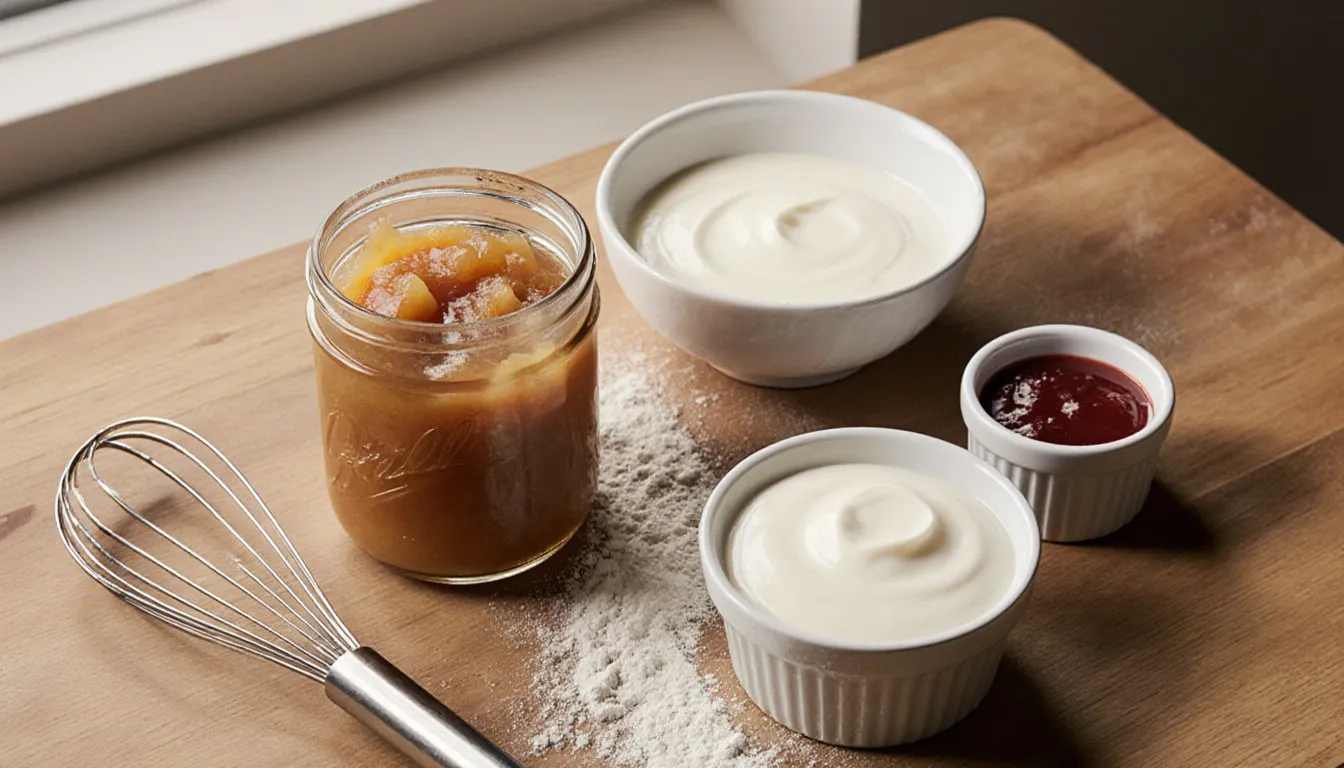
Applesauce is the swap people misuse most. Replace up to half the butter with unsweetened applesauce by volume, so 1/2 cup butter becomes 1/4 cup butter plus 1/4 cup applesauce. Home bakers have relied on it for generations in muffins, banana bread, and spice cake, where its moisture and faint apple sweetness disappear into the batter. Expect a denser, softer, more cake-like crumb and much less browning. Replace all the fat and you get something rubbery and pale that tastes like a fruit leather with ambitions.
Applesauce is wrong, full stop, for shortbread, pie dough, croissants, or anything whose appeal is crispness. There is no fat there to shorten the gluten, so it goes tough. (Applesauce also has its own long history as a stand-in for eggs, which is a different job entirely and follows different rules.) If you are rebuilding a recipe on several fronts at once, the broader guide to baking substitutions covers how the swaps interact.
What Can You Use Instead of Butter for Sautéing and Frying?
Use a neutral, refined oil (canola, grapeseed, sunflower, refined peanut) at 1 tablespoon of oil per 1 tablespoon of butter, or ghee at a straight 1:1 if you want the butter flavor back. The reason is the milk solids. Butter starts browning around 250°F to 300°F (120°C to 150°C) and smoking not far past that, which is fine for eggs over low heat and a disaster for searing a pork chop. Neutral refined oils sit comfortably in the 400s Fahrenheit, and ghee, which is butter with the water cooked off and the milk solids strained out, holds past 450°F (230°C).
My mother called burnt butter “letting it get away from you,” and she was right about the timing: it happens in the ten seconds you spend looking for a spatula. If a recipe wants butter flavor at high heat, ghee is the answer and always has been. It is the everyday cooking fat across much of South Asia for exactly this reason, and it keeps at room temperature in a sealed jar because the water is gone.
A neutral oil cooks the food exactly the same way. What it costs you is flavor: you lose the nutty edge that butter gives to mushrooms, scallops, and scrambled eggs. The standard restaurant fix is to cook in oil and finish with a knob of butter off the heat, which gets you the sear and the flavor. If you are avoiding butter entirely, a splash of good olive oil at the end does a version of the same thing with a different accent.
Where the swap fails: a beurre blanc, a beurre monté, or any pan sauce whose body comes from whisking cold butter into liquid. That thickening is butter’s emulsion doing work no oil can copy. Oil in that pan gives you a slick, broken, sad-looking sauce.
What’s a Good Dairy-Free or Vegan Butter Substitute?
Stick-style vegan butter is the best dairy-free butter substitute for baking, swapped 1:1 by volume or weight. Refined coconut oil is the runner-up, also 1:1, and the better choice when you want a fat that is genuinely solid at cool room temperature.
The stick versus tub distinction matters more than the brand. Stick products (the Earth Balance style baking sticks and the newer plant butters) are formulated to sit near butter’s fat percentage, so they cream, they chill firm, and they behave predictably in a cookie dough. Tub spreads carry more water and more whipped-in air, and they will wreck a cookie: the dough spreads thin, the edges go lacy, and the whole tray runs together. Save the tub for toast.
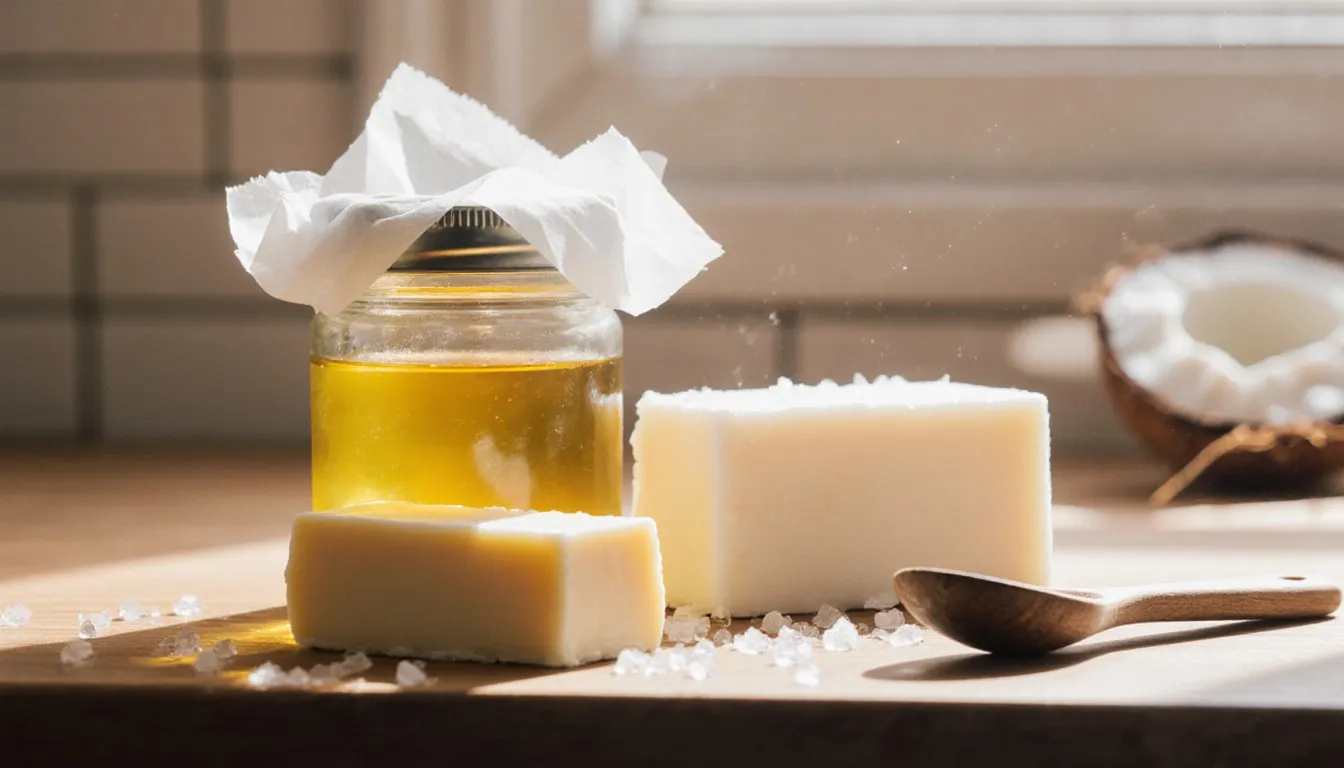
Coconut oil is solid below roughly 76°F (24°C) and liquid above it, which makes it a legitimate solid fat in a cool kitchen and a puddle in an August one. It also contains no water, so bakes come out slightly shorter and crisper, which is welcome in shortbread and less welcome in cake. Refined coconut oil is neutral. Virgin or unrefined tastes distinctly of coconut, so use it where that reads as a feature, like a chocolate bake or anything with lime or ginger already in it.
Two practical warnings. Coconut oil melts and re-solidifies over a narrow range, so pastry made with it wants to be worked fast and cold, and buttercream made with it can turn greasy or split as the bowl warms. And check the label on vegan sticks if you are cooking for anyone with allergies, since most are built on soy, coconut, or nut oils. If you are rebuilding a whole recipe dairy-free and not just the butter, the guide to dairy substitutes covers the milk, cream, and cheese side of it too.
Can You Just Use Oil Instead of Butter?
Yes for cooking, usually yes for melted-butter bakes, and no for anything that depends on butter being solid. That last category is where people get hurt.
Pie dough and biscuits are flaky because cold butter stays in flat pieces through the mixing, then steams in the oven and blows the layers apart. Oil coats the flour evenly instead, so you get a crust that is tender in a crumbly, sandy way and not remotely flaky. Laminated doughs (croissants, puff pastry, rough puff) need a fat you can roll into sheets, and oil cannot be rolled into anything.
American buttercream is the other hard no. It is a foam of solid fat holding sugar and air at room temperature. Substitute oil and you get sweet soup. Vegan baking sticks work here; oil does not, ever.
Between those poles sits a big middle ground where oil is fine and often better: brownies, snacking cakes, muffins, boxed mixes, banana bread. If you want the fuller breakdown of which oils behave how, the guide to oil substitutes gets into the differences between them.
What Replaces Butter for Spreading or Finishing a Dish?
Here you are only chasing flavor and mouthfeel, so pick by taste rather than by ratio. Good olive oil on warm bread, with flaky salt, is the oldest answer there is and still one of the best. Tub-style vegan spread does the toast job convincingly. Nut butters (almond, peanut, cashew) bring fat and richness but also their own strong flavor, so they work on toast and quick breads and not on a dinner roll next to roast chicken. Mashed avocado with lemon and salt covers the same territory with a fresher edge.
For vegetables, a spoonful of olive oil and a squeeze of lemon over hot green beans does what a pat of butter did. Ghee is the closest thing in pure flavor terms, since it is butter’s toasted milk-solid character concentrated, and it melts beautifully over rice, corn, or a baked potato.
For pan sauces, if you cannot finish with butter, whisk in a spoonful of cream, a spoonful of coconut cream, or a piece of chilled vegan butter off the heat. None of them thicken quite as reliably. Be honest with yourself about the fancy-schmancy restaurant sauces: they are butter sauces, and a substitute makes a good sauce rather than that sauce.
Butter Substitute Ratios at a Glance
Worth printing and taping inside a cabinet door, because nobody remembers 3/4 cup at the moment they need it.
| Substitute | Ratio vs. butter | Best job | Worst job |
|---|---|---|---|
| Neutral oil (canola, grapeseed, sunflower) | 3/4 cup per 1 cup butter in baking; 1:1 in a pan | Melted-butter cakes, brownies, sautéing | Creamed doughs, pie crust, buttercream |
| Stick vegan butter | 1:1 | Almost any bake, including creamed doughs | Very high-heat searing |
| Ghee | 1:1 | High-heat cooking, finishing, flavor | Bakes needing butter’s water for steam |
| Coconut oil (refined) | 1:1 | Dairy-free cookies, shortbread, quick breads | Warm-kitchen pastry, buttercream |
| Unsweetened applesauce | 1:1 for up to half the butter | Muffins, banana bread, spice cake | Anything crisp, flaky, or creamed |
| Olive oil | 3/4 cup per 1 cup in baking; 1:1 in a pan | Savory cooking, finishing, rustic cakes | Delicate vanilla bakes, frosting |
| Tub-style spread | 1:1, spreading only | Toast | Any baking at all |
| Nut butters | By taste | Spreading on toast and quick breads | Any structural role in a recipe |
Does the Substitute Change If the Butter Is Salted or Unsalted?
Yes, and it is the easiest correction on this page. Salted butter carries somewhere in the neighborhood of 1/4 teaspoon of salt per stick, though brands genuinely differ, some noticeably saltier than others. Nearly every substitute you reach for (neutral oil, coconut oil, applesauce, ghee) is unsalted.
So when a recipe calls for salted butter and you swap in an unsalted fat, add about 1/4 teaspoon of salt per 1/2 cup of butter replaced, and taste where tasting is possible. Going the other direction, if you are subbing a salted vegan stick into a recipe written for unsalted butter, cut roughly the same amount from the salt the recipe lists. Most vegan sticks come salted, so read the box.
This matters more in baking than anywhere else, because you cannot taste and adjust a cookie dough’s seasoning after it bakes, and under-salted sweets taste vaguely flat in a way people struggle to name. In a pan you have all the room in the world: salt at the end and fix it by tasting. If you are working through swaps across a whole recipe at once, the wider guide to cooking substitutes is the place where all of this connects up.
Store your replacements the way they want to be stored and they will be ready when you need them. Oils belong in a dark cupboard away from the stove, not on the counter beside it, where heat and light turn them stale fast. Vegan sticks freeze well for months and thaw on the counter in about an hour. Ghee keeps at cool room temperature in a sealed jar and gets scooped with a clean dry spoon every time, no exceptions.
And the swap worth trying next: brown a batch of ghee gently until it smells toasty and nutty, then use it in your next batch of chocolate chip cookies in place of melted butter. Cool it back to soft before you cream or stir it in, or the sugar will just dissolve.
Tessa Calloway
Staff Writer
Tessa Calloway has spent twenty years cooking dinner on a weeknight clock and testing the shortcuts that survive contact with a real kitchen. She believes the best recipe is the one you can make with what's already in the house, and she has strong opinions about what actually needs to be homemade (less than you think) and what always does (dressing).