The Shelf-Life Rules Tessa Keeps in Her Head Instead of on the Fridge
How long does food last, by category: the 3-4 day leftover rule, real freezer windows, pantry staples, and what those printed dates actually mean.
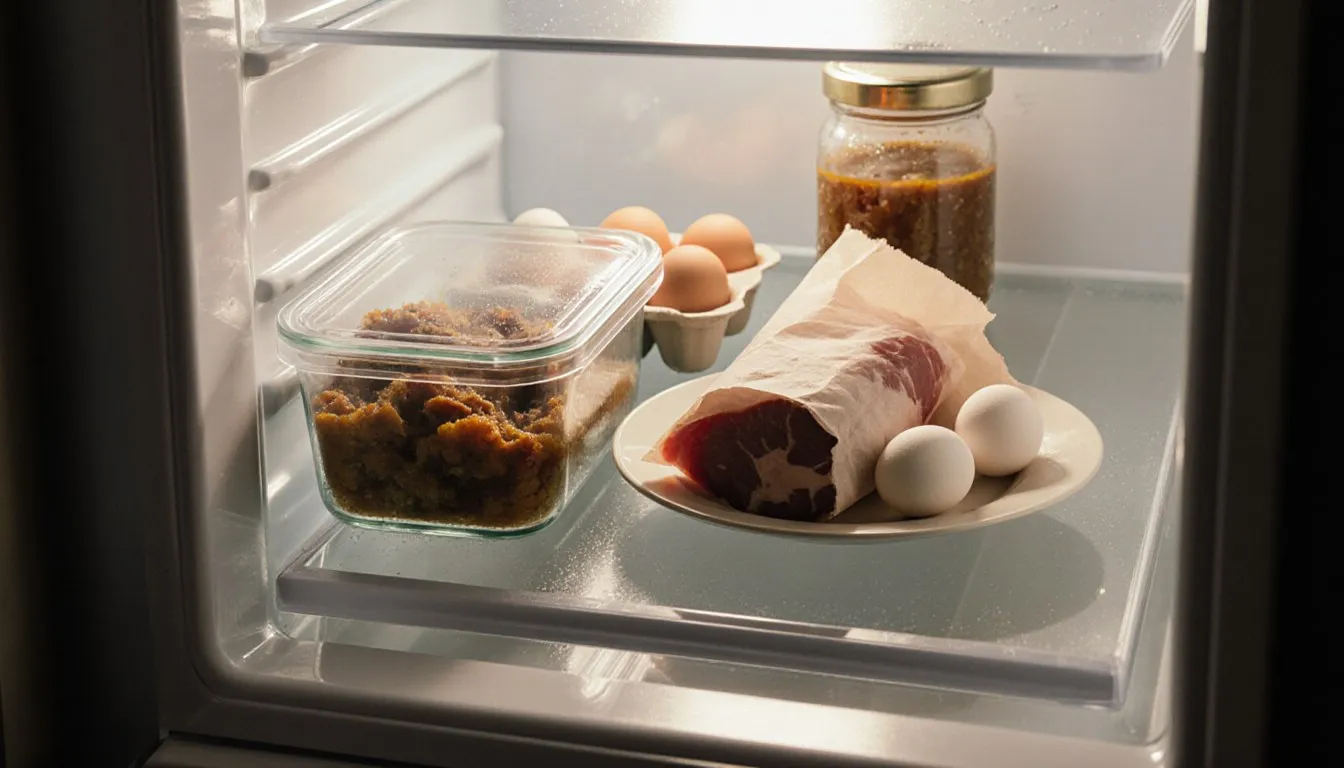
Cooked leftovers get three to four days in the fridge, and that one is not negotiable. Everything else on the shelf-life question is looser than people think: most freezer food stays perfectly safe indefinitely at 0°F while slowly getting worse to eat, and pantry staples run anywhere from a few months to several years depending on how much fat and moisture they carry. Learn those three category rules and you can answer the “is this still good?” question for about ninety percent of your kitchen without looking anything up.
“Will this taste bad?” and “will this make me sick?” are separate problems with separate answers, and the printed date on the package answers neither one reliably. Sort them apart and you stop throwing out perfectly good yogurt while also stopping the habit of sniffing week-old chicken and hoping.
How long does food last?
Cooked leftovers keep three to four days in the fridge, frozen food stays safe indefinitely at 0°F, and pantry staples run anywhere from a few months to several years. Those three lines are how I actually run my own kitchen.
- Fridge: cooked leftovers, three to four days. Raw ground meat and poultry, one to two days. Most everything else in there, a week or so, with dairy and eggs running longer.
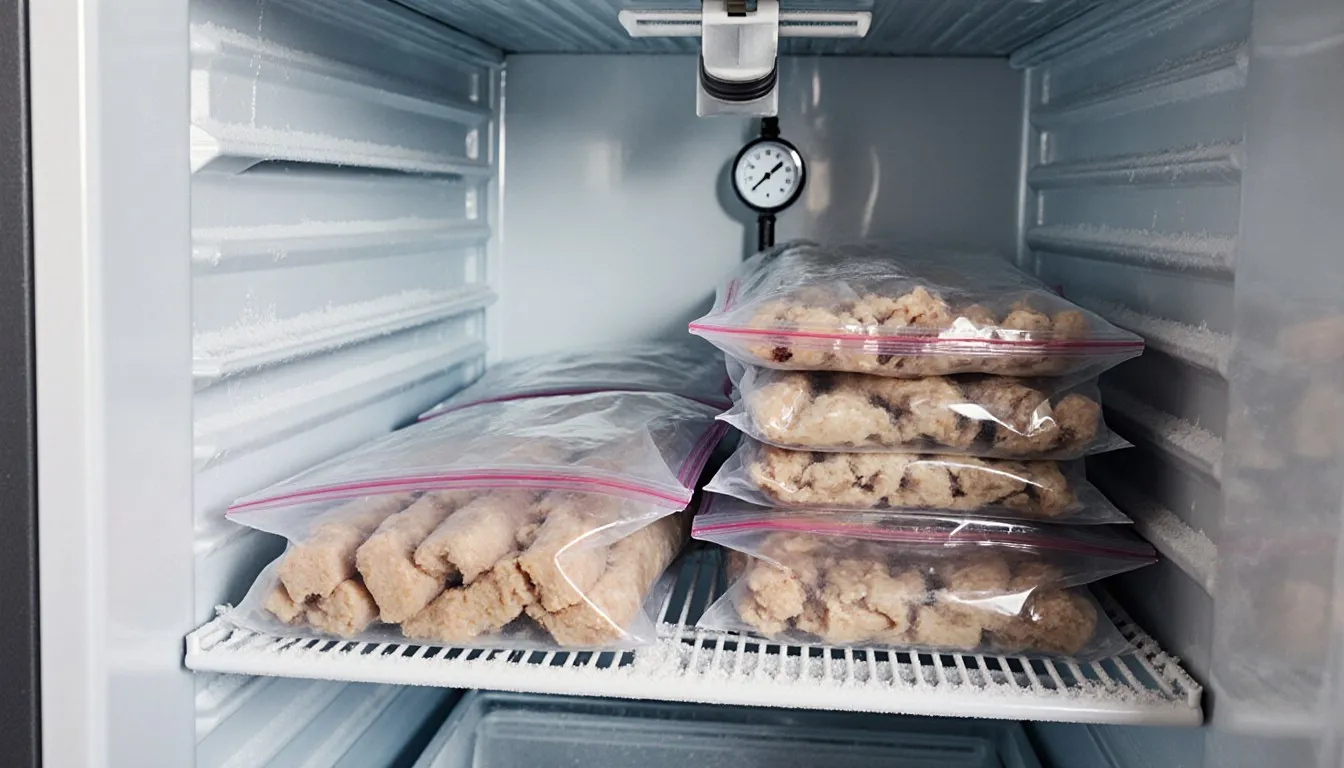
- Freezer: safe forever at 0°F, good to eat for months. Lean things like chicken breast hold quality longest; fatty things like sausage and bacon fade fastest.
- Pantry: months to years, driven by fat content and how well the package seals out air.
Notice that only one of those has a hard stop. The three-to-four day leftover window exists because refrigeration slows bacterial growth without stopping it, and cooking killed the bugs in your food but did nothing about the ones that landed on it afterward. The freezer and pantry numbers are quality windows. They tell you when a chicken breast starts tasting like the freezer and when the crackers go soft in the box, and neither of those is a safety question at all.
My mother used to say that a full freezer is money in the bank, which held up fine right until the day she pulled out a brisket that had been hiding behind the ice cream since roughly the first Bush administration. Perfectly safe to eat, and it tasted like the inside of a freezer, grey around the edges and dry the whole way through. Money in the bank at zero percent interest.
What do “best by,” “use by,” and “sell by” mean?
They are quality dates set by the manufacturer, not federal safety cutoffs. In the United States, infant formula is the one product with a federally regulated date on it. Everything else, that number is a company’s own estimate of when their product stops tasting the way they want it to taste, and there is no national law standardizing what any of the phrases mean.
Which is why the three phrases sound so different and mean so little:
- Sell by: a stocking instruction for the store. It tells the grocery clerk when to rotate the shelf. You are supposed to buy it before that date and then keep it at home for a while.
- Best by / best if used by: peak quality, per the manufacturer. Flavor, texture, color. Not a spoilage prediction.
- Use by: the manufacturer’s last-day-of-peak-quality call. Same category as the others everywhere except infant formula, where it is a real cutoff and you should honor it.
So the honest answer to how long food is good after the expiration date is: it depends entirely on what the food is, and the date barely enters into it. Unopened dry pasta a year past its number is fine. Vacuum-sealed chicken thighs that hit their sell-by date three days ago and have been in a fridge running warm are a different conversation, and the date is still not the reason.
What matters more than the printed number is what happened to the package after you brought it home. Temperature history beats calendar every time. A carton of milk that spent forty minutes in a hot car on the drive back is on a shorter clock than the date suggests, and no label can know that.
How long does food last in the fridge?
First, the number that makes every other number in this section work: your fridge needs to hold at 40°F or below. If it is drifting warmer, every window below shrinks and you will never know why things keep going off early. A cheap appliance thermometer sitting on the middle shelf is the single best five-dollar upgrade in a kitchen, and I mean that sincerely. Most refrigerator dials are numbered one through five and tell you exactly nothing.
The range between 40°F and 140°F is where bacteria multiply fastest, which is the reason for both the fridge threshold and the rule about not leaving cooked food out on the counter for hours while you watch one more episode.
Cooked leftovers
Three to four days, refrigerated, and start counting from when the food went into the fridge, not from when you finally remembered to label it. Get leftovers cooled and put away inside two hours (one hour once the kitchen tops 90°F, which mine is every August). Shallow containers cool faster than one deep tub, so a big pot of chili goes into two or three flat containers rather than sitting on the stove releasing heat until midnight.
If day four rolls around and you have not touched it, freeze it rather than gamble on day five. Reheating does not reset anything, and if you want the full picture on getting yesterday’s dinner back to something worth eating, how to reheat leftovers covers the technique.
Dairy and eggs
Milk generally holds about a week past its sell-by date if it has stayed cold, and it will tell you loudly when it turns. Store it on a shelf, not in the door, where the temperature swings every time somebody goes hunting for a snack. Hard cheeses last weeks; soft cheeses and fresh mozzarella run much shorter. Yogurt and sour cream typically outlive their printed dates by a good stretch, and the watery liquid on top is whey separating out, not spoilage. Stir it back in.
Eggs in the shell keep three to five weeks in the fridge, which surprises people who have been tossing them at the carton date. Refrigerated hard-boiled eggs, peeled or not, get one week.
Raw meat, poultry, and seafood
The tighter windows in the whole fridge live here. Raw ground meat, raw poultry, and most fresh fish and shellfish: one to two days. Raw steaks, chops, and roasts hold longer, three to five days. That difference is about surface area. Grinding meat takes whatever was on the outside and distributes it throughout, which is also why burgers need to be cooked to a higher internal temperature than a steak does.
If you are not cooking it within that window, freeze it the day you bring it home. Not the day before it goes off. The freezer preserves the condition food is in when it arrives, so meat frozen on day one comes out better than meat frozen on day two, every time.
Condiments and opened jars
The forgiving shelf. Ketchup, mustard, soy sauce, hot sauce, vinegar-based things generally: months, because acid and salt are doing preservation work. Mayonnaise and anything with dairy or egg in it, shorter. Opened jarred pasta sauce, about five days to a week. Fresh pesto and hummus, shorter still.
The rule I use for a jar with no obvious answer: how acidic is it, and did anything get into it? A jar you have been double-dipping a used knife into is on a shorter clock than one you have been careful with. Crumbs and food particles introduced into a jar give bacteria and mold somewhere to start.
How long does food last in the freezer?
Food held constantly at 0°F stays safe indefinitely. At that temperature bacterial growth stops entirely, so a chicken breast from 2019 will not make you sick. It just might not be worth eating, and the wrapping it came home in will have a lot to do with which way that goes.
What the freezer does not stop is the slow degradation of quality. Moisture keeps migrating out of the food and refreezing as ice crystals on the surface, which is freezer burn, those grey-white leathery patches. Fat keeps oxidizing, which is why the fatty stuff goes off-flavor first. Both processes keep running at 0°F for as long as the food sits there, which is why a year-old package of sausage comes out tasting faintly like crayons.
Practical quality windows, keeping in mind that these are ranges rather than deadlines and good wrapping stretches every one of them:
- Lean raw poultry and lean cuts: the longest holds in a home freezer, often close to a year with solid packaging.
- Raw beef and pork roasts and chops: several months to most of a year, depending on fat.
- Ground meat and sausage: a few months. More surface, more fat, faster decline.
- Bacon and cured pork: the shortest of the meats. Salt and fat together speed up rancidity.
- Cooked leftovers and casseroles: a few months before texture starts to suffer.
- Fatty fish like salmon and mackerel: shorter than lean white fish, for the same fat reason.
Two things wreck freezer food faster than time does. The first is air, so wrap tightly, press the air out, and use containers sized to what is going in them. The second is temperature swings, which is what happens in a self-defrosting freezer that cycles, and what happens every time someone stands with the door open deciding. How to freeze food gets into the wrapping and packing technique properly if that is where your losses are coming from.
Label everything with the date. A pound of ground beef is recognizable through the bag, but the day it went in is gone from your memory by the following week, and a chest freezer full of unlabeled foil bricks is how good food dies of old age.
How long do pantry staples last?
Pantry shelf life comes down to two things: how much fat the item contains and how well its packaging keeps out air, light, and moisture. Fat goes rancid. Moisture invites mold and insects. A staple that is low-fat, bone-dry, and sealed will outlast almost anything else in your kitchen.
That is why white rice keeps for years and brown rice does not. The bran layer on brown rice carries oil, and that oil eventually turns. Same logic explains why all-purpose flour outlasts whole wheat flour, and why whole nuts in the freezer stay sweet while nuts in a warm cabinet turn sharp and crayon-like within months.
- White rice, dried pasta, sugar, salt: years, kept dry and sealed. Salt and sugar are essentially indefinite.
- All-purpose flour: many months at room temperature. Whole grain flours, considerably shorter. Both keep longer in the freezer, which is where I put anything I bake with occasionally rather than weekly.
- Cooking oils: months once opened. Store away from the stove and out of sunlight, no matter how nice the bottle looks next to the burners.
- Canned goods: years for low-acid cans like beans, corn, and soup. High-acid cans, tomatoes, citrus, pineapple, run shorter because the acid works on the can lining over time.
- Dried herbs and ground spices: safe more or less forever, but they lose potency within a year or two of grinding. Whole spices hold much longer than ground.
The canned-goods exception worth knowing cold: throw out any can that is bulging, leaking, badly rusted at the seam, or that spurts or smells wrong when you open it. Do not taste it to check. Do not “just cook it longer.” That is the botulism line, and it is the one place in your pantry where a mistake can put you in a hospital bed. Home-canned food carries its own set of rules, and canning and preserves for beginners is where those get laid out properly.
Spices are where most people are hoarding disappointment. If your ground cumin does not smell like cumin the second you open it, it is not seasoning anything, and no amount of adding more will fix it. Buy the small jar. I know the big one is better value on paper; it is not better value in a jar you will still be finishing in 2029.
How can you tell when food has gone bad?
Your nose is better calibrated than the calendar, and it is the first tool to use on anything ambiguous. Spoilage bacteria produce compounds we are evolutionarily well equipped to find revolting, which is a useful system with one important limitation I will get to.
What to check, in order:
- Smell: sour where it should be neutral, sharp and ammonia-like on seafood, sweetish and off on cooked meat. Trust the first impression, not the third sniff. By the third you have talked yourself into it.
- Texture: slime is the clearest tell there is. Slippery, tacky film on deli meat, cooked chicken, or raw poultry means done. Same for cheese that has gone unpleasantly sticky rather than simply firm.
- Color: less reliable than people think. Beef turning brownish in the middle of the package is oxygen exposure, not spoilage. Green or fuzzy is a different story.
- Mold: a fuzzy spot on a hard cheese can be cut away with a generous margin, an inch or so, knife not touching the mold on the way back out. On soft cheese, bread, yogurt, jam, cooked food, or anything with high moisture, the whole thing goes. Mold in soft food has threads running well beyond what you can see.
Now the limitation, and it is the reason none of this replaces the fridge windows above. The bacteria that make food smell bad and the bacteria that make people sick are frequently not the same organisms. Food carrying enough pathogens to cause real trouble can look, smell, and taste completely normal. This is exactly why the three-to-four day leftover rule is a rule instead of a suggestion, and why “it smells fine” is not a defense for week-old rice.
So the senses are for catching food that has gone off early, not for extending a window that has already closed. When both signals conflict, the calendar wins on the higher-risk categories below and your nose wins on a slightly elderly bunch of parsley.
Two hard tosses, no inspection required: anything perishable that sat in the temperature danger zone for more than two hours, and any food you are actively uncertain about that falls in the high-risk group. A container of soup is worth less than an evening spent regretting it.
Which foods have the shortest safe window?
Some categories run on a tighter clock than the general fridge rules, and these are the six I have gone ahead and memorized, because the margin for error is thin enough that I do not want to be doing arithmetic at six on a Tuesday with the pan already hot.
- Raw poultry: one to two days refrigerated. Keep it on the bottom shelf in a dish or on a plate so nothing drips onto produce below it.
- Fresh seafood: one to two days, and shellfish shorter still. Fish tells you fast. A good fillet smells like cold seawater, almost like cut cucumber, and when that turns sharp and ammoniac you are done. I have never regretted a fillet I threw out. I have absolutely regretted one I cooked anyway.
- Deli meat and hot dogs: three to five days once the package is open. Deli meat is sliced, handled, and eaten without further cooking, which is a combination that leaves no step to fix a problem.
- Cut melon and cut leafy greens: whatever is sitting on the rind rides the knife straight into the flesh, and cantaloupe flesh is about as hospitable as a laboratory dish. Refrigerate immediately after cutting, keep it cold, and eat it within a few days. I have watched a melon cut on Sunday get set out again on Thursday at more than one family gathering, and that is the bowl I quietly walk to the bin.
- Cooked rice and cooked pasta: three to four days like other leftovers, but cool them fast. Uncooked rice can carry spores that survive cooking and multiply in grain left at room temperature, so a pot of rice left out overnight goes in the bin regardless of how it smells.
- Fresh sprouts: the shortest of the lot. Buy them cold, use them within a couple of days, and if the tub is sitting out on a market table in July, keep walking. Sprouts are grown warm and damp, which is precisely the setup bacteria are hoping for.
What ties this list together is straightforward once you see it. Every one of these either lands on the plate without a final blast of heat to fix a problem, or has been cut, ground, or sliced in a way that carries the outside to the inside. A whole roast gets seared all over and its middle was sterile to start with. Ground beef, cut cantaloupe, and sliced turkey never had that protection, so the storage rules have to do the work instead.
Four or five things in the kitchen get the short leash so everything else can get the long one. Sprouts, seafood, and cut melon are on the short list. A sealed brick of parmesan and a jar of mustard are not.
What else should you know about food shelf life?
Does freezing reset the shelf-life clock?
No. The freezer pauses whatever time has already been spent. Leftovers that spent three days in the fridge go into the freezer with three days already spent, and when you thaw them in the fridge you have got roughly a day left, not four. Same principle with raw chicken: whatever quality and freshness it had going in is what comes back out.
Thawing matters too. Thaw in the refrigerator, in cold water changed every half hour, or in the microwave if you are cooking it right away. Thawing on the counter puts the outside of the food in the danger zone for hours while the middle is still solid, and food thawed in the fridge can be refrozen safely, though it will lose a little quality on the second trip.
Is food automatically unsafe after the date on the package?
No, and for shelf-stable and frozen food the date is close to irrelevant. Dry pasta, canned beans, unopened vinegar, and frozen vegetables are all fine well past their printed numbers as long as the packaging is intact and storage was reasonable. Crackers go soft, frozen peas pick up freezer flavor, and canned beans get mushier by the year, all of it gradual and none of it tied to the number stamped on the package.
Refrigerated perishables deserve more respect, and even there the printed date is one input among several. What determines whether that yogurt is good is whether it stayed at or below 40°F, whether the seal held, and whether it smells right. Infant formula stays the exception: honor the use-by date on that, full stop.
Can you just cook the bacteria out of questionable food?
No, and this is the misconception worth killing. Cooking kills bacteria, but some bacteria leave behind heat-stable toxins that survive any temperature your stove reaches. Food that has already been badly mishandled cannot be rescued with heat. If it should not be eaten, boiling it does not change the answer.
A roll of masking tape and a marker in the kitchen drawer beats memorizing any of these numbers. Date every container of leftovers on its way into the fridge or freezer, write it big enough to read through frost, and the guessing ends, because the honest reason most of us throw out good food is that we have no idea when it went in. Tape costs about two dollars a roll and outlasts a whole lot of chili.
Tessa Calloway
Staff Writer
Tessa Calloway has spent twenty years cooking dinner on a weeknight clock and testing the shortcuts that survive contact with a real kitchen. She believes the best recipe is the one you can make with what's already in the house, and she has strong opinions about what actually needs to be homemade (less than you think) and what always does (dressing).