Quick Bread Recipes: One Method, No Yeast, Under an Hour
Quick bread recipes skip yeast entirely. Get the master ratio, the overmixing rule, and five loaves worth keeping in rotation, sweet and savory.
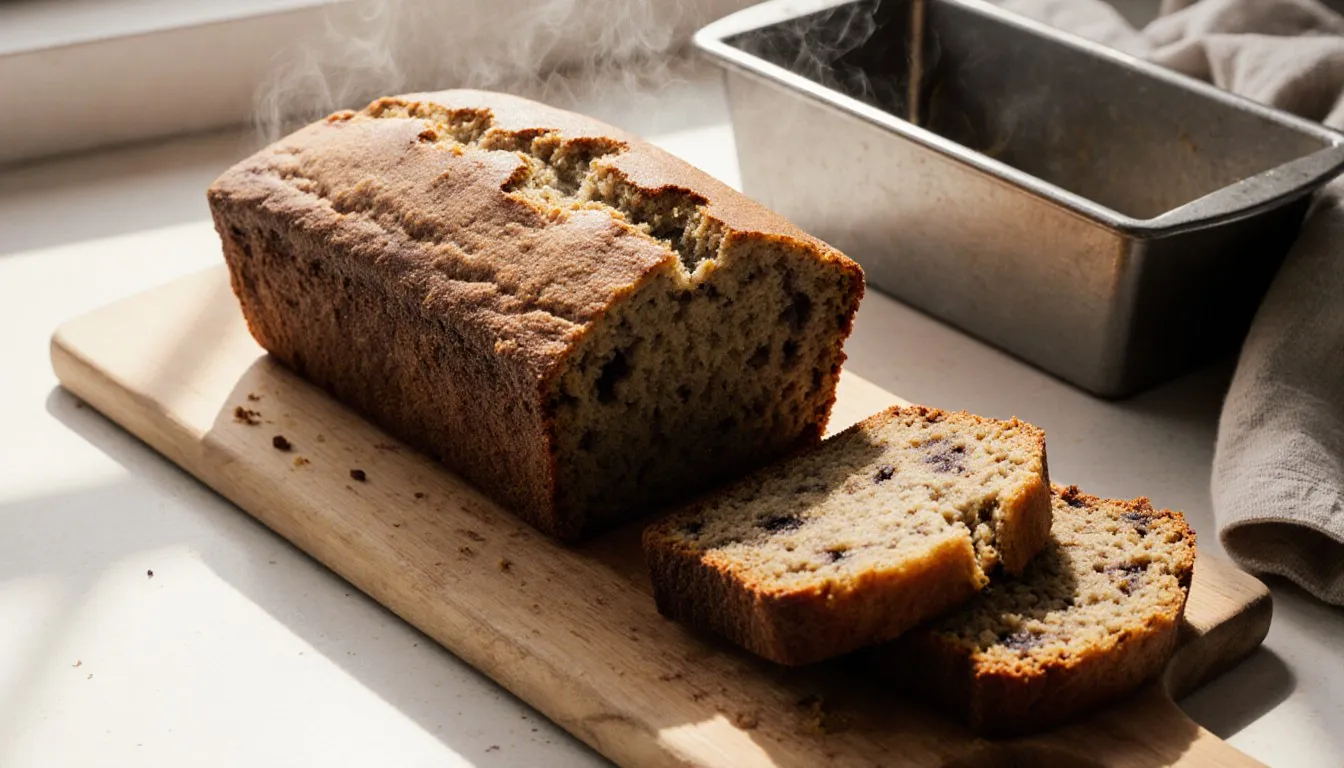
Quick bread is bread you can start at 6:15 and slice at 7:30, because nothing in it has to rise on its own schedule. No yeast, no proofing, no punching down, no covering a bowl with a towel and hoping your kitchen is warm enough. You stir baking powder or baking soda into flour, add wet ingredients, fold until it just barely comes together, and put it in the oven. That’s the whole trick, and once you have the ratio in your head you can make a loaf out of whatever the fruit bowl and the cheese drawer are offering.
Below: the master formula I actually use, why the chemical leaveners work in minutes when yeast needs hours, the one mistake that ruins every version of this, and five loaves worth keeping in permanent rotation.
What actually makes a bread “quick”?
The leavening. Yeast is alive, and living things take their time. It eats sugars in the dough and burps out carbon dioxide over an hour or two, which is what gives yeast bread its stretchy, chewy, open crumb and that faintly beery smell in the kitchen. Baking powder and baking soda start throwing off gas the second they hit moisture, and they’re spent by the time the loaf comes out. An hour of waiting buys you nothing with either one, which is why the batter goes straight from the bowl to a hot oven.
That difference in the leavener changes everything downstream. Yeast bread is a dough you knead to build structure. Quick bread is a batter you barely touch, closer to cake in handling and closer to bread in how you eat it. The crumb is tighter and more tender, the crust is soft, and it slices best after it’s cooled rather than hot out of the oven.
It also means quick bread forgives a lot that yeast bread doesn’t. Your kitchen temperature doesn’t matter. You cannot kill your leavener by letting the batter sit too cold, though you can waste it by letting the batter sit too long. There’s no window where the dough is over-proofed and slumping. If you’ve been circling the whole business of how to make bread and stalling out at the proofing step, this is the escape hatch, and it’s a legitimate one. Nobody eating your cornbread is going to ask whether you developed the gluten properly.
The broad family tree of loaves, flatbreads, and enriched doughs is a bigger conversation, and the full rundown on types of bread covers where each branch sits. What matters here is that quick breads are their own branch with their own rules, and the rules are short.
The one ratio that covers almost every quick bread
Here’s the skeleton I keep in my head, and it has never once let me down:
- 2 cups flour (all-purpose, spooned into the cup and leveled, not scooped)
- 1 cup liquid (milk, buttermilk, yogurt thinned with milk, or fruit puree counted as part of it)
- 1/3 to 1/2 cup fat (melted butter, neutral oil, or bacon drippings if we’re going savory)
- 2 teaspoons baking powder per 2 cups of flour, or 1 teaspoon baking soda if your liquid is acidic
- 1 to 2 eggs
- 1 teaspoon salt for savory, 3/4 teaspoon for sweet
- Sugar: 0 to 1 cup, and that range is the entire difference between a dinner loaf and a coffee loaf
Sweet versions live at the top of the sugar range and the top of the fat range, and they usually want a mashed fruit or vegetable doing part of the liquid’s job. Savory versions drop the sugar to a tablespoon or none at all, and take on a cup or so of add-ins: shredded cheese, chopped scallions, herbs, crumbled bacon, roasted corn.
Two things to watch when you improvise. First, wet add-ins count as liquid. Two mashed bananas or a cup of shredded zucchini are mostly water, so pull back the milk accordingly or you’ll get a gummy center that never sets. Second, more than about a cup and a half of chunky add-ins in a 9x5 loaf pan and the batter can’t hold them up. They sink, and you get a stripe of cheese welded to the bottom of the pan.
Bake it in a 9x5 loaf pan, greased and, if you want to be smart about it, lined with a parchment sling so you can lift the loaf out. A cast iron skillet works beautifully for cornbread and Irish soda bread. Muffin tins work for all of it, with a shorter bake.
Overmix it and you get a tough, tunneled loaf
Flour plus liquid plus stirring equals gluten, the protein network that makes bread chewy. In yeast bread you want that; you knead for ten minutes specifically to build it. In quick bread it’s the enemy, because a batter you’ve beaten smooth bakes up tough, rubbery, and full of long tunnels where the gluten strands trapped gas in the wrong shape.
So: dry ingredients whisked together in one bowl, wet ingredients whisked together in another, then combine with a spatula and about twelve to fifteen strokes. Stop while it still looks wrong. Streaks of dry flour the size of a pea are fine, lumps are fine, a batter that looks like something you’d be embarrassed to serve is exactly right. It smooths out in the oven.
My mother used to say you should be able to count the strokes on two hands, and she was closer to correct than most cookbooks. If you’re using a stand mixer for this, you’ve already lost. Use a spatula or a wooden spoon so you can feel when it’s had enough. That same restraint, by the way, is the whole secret to a tender quiche crust, which is why pastry people and quick bread people tend to have the same gentle hands.
Once the liquid hits the leavener, the clock starts. Get the batter into the pan and into a preheated oven within a few minutes. A bowl of quick bread batter left sitting on the counter for half an hour while you deal with something else will bake up noticeably flatter, because a good part of the lift has already fizzed away into the air.
Baking powder or baking soda: which one and why
Baking soda is a pure base, and it needs an acid somewhere in the recipe to react with. Leave that acid out and you can taste it: a soapy, faintly metallic tang at the back of the bite, usually alongside a crust that browned darker and oranger than it should have. That’s unreacted soda sitting in the crumb with nothing to do. Baking powder is baking soda with a powdered acid already blended in, plus cornstarch to keep it dry, so it works in a batter with no acidic ingredient at all.
The practical version: look at your liquid. If the recipe calls for buttermilk, yogurt, sour cream, molasses, brown sugar in quantity, cocoa (natural, not Dutch-processed), or a lot of very ripe banana, there’s acid in there and baking soda will fire. If your liquid is plain milk or water, you need baking powder.
Most modern baking powder is double-acting, which means it releases a first round of gas when it gets wet and a second, bigger round when it hits oven heat. That second stage is your insurance policy, and it’s why a slightly slow cook still gets a decent rise. Single-acting powder is rare on grocery shelves now, but if you find some, understand that it’s all spent in the bowl and you need to move fast.
A few working notes:
- Baking soda is roughly three to four times as strong as baking powder by volume. Do not swap them one for one, ever, in either direction.
- Plenty of recipes call for both. The soda neutralizes the acid in the buttermilk and browns the crust; the powder supplies the rest of the lift.
- Baking powder goes stale. Drop a half teaspoon in hot water; if it doesn’t fizz enthusiastically, it’s done, and no amount of good technique will save a loaf leavened with dead powder. Buy the small can.
- Baking soda lasts nearly forever in a sealed container, which is why the open box in your fridge absorbing odors is not the one you should bake with.
Five quick breads worth keeping in rotation
These are the five I make on repeat, and each one has a single thing that determines whether it’s good or merely fine.
Banana bread
The bananas have to be genuinely ugly. Black-speckled, soft, slumping in the bowl, the ones your family has stopped pretending they’re going to eat. Underripe bananas are starchy and bland and no amount of sugar fixes it. Three large ones mashed, roughly a cup and a quarter of puree, gives you the moisture and the flavor at once, so cut the milk back to a splash. Baking soda rather than powder here, because ripe banana and brown sugar bring plenty of acid. Melted butter over oil if you care about the flavor; oil if you care about it staying moist on day three.
Cornbread
Preheat the fat in the pan. Put a cast iron skillet with a few tablespoons of butter or bacon drippings into the oven while it comes up to temperature, and pour the batter into the hot fat when you’re ready. That sizzle is what gives you the crackling, deeply browned bottom crust that separates real cornbread from cornbread-shaped cake. Buttermilk and baking soda, a ratio somewhere around one part flour to one part medium-grind cornmeal, and how much sugar you add is a regional argument I have no interest in refereeing. My house uses a tablespoon. Yours can do what it likes.
Savory cheddar and herb loaf
Toss the cheese in a spoonful of the measured flour before it goes into the batter. That thin flour coating keeps the shreds suspended instead of sliding to the bottom of the pan. A cup and a half of sharp cheddar, a few tablespoons of chopped chives or scallions, a teaspoon of black pepper, and no sugar at all. This is the loaf that makes a pot of soup feel like an actual dinner, and it goes from bowl to table in about fifty minutes. Add a handful of cheese on top for the last ten minutes of baking if you want a browned, craggy lid.
Irish soda-style loaf
The lightest hand of the bunch. Traditional soda bread is flour, buttermilk, baking soda, and salt, brought together into a shaggy round on the counter with maybe eight or ten quick turns, then scored with a deep cross and baked. Handle it like you’re annoyed with it and want it gone. That deep cross lets heat into the middle of a dense round so it cooks through, and the tradition of cutting it goes back a long way in Irish kitchens. Raisins and caraway are a common addition on this side of the Atlantic and a departure from the plain original, which is fine, just know what you’re making. And if the griddle side of soda bread appeals to you, english crumpets sit right at the edge of this family, yeasted but soda-boosted, cooked in rings on the stovetop.
Spiced pumpkin or zucchini loaf
Squeeze the zucchini. A cup of shredded zucchini holds a startling amount of water, and if you dump it in wet you’ll get a loaf that’s set on the outside and pudding in the middle. Wring it in a clean dish towel first. Canned pumpkin puree needs no such treatment but does count fully as liquid, so cut the milk to a quarter cup or so. Both versions want a serious hand with the spice: a full teaspoon and a half of cinnamon, plus nutmeg, ginger, and a pinch of cloves. Timid spicing is why so many pumpkin loaves taste like vaguely orange bread.
How do you know a quick bread is done?
Start checking a 9x5 loaf at 45 minutes and expect it to want somewhere between 50 and 65 minutes at 350°F (175°C). That spread is wide because ovens are: 25°F between what the dial says and what the box actually does is common, and a dark pan runs faster than a light one. A skillet cornbread is much faster, usually 20 to 25 minutes at 400°F (205°C), and muffins faster still.
The toothpick test still works, with one refinement: a wooden skewer or toothpick into the center should come out with a few dry crumbs clinging to it, not wet batter and not perfectly clean. Perfectly clean means you’ve gone a few minutes past ideal. Wet streaks mean give it another eight minutes and check again.
The other cues, which I trust more than the clock:
- The top has cracked open down the center. That split is normal and expected in a loaf, and it means the crust set before the inside finished rising.
- The edges have pulled slightly away from the pan sides.
- The top springs back when you press it instead of holding a dent.
- The smell changes. Raw batter smells like nothing much; a finished loaf smells like toasted flour and butter, and you’ll notice it from the next room.
If you want certainty, an instant-read thermometer into the center should read around 200°F (93°C) for a standard loaf. And here’s the part nobody wants to hear: let it cool in the pan for ten minutes, then turn it out onto a rack and leave it alone for at least another half hour. A hot quick bread is still setting, and slicing into it early gives you a gummy, compressed slice and a loaf that dries out faster afterward. I know. I’ve done it anyway plenty of times.
Can you make quick bread ahead or freeze it?
Yes to both. A loaf wrapped and frozen the day it’s baked comes back out tasting the way it did on day one, which is more than most baked goods will do for you.
On the counter, a fully cooled sweet loaf wrapped tightly in plastic or foil holds well for two to three days, and honestly banana bread is better on day two once the flavor settles. Savory loaves with cheese, eggs, meat, or vegetables in them go into the refrigerator as soon as they’re fully cooled, wrapped or in a covered container, and they’ll keep about three to four days there. Two hours at room temperature is the hard limit for any quick bread with a perishable filling: cheese, eggs, meat, cooked vegetables, anything of that kind. Past two hours on the counter, refrigerate it or let it go. This applies to the cooling window too, so plan on the loaf being out of the pan and into the fridge inside that stretch.
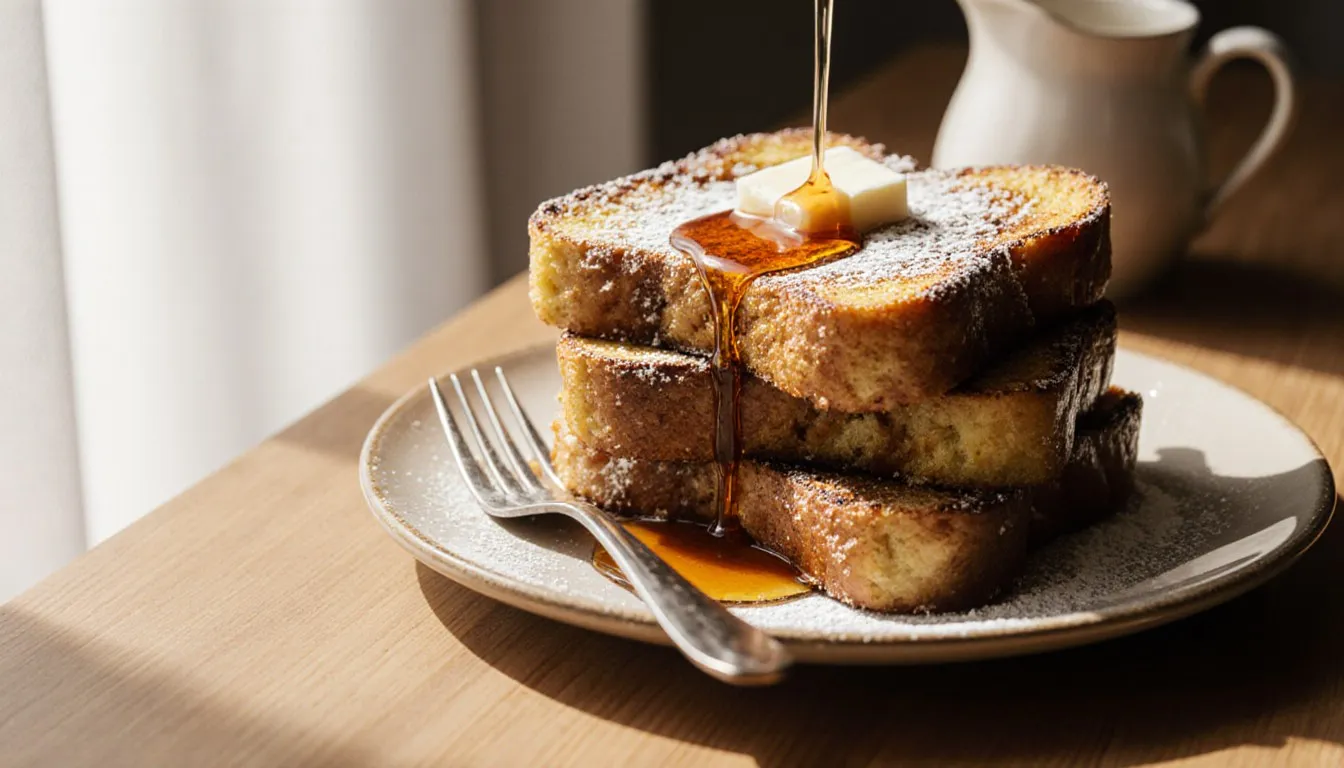
The fridge is fine for savory loaves and a slight downgrade for sweet ones, since cold speeds up staling. Wrap well and warm a slice before you eat it. A sweet loaf a day past its best is also prime bread for french toast, and if the fridge is truly bare, you can even pull off french toast without milk.
For the freezer, cool the loaf completely, and I mean completely. Any residual warmth turns into ice crystals. Then wrap it tightly in plastic wrap, then again in foil or a freezer bag with the air pressed out. Whole loaves keep their quality for about three months; past that they’re still safe, just increasingly dull and freezer-flavored. Freezing in slices with a scrap of parchment between them is the move if you’re a one-slice-at-a-time household, because you can pull exactly what you want and toast it straight from frozen.
Thaw a plain sweet loaf still wrapped, at room temperature for a few hours, so the condensation lands on the wrapper instead of the crust. A savory loaf with cheese, bacon, or eggs in it thaws wrapped in the refrigerator overnight, same as any other perishable. Twenty minutes in a 300°F (150°C) oven afterward brings the crust back to life. You can also freeze the dry ingredients premixed in a labeled bag, which turns a weeknight loaf into a two-minute job: dump, add wet, fold, bake.
What’s the difference between quick bread and a muffin?
The pan, mostly, and a bit of the ratio. Muffins are the same dry-wet-fold method in a different shape, usually with slightly more fat and sugar to survive the higher heat and shorter bake, and often a hotter oven to force the domed top. Anything in this article bakes into muffins at around 400°F (205°C) for 18 to 22 minutes, and the same overmixing rule applies with even less mercy, since tunnels show up more obviously in a small round. If muffins are more your speed, oatmeal muffins are a good place to start on that side of the family.
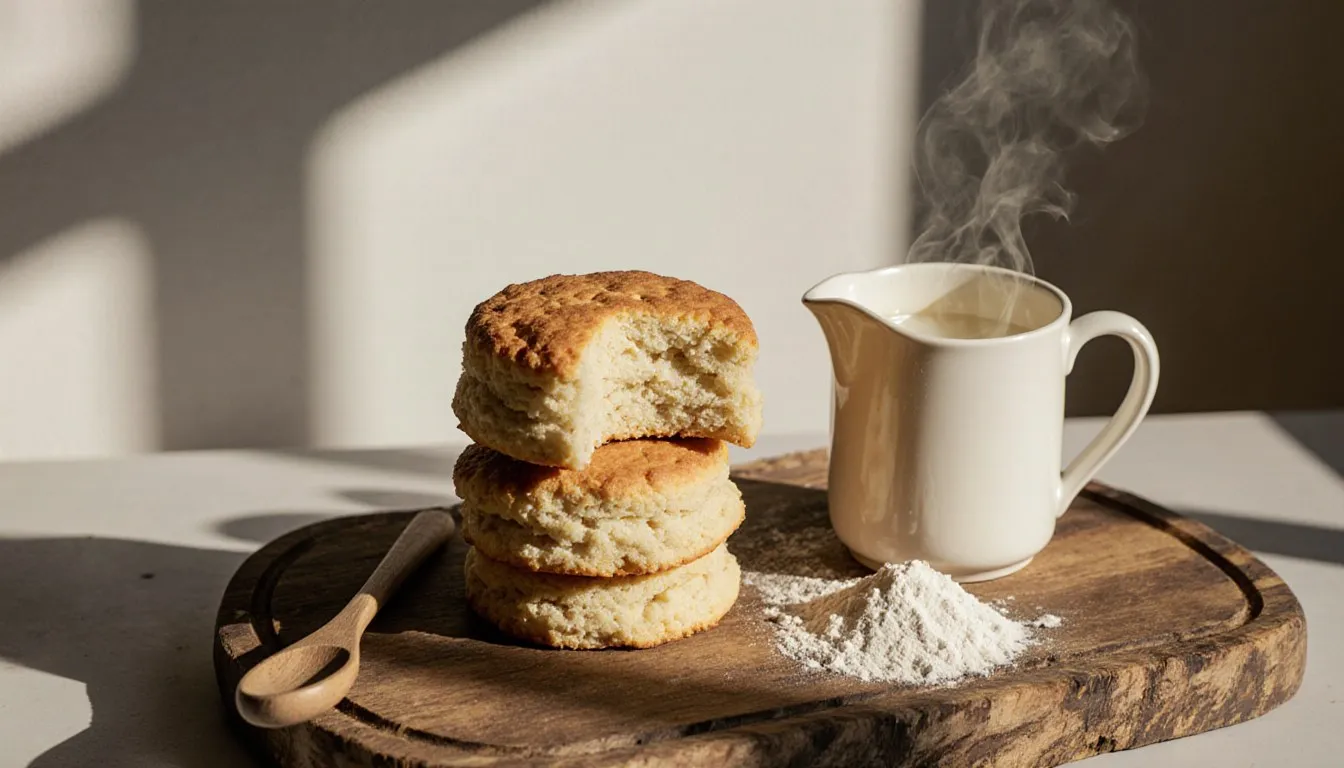
Biscuits and scones are a different animal again. Those use cold, solid fat cut into the flour to make flaky layers, rather than melted fat stirred into a batter. Keep the butter cold enough that you can still see pea-sized flecks of it when the dough comes together, and stop handling it there.
Start with the cheddar loaf this week. Mix it while the soup’s on, and by the time the soup’s ready so is the bread. That’s the whole appeal of this category: you get bread on the table without ever having negotiated with a yeast packet. Easy peasy, as I’m reliably informed I’m too old to keep saying.
Tessa Calloway
Staff Writer
Tessa Calloway has spent twenty years cooking dinner on a weeknight clock and testing the shortcuts that survive contact with a real kitchen. She believes the best recipe is the one you can make with what's already in the house, and she has strong opinions about what actually needs to be homemade (less than you think) and what always does (dressing).