Cooking With Herbs and Spices: What Goes In Early, What Goes In Last
Cooking with herbs and spices is mostly timing: what goes in early, what goes in last, the 1:3 fresh-to-dried ratio, and how to bloom spices right.
Dump every herb and spice into the pot at the same moment and dinner comes out flat and faintly grassy, no matter how good the jars were. Hardy herbs and ground spices belong early, where fat and heat have time to pull the flavor out. Tender herbs belong at the end, off the heat, where they stay bright green and taste like themselves. That one piece of timing rescues more weeknight dinners than any ingredient you’re missing from the store.
Below, the timing rules worth memorizing, the fresh-to-dried ratios that hold up, and the storage habits that keep a jar tasting like something. Learn the pattern once and a recipe’s seasoning line turns into a suggestion you can argue with.
What’s the difference between an herb and a spice?
Herbs are the leafy, tender green parts of a plant. Spices are the harder pieces: bark, root, seed, dried fruit, and the occasional flower bud. Cinnamon is bark, ginger is a rhizome, cumin and coriander are seeds, peppercorns and allspice are dried berries, cloves are flower buds that never opened. Basil, parsley, thyme, and cilantro are leaves.
Plenty of plants give you both. Dill leaf is an herb and dill seed is a spice, and they taste like cousins rather than twins. Coriander seed has a warm, almost citrusy roundness that has nothing obvious to do with the cilantro leaves growing above it, which is why swapping one for the other never works. Fennel gives you feathery fronds for finishing fish and hard little seeds for sausage.
That botanical split sounds like trivia until you watch it play out on the stove. The flavor in a soft leaf lives in volatile oils sitting right at the surface, and volatile means exactly what it sounds like: heat drives it off. Twenty minutes of simmering turns fresh basil into wet green confetti with most of its perfume gone up the range hood. Spice flavor is locked inside dense, dry material, and it needs grinding, heat, fat, or time to get out. Same reason spices go further: a teaspoon of ground cloves will take over a pot that could absorb a full cup of chopped parsley without blinking.
Bay leaf is the odd one out, a leaf that behaves like a spice. It’s leathery, it releases slowly, and it wants a long simmer to give up its faintly tea-like, resinous background note. It also stays whole and comes out before the food hits the table. I have fished a bay leaf out of a pot of soup with a slotted spoon more times than I can count, and it’s worth the trouble, because nobody wants to bite into one.
One more line to draw, since older herb lists tend to blur it: this is a cooking conversation, start to finish. Herbs sold for their medicinal or therapeutic reputation are a separate subject and a question for a doctor, not for a recipe. What follows is about flavor.
When should you add herbs and spices while cooking?
Early for anything hardy or dried, late for anything tender and fresh. Ground spices and dried herbs need time in fat and liquid to open up and stop tasting dusty. Fresh basil, cilantro, parsley, dill, mint, chives, and tarragon need to be protected from heat, not subjected to it.
Think of a pot as having three seasoning windows.
The base, in the first few minutes. Onions, garlic, ginger, and chiles soften in fat, then ground spices go in and swim in that fat for half a minute. This is also where dried herbs belong. Dried oregano and thyme are essentially spices in behavior: they’re desiccated, concentrated, and they need liquid plus time to rehydrate and taste like anything. Sprinkling dried oregano over a finished bowl of soup gets you the texture of lawn clippings and about a tenth of the flavor.
The simmer. Whole spices, bay leaves, rosemary and thyme sprigs, a strip of orange peel, a cinnamon stick. Anything tough enough to survive an hour goes in with the liquid and gives up flavor slowly. If you’d rather not chase stems around the pot later, tie them into a bundle with kitchen twine and lift the whole thing out at the end. That bundle is a bouquet garni, and it saves you fishing woody stems out of a finished pot.
The finish, off the heat. Tender herbs, a fresh crack of black pepper, lemon zest or juice, a splash of vinegar, a drizzle of good oil. This window is where most home cooks leave flavor on the table. A braise that tasted heavy and one-note at the forty-minute mark often needs nothing but a fistful of chopped parsley and a squeeze of lemon to wake all the way up.
Dry heat plays by different rules. Dried herbs scattered on a hot grill or a roasting pan can scorch and go acrid before the food is done, so bind them with oil first or bury them in a rub where they’re protected. Rubs get a further wrinkle, since sugar in the mix will darken long before the meat is cooked, so keep the sugar low for anything sitting over direct heat, or move the meat further from the fire and give it more time. For sugar-to-spice ratios that survive a long cook, see dry rub for ribs.
Here’s how the common culinary herbs sort themselves out. Hardy means it can take heat from the start; tender means it goes in at the end.
| Herb | Hardy or tender | When it goes in | Natural partners |
|---|---|---|---|
| Basil | Tender | Off the heat, torn not chopped | Tomato, olive oil, mozzarella, summer squash, peaches |
| Bay leaf | Hardy | Early, whole; remove before serving | Braises, beans, stock, tomato sauce, rice |
| Chervil | Tender | At the very end | Eggs, delicate fish, spring peas, cream sauces |
| Chives | Tender | Raw, at the table | Potatoes, eggs, sour cream, cucumber |
| Cilantro | Tender | Off the heat | Lime, chiles, cumin, black beans, shellfish |
| Curry leaves | Hardy | Fried in hot fat at the start | Mustard seed, lentils, coconut, South Indian tempering |
| Dill | Tender | Last minute | Salmon, cucumber, yogurt, potatoes, pickles |
| Fennel fronds | Tender | Last minute | Fish, pork, oranges, white beans |
| Lemongrass | Hardy | Bruised, early, in the simmer | Coconut milk, ginger, chiles, shrimp |
| Marjoram | Tender side | Near the end | Eggs, mushrooms, sausage, carrots |
| Mint | Tender | Raw or off the heat | Lamb, peas, yogurt, watermelon, tea |
| Oregano | Hardy | Early; one of the few better dried | Tomato, chile, lamb, oil-based dressings |
| Parsley | Tender | At the end, by the fistful | Garlic, lemon, grains, almost anything savory |
| Rosemary | Hardy | Early, whole sprig; pull it out | Potatoes, chicken, lamb, white beans, focaccia |
| Sage | Hardy | Early, or fried crisp in butter | Pork, brown butter, winter squash, stuffing |
| Savory | Hardy | Early | Beans, lentils, sausage |
| Sorrel | Tender | Off the heat; it melts to a purée | Eggs, fish, potato soup |
| Tarragon | Tender | Near the end | Chicken, eggs, mustard, vinegar, cream |
| Thyme | Hardy | Early | Stock, mushrooms, roast chicken, tomatoes |
How do you convert fresh herbs to dried (and back)?
The working ratio is one to three: one teaspoon of dried herbs stands in for one tablespoon of chopped fresh. Drying strips out the water and leaves the aromatic compounds behind in a much smaller package, so the same volume carries roughly three times the punch. Going the other direction, a recipe calling for a teaspoon of dried thyme wants about a tablespoon of fresh leaves.
Treat that as a starting point rather than a law. A jar of oregano opened last spring has faded, and you may need half again as much. Freshly dried oregano from a friend’s garden can be shockingly strong. Measure, stir, wait a few minutes, taste, adjust.
The bigger question is whether the swap is worth making at all. Some herbs dry beautifully because their flavor lives in sturdy compounds that survive water loss: oregano, thyme, rosemary, sage, marjoram, savory, and bay all keep their character, and dried Mediterranean oregano is arguably the better ingredient for a long-simmered tomato sauce. Others collapse. Dried basil tastes like hay with a memory of basil. Dried parsley and dried cilantro are mostly green dust. Dried chives and dried dill hold onto a whisper and no more.
So the honest rule runs like this. If the dish simmers and the herb is hardy, dried works and you’ll never miss the fresh. If the herb goes in raw or at the last second, and especially if it’s one of the collapsers, skip the swap and change your plan instead. Nobody has ever made a decent pesto, tabbouleh, salsa, or chimichurri out of dried leaves, and I’d rather you use a different herb entirely than try. Out of fresh basil for a caprese? Mint or torn arugula gets you a good salad. Dried basil gets you a sad one.
For tender herbs, the freezer beats the spice rack. Chop parsley, cilantro, or dill, pack it into an ice cube tray with a spoonful of olive oil or water, freeze, then bag the cubes. It won’t garnish anything, since it thaws limp, but stirred into soup, rice, or a pan sauce it holds far more of the original flavor than the dried version. Ginger takes to this treatment too, which is why frozen ginger puree has become a standard shortcut in a lot of kitchens.
Whole-to-ground conversions work differently, and this is where I’d rather you not do the math. Grinding changes the volume unpredictably depending on the spice and how fine you take it, so grind first and measure after. Cumin makes the case: whole seeds toasted and ground fresh are so much louder than the pre-ground jar that a straight one-to-one substitution can flatten or overwhelm a dish depending on which direction you’re going. If you want the full comparison, it’s laid out in cumin seeds vs ground cumin.
Should you toast or bloom spices before using them?
Yes, and it costs you under a minute. Ground spices dropped into hot fat for thirty seconds taste rounder, warmer, and noticeably less dusty than the same spices stirred into liquid later. Whole spices toasted dry in a skillet before grinding go somewhere else entirely.
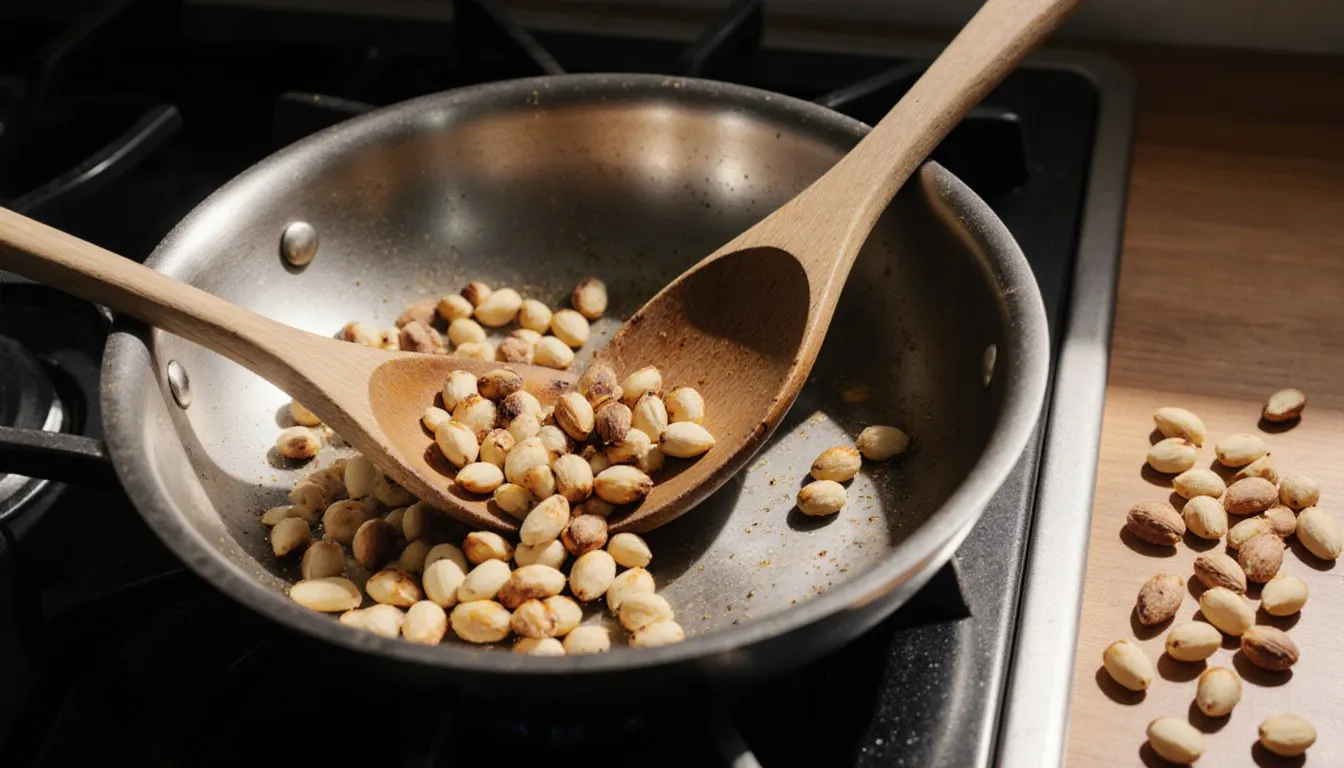
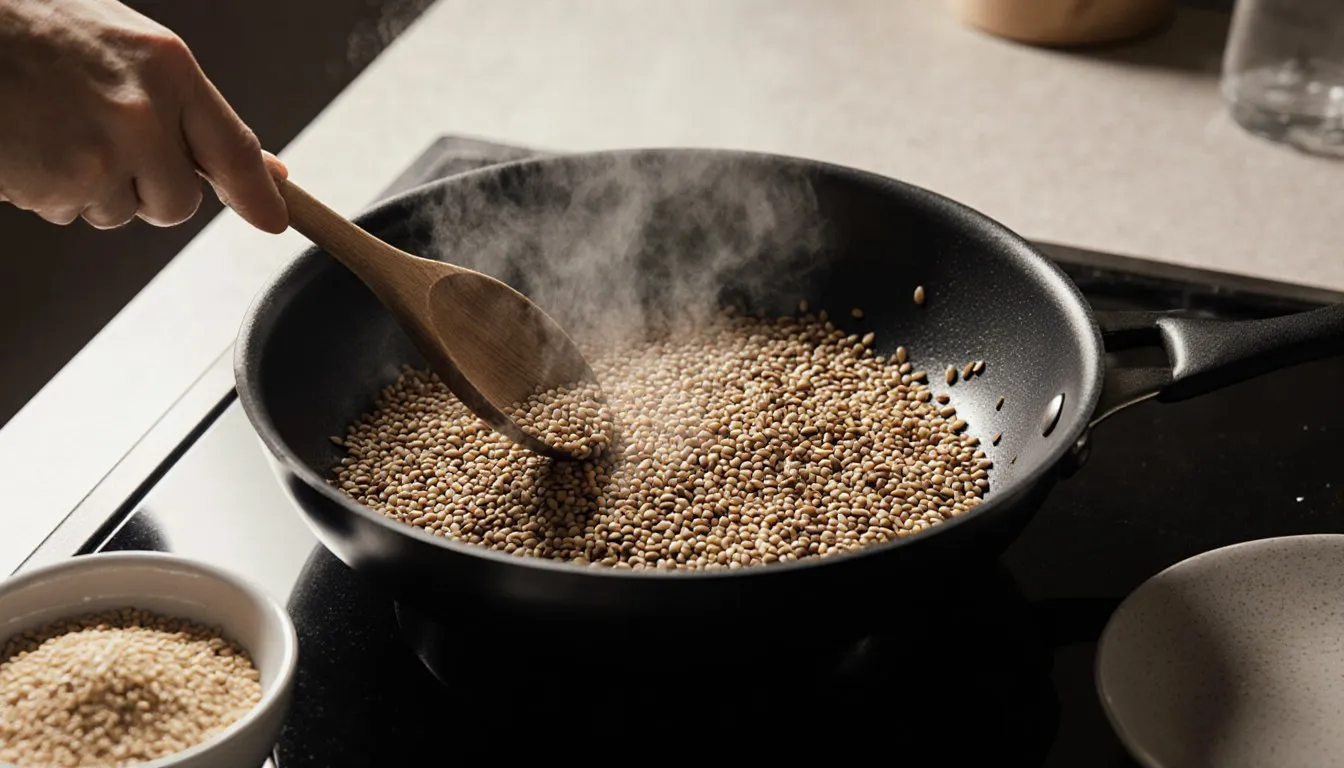
Two techniques, two purposes. Dry toasting is for whole spices: cumin seed, coriander seed, fennel, mustard, cardamom pods, peppercorns, dried chiles. Put them in a dry skillet over medium heat and shake the pan more or less continuously. They’re done when they smell like themselves but louder, and they’ve gone a shade darker. Cumin will go from beige toward brown; mustard seeds will start jumping around the pan and popping. Tip them onto a plate immediately, because a hot pan keeps working after you turn off the burner, and then grind.
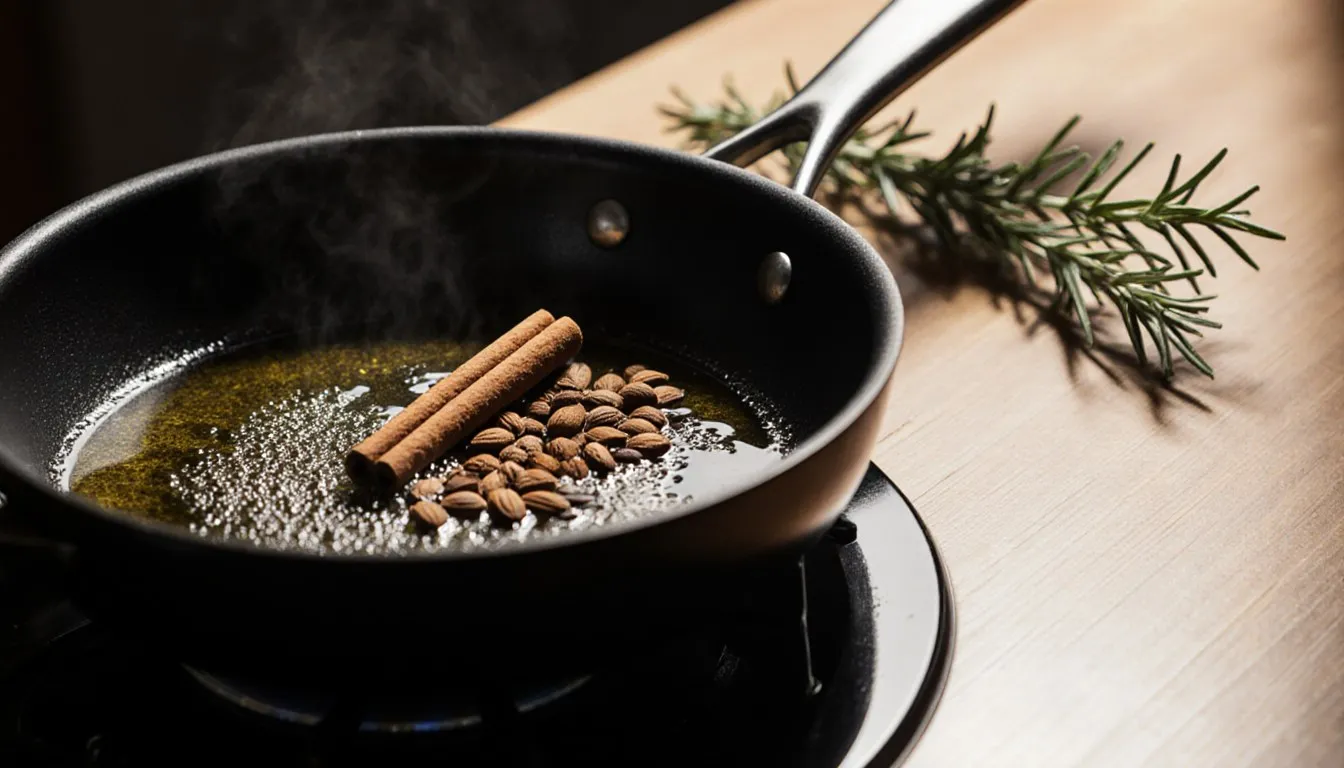
Blooming is for ground spices, in fat. Once your onions have softened, push them aside or just lower the heat, add the ground spices to the oil, and stir for thirty seconds to a minute. The aromatic compounds in spices are largely fat-soluble, so the oil pulls them out and then carries them through the entire dish instead of leaving them in stubborn little pockets. Skip the bloom and a curry keeps that raw-powder edge right through to the last bite.
The whole window is short enough that your nose is the only timer worth trusting. Ready smells fragrant and full, and the oil takes on color. A hair past ready smells sharp and slightly burnt, and there’s no fixing it: burnt spices are bitter all the way through, and the only honest move is to wipe the pan and start the base again. I’ve done it. It stings for about a hot minute and then dinner is fine.
Some spices need protection. Ground turmeric, paprika, and the chile powders have low scorch points and go bitter fast, so add them at the tail end of the bloom, or off the heat with a splash of water, stock, or tomato to drop the pan temperature. Same with anything containing sugar or garlic powder.
The reason mise en place matters here is pure arithmetic. The bloom window is under a minute, and the pan does not wait while you unscrew four lids. Measure your spices into one small bowl before the oil is hot, even if you’ve never bothered with prep bowls in your life. This is the one place they earn their keep.
What belongs in a basic herb and spice pantry?
Buy in groups that get you a whole cuisine’s worth of dinners rather than accumulating jars one recipe at a time. Three small shelves cover an enormous amount of weeknight ground.
- The Mediterranean shelf: dried oregano, dried thyme, dried rosemary, bay leaves, fennel seed, and red pepper flakes. That’s pasta sauce, roast chicken, white beans, vinaigrette, sausage, sheet-pan vegetables, and most of what you’d call Italian or Greek home cooking.
- The warm shelf: cumin, coriander, cinnamon, ginger, allspice, cardamom, cloves, and nutmeg. This one straddles savory and sweet, and it’s the backbone of a huge span of Indian, Middle Eastern, North African, and Mexican dishes, plus every pie you’ll bake in November.
- The chile shelf: sweet paprika, smoked paprika, chili powder, and cayenne or chipotle. Heat, color, and smoke, controlled separately. Smoked paprika in particular carries a lot of flavor per teaspoon, enough to give a pot of beans the impression of bacon that isn’t in it.
Then the two that aren’t negotiable: whole black peppercorns in a grinder, and salt. Pre-ground pepper loses its aromatic top notes within weeks and settles into generic dusty heat. Grinding it yourself takes three seconds and costs you nothing beyond the grinder.
Salt deserves its own paragraph because it’s the seasoning people get wrong most consistently. Kosher salt and table salt are not interchangeable by volume: kosher crystals are big and flaky, so a teaspoon of them holds far less salt than a packed teaspoon of fine table salt. Brands of kosher salt also differ from each other by a wide margin in crystal size. Pick one salt, cook with it until your hand knows it, and when you switch brands or types, add less than the recipe says and taste your way up. If you want to know where flaky sea salt fits alongside the box of fine table salt, sea salt vs table salt sorts them out.
Beyond those three shelves, buy for the food you cook most weeks. If Thai food is in your weekly rotation, you want lemongrass, lime leaves, and white pepper more than you want juniper berries. If you are stocking a cabinet from scratch and want a list to shop from, start with must have spices. Once those jars are on the shelf, a proper spice guide walks through what each one tastes like, which is the part that tells you when to reach for it. And for the unfamiliar jars two rows over, the ajwain and the grains of paradise you have never had a reason to buy, spice varieties sorts out what they are and who cooks with them.
Two buying habits worth adopting: get the smallest container the store sells, since a giant jar of coriander is not a bargain if two thirds of it goes stale, and check the Indian grocery, the Mexican market, the Middle Eastern shop, or the bulk bins, where whole spices are frequently a fraction of supermarket prices and turn over faster, so they’re fresher on the shelf.
How do you store herbs and spices so they don’t go stale?
Light, heat, air, and moisture are what kill them, in roughly that order of how often home kitchens get it wrong. The rack mounted on the wall above the stove is a bad place for spices, and it is where most people keep them. Every time the oven runs, that shelf gets cooked. A closed drawer or a cupboard away from the range is dull-looking and vastly better.
Rough shelf lives, understanding that “expired” here means faded rather than unsafe:
- Ground spices: about six months to a year at their best; the makers put usable life at two to three years, and your nose settles it. Still fine to eat after that, just quieter, so you compensate with a heavier hand or replace them.
- Whole spices: two to three years, sometimes longer for peppercorns and whole nutmeg. Their oils stay sealed inside until you grind, which is the whole argument for buying whole.
- Dried leafy herbs: one to two years, and the delicate ones fade at the fast end of that.
The test that beats any date on the label: pinch some into your palm, rub it hard with your thumb to warm it, and smell. If the smell arrives immediately and you can name it, the jar is alive. If you have to go hunting for it, that jar has been coasting on looking the part. Toss it, or dump the whole thing into a batch of vinaigrette or a marinade where quantity can substitute for intensity.
Keep spices in tight-lidded jars, never in a bag that gets rolled shut, and don’t shake them straight from the jar into a steaming pot. The steam goes up into the container and dampness turns a free-flowing powder into a caked brick. Measure into your hand or a spoon over the counter instead.
Fresh herbs need different handling depending on which camp they’re in. Tender ones (parsley, cilantro, dill, mint) do best treated like cut flowers: trim the stems, stand them in a jar with an inch of water, drape a loose bag over the top, and refrigerate. Basil is the exception and hates the cold, so give it the same jar treatment on the counter instead, out of direct sun. Hardy ones (thyme, rosemary, sage, oregano) keep well rolled in a barely damp towel inside a bag in the crisper, and they’ll go a couple of weeks that way. Wash herbs when you’re about to use them, not when you get home, because trapped water on the leaves speeds up the slime.
One storage rule I won’t soften: any homemade oil infused with fresh herbs, garlic, or chiles has to be refrigerated and used within a few days, and it must never sit out on the counter. Low-acid ingredients suspended in oil at room temperature create conditions where Clostridium botulinum can grow, and botulism is not something you take chances with for the sake of a pretty bottle. Commercially produced infused oils are acidified specifically to be shelf stable; your kitchen version isn’t. Anyone going down that road should read up properly first, and both infused olive oil and the broader subject of flavored oils cover the safe methods.
How do you pair herbs and spices with what you’re cooking?
Start by borrowing a cuisine’s signature combination whole, then learn to build your own by layering one early flavor and one late one. Improvisation comes down to a handful of combinations you’ve repeated enough times to stop thinking about them.
The borrowed combinations are the fastest way in. Oregano, basil, garlic, and fennel seed put you in Italian-American territory. Thyme, bay, and parsley are the French braising backbone. Cumin, coriander, and chile show up under enormous swaths of Mexican and Indian cooking, then split apart based on what joins them: oregano and lime in one direction, turmeric, garam masala, and mustard seed in another. Cinnamon, cumin, coriander, and paprika lean North African. Ginger, garlic, and scallion cover a great deal of Chinese home cooking. Lemongrass, chile, lime, and fish sauce say Thai before you’ve tasted anything. Cook inside one of those sets for a few weeks and your hand starts reaching correctly on its own.
Then there’s layering, which is the real skill. Nearly every dish that tastes finished has a base note built early and a bright note added late. The base is earthy and needs heat: bloomed cumin, smoked paprika, dried oregano, toasted coriander, a bay leaf. The finish is volatile and needs protection: fresh herbs, lemon zest, a splash of vinegar, raw garlic, fresh chile, cracked pepper. When a pot of chili tastes muddy and heavy, the fix is nine times out of ten a bright note it never got: lime, a splash of vinegar, cilantro, raw onion, something with an edge on it.
Match intensity to the ingredient, too. Rosemary on delicate white fish steamrolls it; tarragon, dill, or chervil flatter it. Lamb and pork can absorb rosemary, sage, cumin, and coriander without flinching. Eggs want soft herbs. Beans want a hardy herb simmered in from the start, which is why savory picked up its old nickname as the bean herb in the first place. And keep the count down: two or three dominant flavors read as a dish, six read as a spice cabinet accident.
The habit that ties it all together is tasting at every stage, not once at the end. Taste the base after the spices bloom, taste midway through the simmer, taste right before it goes to the table. Three tastes, three chances to steer.
Increments help as much as timing does. Add half of what you think the pot wants, stir, give it a minute to spread, then taste again. My mother used to tell me you can always add more, you can’t take it back out, and she was right about salt first and everything else second.
Cayenne, cloves, and fish sauce punish a heavy hand hardest, because none of them can be walked back once they are in the pot. The only cure is dilution, and dilution means cooking more food than you planned on just to rescue the batch you already have.
What are the most common seasoning mistakes home cooks make?
A short list, and I’ve committed every one of them.
Salting only at the end. Salt added early works its way into the food; salt added at the table sits on top of it. Season the onions when they go in, season the liquid when it goes in, season again before serving. Each addition gets time to spread through whatever it’s touching before the next one lands. Beans and grains make the clearest case: cooked in unsalted water, they stay bland no matter how much you sprinkle on at the table.
Cooking with stale dried herbs. If your recipe seems bland after you followed it exactly, suspect the jar before you suspect anything else. Do the palm test on everything in the cabinet this weekend and be ruthless. Anything you can’t identify by smell has stopped contributing.
Skipping the bloom. Stirring ground spices straight into a simmering liquid leaves them tasting flat and powdery, and cooks who chase the restaurant version of a dish usually find the bloom is what was missing. Thirty seconds in fat, before the liquid goes in, closes most of that gap.
Adding tender herbs too early. Fresh basil at the twenty-minute mark of a sauce contributes almost nothing and looks worse. Hold it back and stir it in with the burner off.
Using the fresh quantity when the recipe means dried, or the reverse. A tablespoon of dried oregano where a tablespoon of fresh was intended will bulldoze the dish. Remember the one-to-three ratio and check which one the recipe assumes before you measure.
Treating all salt as one ingredient. A teaspoon of fine table salt and a teaspoon of coarse kosher salt are meaningfully different amounts of actual salt, which is how a recipe that worked for the writer comes out inedible in your kitchen. Learn the salt you own by feel.
Burning the garlic. Not an herb or a spice, but it lives in the same thirty-second window and goes bitter faster than any of them. Garlic goes in after the onions have softened, not with them, and it needs less than a minute.
Forgetting acid. Under-seasoned is sometimes actually under-acidified. If a dish tastes complete but slightly dull, try a squeeze of lemon or a teaspoon of vinegar before you add more salt. It sharpens everything already there. More small adjustments in this vein are collected in seasoning tips.
Get a date on your jars, since a marker line on the lid the day you open something tells you more than any printed best-by. Then take one small step past all of this: buy whole cumin seed, toast a few tablespoons in a dry skillet until they darken and fill the kitchen, grind them, and use that in the next thing you’d normally season from the pre-ground jar. It takes four minutes, and the first taste explains, better than any of the paragraphs above, what all this fuss about timing and heat is really protecting.
Tessa Calloway
Staff Writer
Tessa Calloway has spent twenty years cooking dinner on a weeknight clock and testing the shortcuts that survive contact with a real kitchen. She believes the best recipe is the one you can make with what's already in the house, and she has strong opinions about what actually needs to be homemade (less than you think) and what always does (dressing).