The Four Things That Actually Decide Whether a Wine Pairing Works
Skip the chart. Wine pairing comes down to weight, acid, sweetness, and tannin, and once you know those four you can pick a bottle for anything.
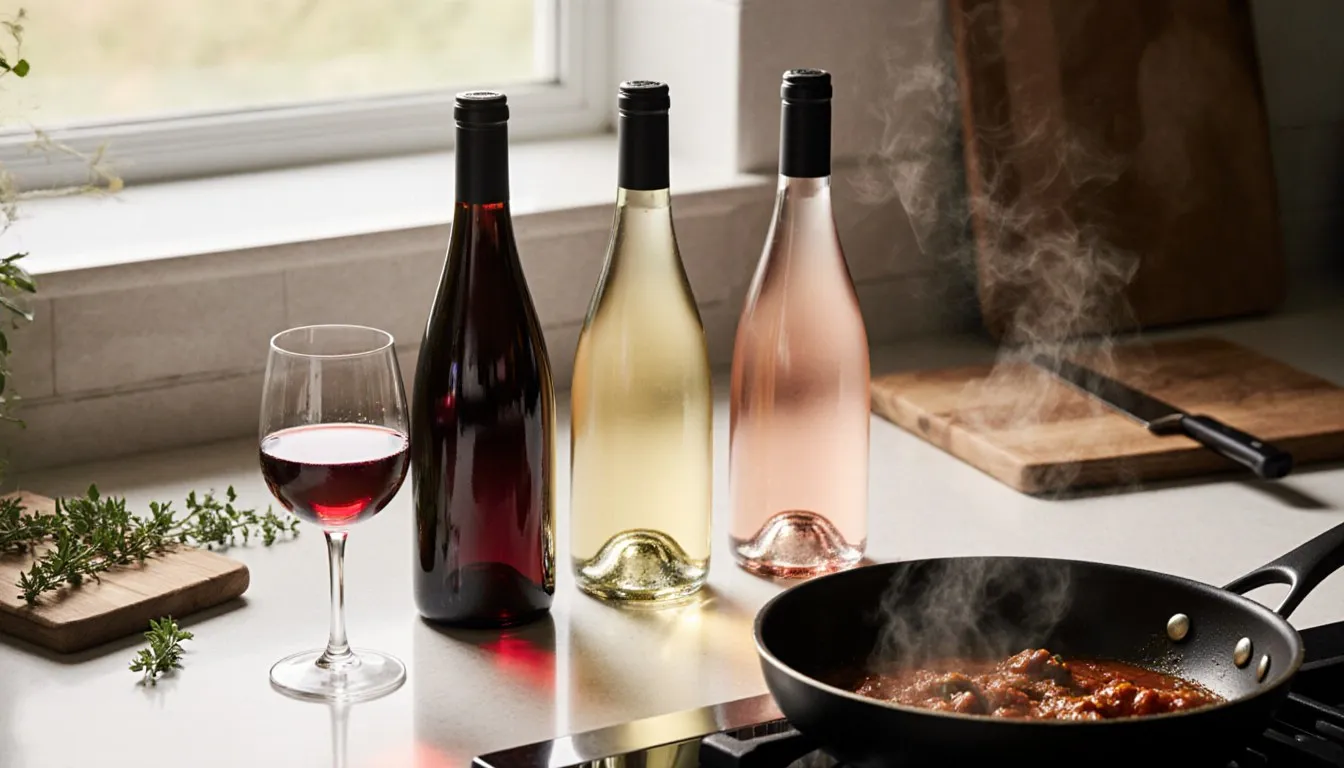
Forget the chart on the back of the wine shop door. Wine pairing comes down to four things: the weight of the wine against the weight of the dish, how much acid the wine has, whether it is sweeter than what’s on the plate, and how tannin behaves against fat. Get those four roughly right and the pairing works across all the main types of wine, whether the bottle is red, white, orange, or a screw-cap rosé you grabbed for eleven bucks on the way home. Get them wrong and no amount of matching the color to the protein will save you.
That’s the whole system. Below is how each of the four actually behaves at the table, why the red-meat-white-fish rule survived as long as it did, and how to think your way through a bottle-and-dinner combo standing in an aisle with a cart and a deadline.
What does “wine pairing” actually mean?
A pairing works when the wine makes the food taste better and the food makes the wine taste better. Both directions. That’s it, and it’s a lower bar than the wine world sometimes lets on.
You have already felt it work. Squeeze lemon over fried fish and the fish tastes less greasy and more like fish. A high-acid white does the same job from the glass. You have also felt it fail: a big oaky Chardonnay next to a plate of oysters, where the oysters go metallic and the wine goes flabby and neither one is doing the other any favors.
Nothing about this is a test with a right answer. There’s no grade. If a pairing most people would call a miss happens to taste great to you, pour it again next week. What follows are the patterns that make a match more likely to land, so you spend less of your life discovering the misses one bottle at a time.
One thing worth setting straight early: expensive does not mean easier to pair. A serious, structured, age-worthy bottle is often the fussiest thing you can put next to a weeknight dinner. Some of the most reliable food wines on the shelf cost less than the cheese you’re serving with them.
Do you really have to match red wine with meat and white wine with fish?
No, and you never did. But the rule is not stupid, and that’s why it stuck around for a century.
The rule is a rough proxy for two things that actually matter. Red wines tend to be heavier and more tannic; red meat tends to be richer and fattier, and tannin and fat get along. White wines tend to be lighter and higher in acid; fish tends to be delicate and benefits from acid the way it benefits from a lemon wedge. So the old rule gets you to the right answer a decent amount of the time by accident, the way a stopped clock does. Sommeliers have repeated it for generations as a shorthand for beginners, not as a law they follow themselves.
Here’s where color leads you astray:
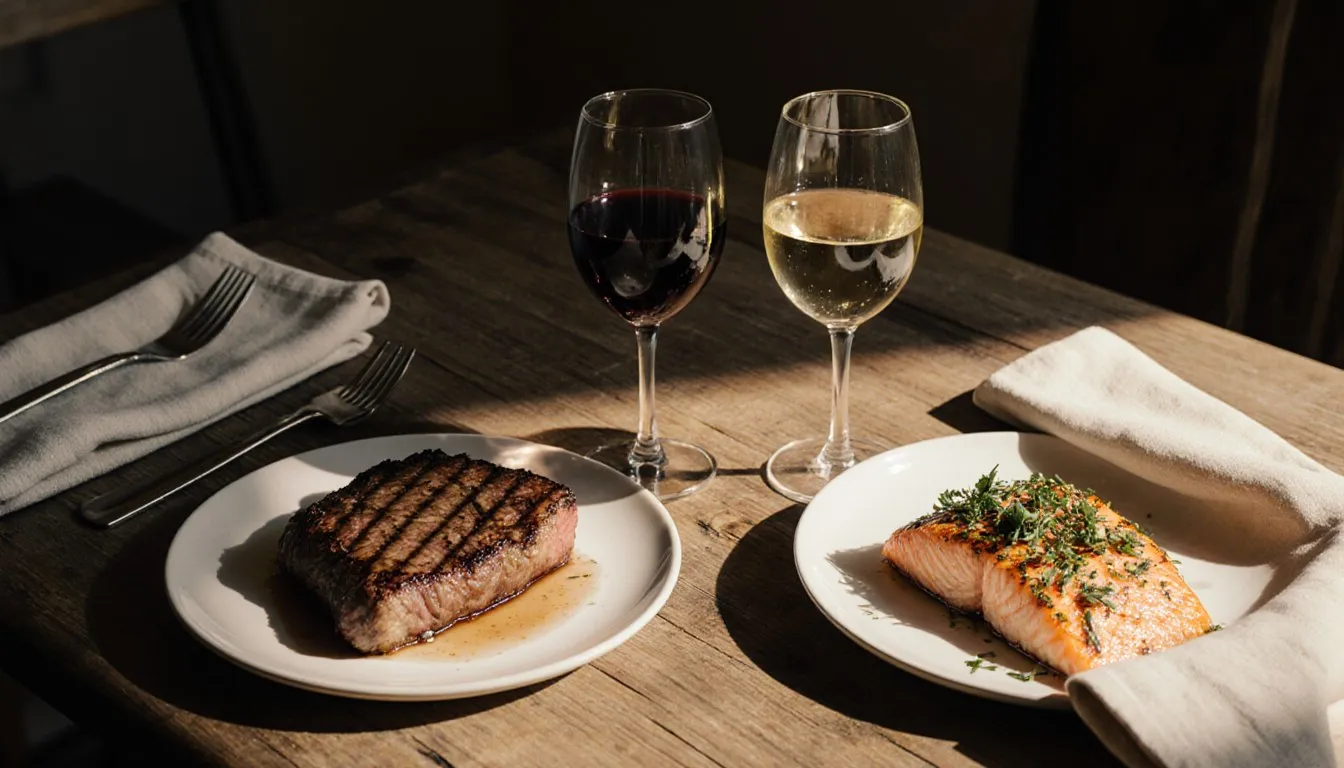
- Grilled salmon with a light red: salmon is oily, meaty, and has enough presence to stand up to a chilled Pinot Noir or a Gamay. Serve it around 55°F (13°C) and it’s lovely. The color rule would have sent you to a white and missed a better match.
- Roast chicken with a big white: a bird with crisp brown skin and pan drippings is richer than a lot of red meat. An oaked Chardonnay or a white Rhône blend handles it better than a light red will.
- Delicate white fish with a heavy white: the color rule says yes. Your mouth says no. Sole in butter gets flattened by a big barrel-aged white and sings next to a lean, bracing one.
- Steak with a white: rare, but a rich, low-acid white with real body can work with a lean cut. Pour it for a filet or a lean sirloin, not for a ribeye with a fat cap on it.
Use color as a starting instinct and then check it against the four things below. If you want the wider view of what separates the categories in the first place, the guides to red wine and to white wine dig into the grapes themselves.
Why does the weight of the wine matter more than its color?
Weight, or body, is how heavy the wine feels in your mouth. Skim milk versus whole milk versus cream. It’s not about flavor intensity and it isn’t about alcohol alone, though higher alcohol usually tracks with more body.
The rule is simple: match heavy to heavy and light to light. A big wine steamrolls a delicate dish. A light wine disappears next to a rich one, and you’ve wasted both.
Rough weight ladder, lightest to heaviest, with plenty of overlap depending on where the wine was grown:
- Light: Pinot Grigio, Muscadet, Vinho Verde, Albariño, Beaujolais, most rosé
- Medium: Sauvignon Blanc, unoaked Chardonnay, dry Riesling, Pinot Noir, Chianti, Barbera
- Full: oaked Chardonnay, Viognier, white Rhône blends, Cabernet Sauvignon, Syrah, Malbec, Zinfandel
Now weigh the dish, and weigh what you actually cooked rather than the raw ingredient. Sauce and cooking method usually outrank the protein. Poached chicken breast is a light dish. That same chicken breast in a cream sauce with bacon is a full-bodied one. Shrimp are featherweights until you drown them in butter and garlic. The heaviness comes from fat, sugar, reduction, and browning.
The eyeball test I actually use: would the leftovers of this dish taste heavy cold, straight out of the fridge? Cream sauce, braise, anything with rendered fat, that’s a heavy dish, go up the wine ladder. Something you’d happily eat cold on a hot day is a light dish, stay down the ladder.
Alcohol on the label is a free clue about weight. Under about 12% usually means a lighter wine. Over about 14% usually means a fuller one. It’s not exact, and dessert wines break the pattern entirely, but it’s printed right there and it costs you nothing to glance at it.
Why does a wine’s acidity make or break a pairing?
Acid is the workhorse of pairing, and it’s the thing most beginners underrate. Acid in wine does exactly what a squeeze of lemon does to a dish: it cuts through fat, resets your palate, and makes the next bite taste as good as the first one did.
You know a high-acid wine by what happens in your mouth. It makes you salivate, and it tastes crisp, tart, or zippy rather than round and soft. Sauvignon Blanc, Riesling, Muscadet, Chablis, Champagne, Chianti, and Barbera all sit high on the acid scale. Cooler growing regions tend to make higher-acid wines than warm ones.
Two jobs acid does for you at the table:
- It cuts richness. Fried chicken, mac and cheese, a pork belly, a pile of cheese. High acid slices through the fat and keeps the dish from turning into a coat on your tongue. This is why sparkling wine is the great cheat code with anything fried.
- It matches acid in the food. Anything with vinegar, citrus, tomato, or a sharp dressing. A tomato sauce next to a low-acid wine makes the wine taste dull and slightly sweet, like it lost a fight. Put Chianti next to the same sauce and both perk up.
The rule underneath both: the wine should be at least as acidic as the food. If the plate is sharper than the glass, the wine goes limp and flat. If the wine is sharper, everything stays lively. When in doubt, err high. I have never once regretted opening a wine that was too crisp for dinner, and I have absolutely regretted the flabby ones.
This is also why salad dressing has a reputation as a wine killer. Vinaigrette is basically pure acid, and it will beat most wines on the field. A very high-acid white is the only thing that survives it, which is one more argument for making your own dressing and going easy on the vinegar when there’s a bottle on the table.
What happens when a dessert or spicy dish is sweeter than the wine?
The wine loses, badly. This is the most reliable rule in the whole business: the wine needs to be at least as sweet as the plate, or it tastes stripped, sour, and thin.
Try it once and you’ll never forget it. A dry Cabernet with chocolate cake tastes like someone wrung it out. The sugar in the cake makes your palate recalibrate, and the wine’s fruit vanishes, leaving nothing but tannin and acid standing there. The wine did nothing wrong. It just got outgunned.
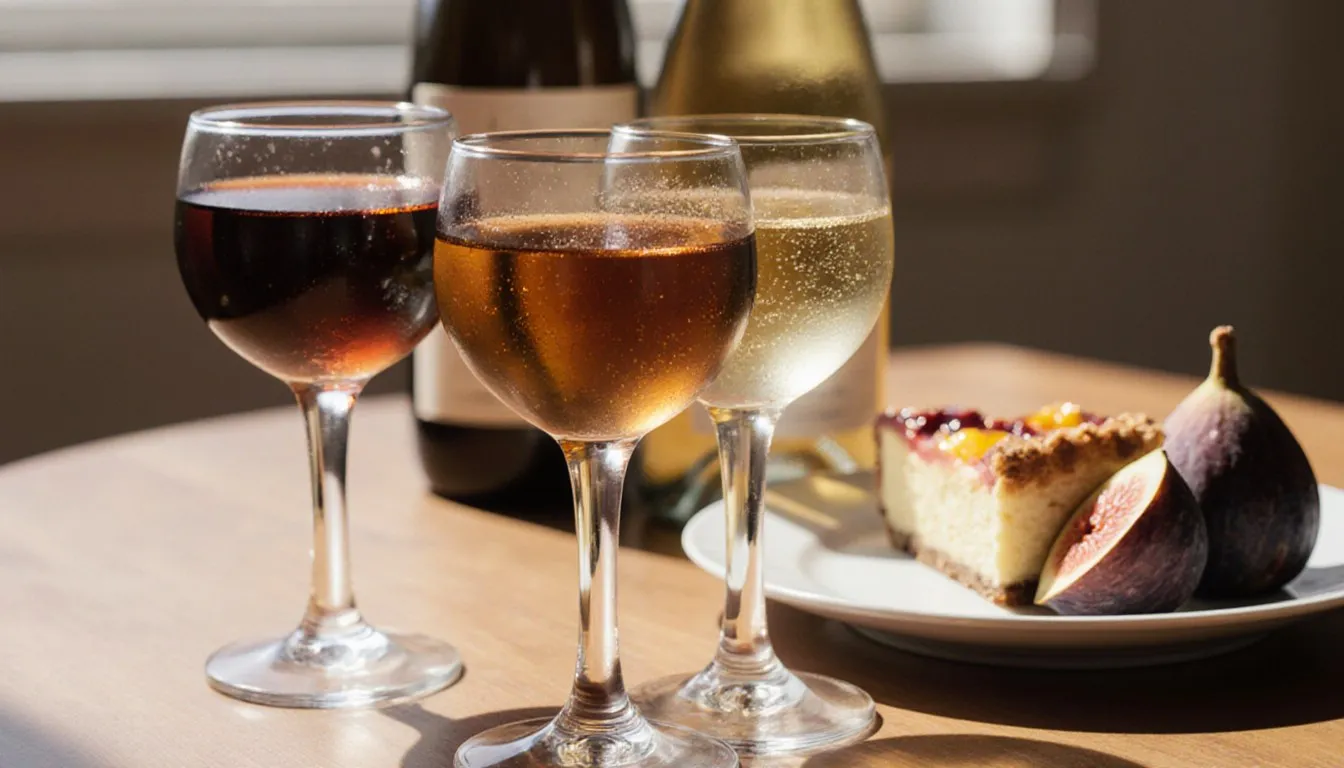
So with anything genuinely sweet, go sweeter in the glass. That’s the whole logic behind dessert and fortified wine as a category, and the range there is enormous, from Sauternes to Port to Madeira to late-harvest Riesling. If you’re building a sweet-wine match specifically, that’s the deeper end of the pool.
Sweetness pulls a second shift with heat. Chili heat and alcohol amplify each other, so a high-alcohol dry red next to a spicy curry burns twice. A little residual sugar in the wine does the opposite: it cools the fire and softens the burn. This is why an off-dry Riesling is the standing answer for spicy food, and it earns that reputation across Thai, Sichuan, Indian, and Korean cooking. Look for a Riesling around 8 to 9% alcohol, which usually signals real sweetness left in the bottle, and skip the 14% Zinfandel you were reaching for.
Sweetness in food is sneakier than you’d think, too. Barbecue sauce, glazed ham, teriyaki, honey-roasted anything, a squash dish with maple. None of those read as dessert, but they all carry enough sugar to flatten a bone-dry wine. Off-dry or fruit-forward is the safer call.
Why do tannic red wines clash with some foods and love others?
Tannin is the drying, grippy, mouth-puckering sensation you get from a big red, the same feeling as over-steeped black tea. It comes from grape skins, seeds, and oak barrels, and it’s the reason a young Cabernet Sauvignon can feel like it’s shrink-wrapping your tongue.
Tannin binds to protein and fat, and that’s the entire story of what it does at dinner. Give it something rich to grab onto and it goes soft and plush. Give it nothing and it stays sharp and bitter and you wonder why anyone paid for this.
What tannin loves:
- Well-marbled steak, lamb, short ribs, duck. The fat and protein blunt the tannin, and the wine in turn scrubs the fat off your palate. Both sides gain. This is the pairing the old color rule was actually pointing at all along.
- Hard aged cheeses. Aged cheddar, Parmesan, Manchego. Same mechanism.
- Anything with a hard sear or a char. Browning gives the wine’s own toasty, smoky notes something to echo.
What tannin fights:
- Delicate fish. Tannin plus certain fish oils produces a genuinely metallic, tinny taste. The tannin reacts with the oils in a way you taste immediately, like sucking on a penny, and it is the one place the old white-with-fish rule earns its keep.
- Very spicy food. Tannin and alcohol both push the heat higher. A tannic red with a hot curry is a rough evening.
- Salt-forward, low-fat dishes. Without fat to soften it, the tannin just sits there being bitter.
- Sweet dishes. Sugar makes tannin taste harsher, on top of the sweetness problem above. Dry tannic red and chocolate cake is a double failure.
Umami is the wildcard here, and it deserves a mention because it explains pairings that otherwise make no sense. Mushrooms, aged cheese, soy sauce, cured meat, tomato paste, anchovy, seaweed: high-umami foods make tannic wines taste more bitter and more astringent, and they take the fruit away. The old kitchen fix is salt and fat, and it genuinely works. Butter on the mushrooms, cheese on the pasta, a properly salted steak. That’s part of why a well-seasoned dish pairs better than an under-seasoned one, and why the classic mushroom-and-Pinot match works so well: Pinot Noir has low tannin, so there’s nothing for the umami to sharpen.
Should you match flavors or contrast them?
Both work, and they’re the two moves you have. Once you’ve handled weight, acid, sweetness, and tannin, this is the part where you get to have taste.
Matching (echo the dish): find a wine that shares a flavor with the food. Goat cheese and Sauvignon Blanc both have that green, herbal, grassy thing going. A herb-roasted lamb and a Syrah with peppery, savory notes. A buttery, oaked Chardonnay with a butter-poached lobster. The pairing feels smooth and inevitable, like the two things were made together.
Contrasting (play against the dish): use the wine to supply what the plate lacks. Champagne with salty potato chips, which is a legitimately great pairing and not a joke. Off-dry Riesling against a fiery curry. A crisp, lean white against a heavy cream sauce. The contrast keeps the palate awake and the dish from becoming one long note.
Contrast is usually the more interesting of the two, and it’s the one home cooks reach for less often. If your dish is one big thing (very rich, very salty, very spicy, very sweet), contrast is almost always the stronger play. If your dish already has several things going on, matching keeps it from turning into noise.
And here’s the thing that gives you permission to relax: with the four fundamentals handled, most of these choices are shading. You are picking between good and slightly better, so follow whichever one sounds more fun to drink.
Is “what grows together, goes together” actually good advice?
It’s a good shortcut and a bad law. As starting points go, it’s one of the most reliable ones you’ll find.
The logic holds up: regional cooking and regional winemaking grew up next to each other over centuries, with cooks and winemakers tasting each other’s work the whole time. Sancerre and the goat cheeses of the Loire. Chianti and Tuscan food built on tomato and olive oil. Muscadet and the shellfish off the Atlantic coast an hour away. Rioja and lamb. Those matches were tuned by generations of people eating dinner, which is a longer test than any chart got.
Where it oversells itself:
- Most of what we cook has no wine region. Thai, Sichuan, Ethiopian, Vietnamese, most of Mexico, most of the American South. Historically these are beer, tea, and spirits cuisines. The regional shortcut has nothing to offer you there, and you fall back to the four fundamentals.
- The wines themselves changed. A modern high-alcohol, heavily extracted version of a traditional regional wine may not do the job the old lighter version did. Check the alcohol on the back label before you trust the region to do the work for you.
- Your version of the dish isn’t the regional version. Your weeknight Bolognese has different proportions than a Bolognese in Bologna, and the wine responds to what’s in your pot.
Treat it as a strong first guess in the aisle, then sanity-check the weight and acid. Nine times out of ten it holds.
What are the pairing mistakes that trip up most home cooks?
Four things account for most of the misses I see, and none of them are exotic.
Reaching for the big oaky white with delicate food. Heavy oak brings vanilla, butter, and toast, and those flavors bulldoze anything subtle. Save the barrel-aged whites for rich food, cream sauces, roast chicken, lobster with butter, and pour something lean with your fish.
Tannic red with spicy food. Covered above, but it’s the single most common misfire, usually because someone thinks red wine is the fancy choice and reaches for the biggest bottle in the house. Match the spice with sweetness or with a soft, low-tannin red.
Serving temperature, which undoes good pairings quietly. Most people serve white too cold and red too warm, and both hide the wine. Straight out of a modern fridge, a white is numb: pull it out about 20 minutes before you pour. “Room temperature” for red was invented in stone houses without central heating, and a red at 72°F (22°C) tastes hot and alcoholic. Fifteen minutes in the fridge before serving does more for a red than most people expect. Light reds like Beaujolais and Pinot Noir are genuinely better with a real chill on them.
Forgetting the sauce. People pair to the protein and ignore what’s on it. The sauce usually carries the fat, the acid, the sugar, and the intensity, which is to say, it carries three of the four things that decide the pairing. Pair to the sauce and the protein takes care of itself.
One I’ll add from experience: don’t save the good bottle for a dish that will fight it. A complex, structured wine wants simple food that gets out of its way. If you’re making something loud, open something friendly. The nice bottle will still be there on a night when you’re roasting a chicken and it can actually be heard.
How do you pick one wine for a table with several different dishes?
Go medium-bodied, high-acid, and low-tannin, and stop trying to match anything. That’s the answer for a potluck, a holiday table, a buffet, or any dinner where five things hit the table at once.
The reasoning: a wine can’t be right for every dish, so pick one that’s never actively wrong for any of them. Medium body doesn’t crush the light dishes or vanish next to the rich ones. High acid handles the fat and stands up to the vinegar in someone’s salad. Low tannin keeps you out of trouble with the fish, the spice, and the sweet glaze on the ham.
The bottles that do this job well:
- Dry sparkling wine. The single most versatile thing you can put on a table. High acid, bubbles that scrub the palate, enough body for rich food, no tannin to clash with anything. The details of champagne and sparkling wine go well beyond the pairing question, but for a mixed table, it’s hard to beat.
- Dry rosé. Chilled, crisp, works across the spread and looks good doing it.
- Off-dry Riesling. The acid handles the rich dishes and the touch of sugar covers whatever spicy or glazed thing showed up.
- Pinot Noir or Beaujolais for a red. Light enough for fish, savory enough for meat, barely any tannin to cause trouble.
For a table of eight, two bottles of one crowd-pleasing white and one moderate red beats four different clever bottles. Nobody will notice your brilliant pairing while they’re passing the potatoes, and I say that as someone who used to try.
Buy a spare of whichever bottle you liked best, too. An unopened bottle stores fine on its side somewhere dark and cool, and a wine you already know works with your own cooking is worth more than a shelf of unknowns. Next time, pour an inch of it before you start cooking and taste it against the sauce as you season, easy peasy, and adjust the salt or the acid in the pot until the two of them get along.
Tessa Calloway
Staff Writer
Tessa Calloway has spent twenty years cooking dinner on a weeknight clock and testing the shortcuts that survive contact with a real kitchen. She believes the best recipe is the one you can make with what's already in the house, and she has strong opinions about what actually needs to be homemade (less than you think) and what always does (dressing).