Mocktail Recipes That Don’t Taste Like Sad Juice
Most mocktail recipes taste flat because they skip the sour. Here’s the balance ratio bartenders use, the pantry it needs, and five builds to make tonight.
Almost every bad mocktail has the same missing piece: acid. Cranberry and ginger ale, orange juice and Sprite, a splash of grenadine over ice, these are sweet on sweet with nothing pushing back, and your tongue gets bored by the third sip. A real cocktail almost never does that. It sets sweet against sour, thins the whole thing with water, and slips in something bitter or salty so the drink has an edge to it.
Take the alcohol out and every one of those jobs still needs doing. Do them and you get a drink somebody wants a second one of. Below is the ratio bartenders build on, the short list of things worth keeping in the house, the tricks that give a zero-proof drink some weight, and five builds you can make tonight.
Why do most mocktails taste flat or too sweet?
Because they were designed by subtraction. Somebody took a cocktail, pulled the liquor out, and topped up the missing volume with more juice or more soda. The problem is that liquor was carrying two things nobody replaced: bite and dilution. Gin is not sweet. Tequila is not sweet. Take a two-ounce pour of something bracing out of a glass and refill it with pineapple juice, and you have shifted the whole drink onto one flavor axis.
The other half of it is that juice alone is duller than it seems. Bottled orange juice has plenty of sugar and just enough acid to read as fruity, but the acid is soft and it fades. Fresh lime is sharp and loud and hits the sides of your tongue, and it keeps doing that down to the last inch of the glass.
The rest of this piece runs on one opinion: every mocktail needs enough sour to make the second sip taste different from the first. Acid resets your palate between sips, which is why you come back to a daiquiri and stop halfway down a glass of cranberry and ginger ale. Sweetness without it accumulates, and by the third sip you are tasting sugar and nothing else. Sweet punch has its place, and there is a whole world of party drinks and punches built for exactly that. But if you are handing somebody a coupe and expecting them to sip it slowly for twenty minutes, it needs acid.
What’s the ratio that makes a non-alcoholic drink taste balanced?
Bartenders build most shaken drinks on a sour template: roughly 2 parts spirit, 1 part fresh citrus, and 3/4 part syrup, shaken with ice. A daiquiri is that. A margarita is that. A whiskey sour is that. Once you can see the shape, you stop needing recipes.
For zero-proof, keep the shape and swap in a base with actual character. My working formula, in ounces, for one drink:
- 3 oz flavorful base: strong brewed tea, a shrub diluted with water, cold brew coffee, or an alcohol-free spirit alternative like Seedlip. Not plain juice. Plain juice is a supporting player.
- 3/4 oz fresh citrus: lime or lemon, squeezed that day. Verjuice, the tart pressed juice of unripe grapes, subs in at the same 3/4 oz, trading lime’s sharp top note for something rounder and more grape-skinned, which suits delicate bases like green tea or cucumber. It will not carry a cold brew or a vinegary shrub build, though: its acid is softer and those bases swallow it. Reach for lime there.
- 1/2 to 3/4 oz simple syrup: start at 1/2 and taste. Zero-proof drinks need less sugar than boozy ones because there is no alcohol burn to soften.
- Something bitter or savory: 2 or 3 dashes of alcohol-free aromatic bitters, or a pinch of salt, or both.
- Dilution: shake hard with plenty of ice, or top with 2 oz of soda water for a taller drink.
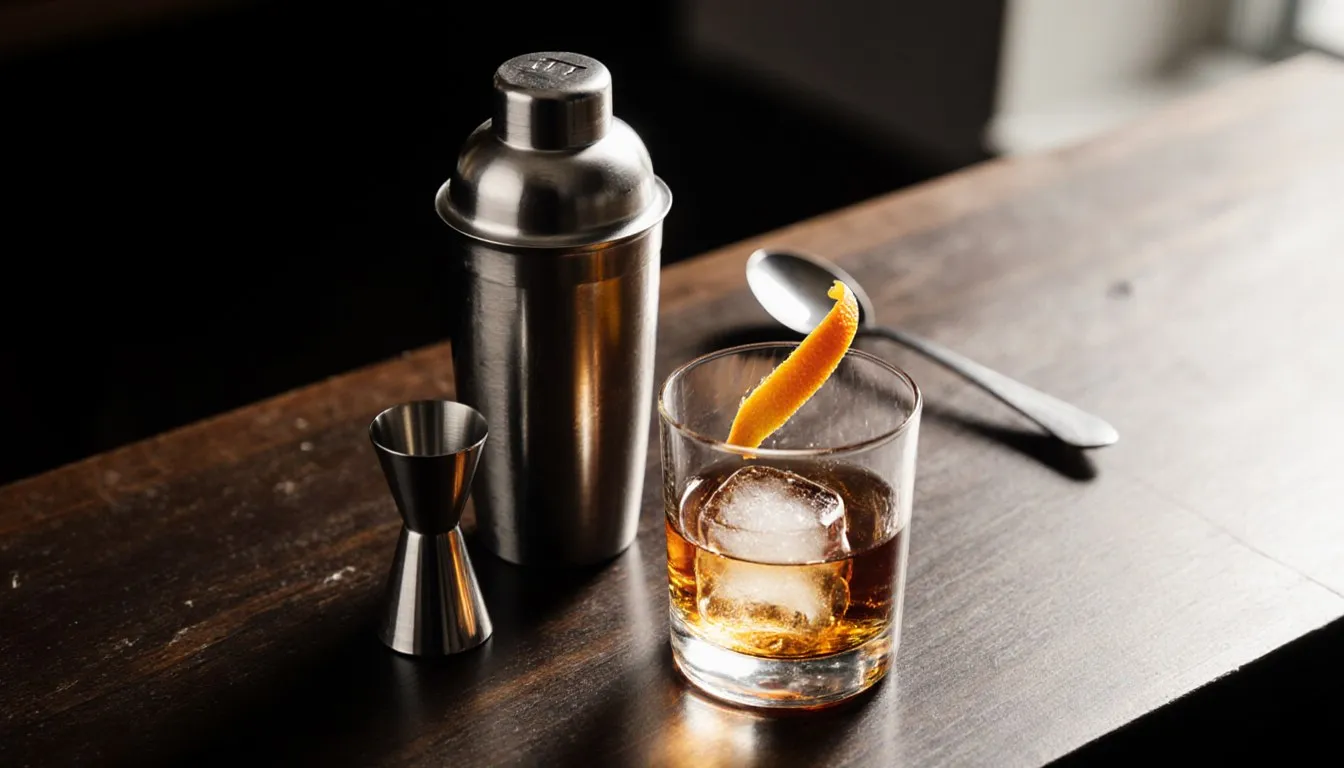
Shake it for a good fifteen seconds. You are chilling and watering the drink on purpose, and skimping there leaves it thick and cloying. The tin should be too cold to hold comfortably; that is your cue, not the clock.
Then taste it before you pour. Flat and heavy means more citrus. Puckery and thin means a bar spoon more syrup. Nothing wrong with either mistake, both are two seconds from fixed. If you want the fuller picture on shaking, stirring, and why the tin frosts, bartending basics covers the mechanics.
One note on bitters. Traditional aromatic bitters are high-proof, and while a couple of dashes is a tiny amount of alcohol, that still matters if you are serving someone who avoids it entirely. Buy the alcohol-free ones. It is also worth knowing that in the United States a drink labeled non-alcoholic can legally contain up to 0.5 percent alcohol by volume, which is why “zero proof” and “alcohol-free” on a label are worth reading closely rather than assuming.
What should be in a mocktail pantry?
Shorter list than you would think, and most of it lives in the fridge door.
- Fresh lemons and limes. Nothing substitutes. Bottled juice tastes cooked and slightly bitter, and it will drag every drink you make down with it. Two limes and two lemons at all times.
- Simple syrup, 1:1. Equal weights sugar and water, stirred until clear. No heat needed if you are patient, though warm water speeds it along. Rich syrup is 2 parts sugar to 1 water, thicker and sweeter, and you use less of it.
- A shrub or two. A drinking vinegar, meaning fruit steeped with sugar and cut with vinegar. This is the single biggest upgrade in the list.
- Strong tea. Hibiscus, sometimes sold as agua de jamaica, black tea, green tea, roasted barley tea. Brewed double strength and chilled, tea gives you tannin, which is the closest thing to the grip a spirit provides.
- Fresh herbs. Mint, rosemary, basil, thyme. A supermarket clamshell covers a party.
- Alcohol-free bitters. Aromatic and citrus. They will last you a year.
- Soda water, in small bottles or cans, not a two-liter that goes flat by Tuesday.
- Flaky salt, or a small bottle of saline (1 part salt to 4 parts water, shaken). Two drops of saline in a fruit drink makes the fruit taste more like itself.
An alcohol-free spirit alternative is optional. Seedlip and the products that followed it are pricey and they do not taste like gin, no matter what the bottle implies. What they do give you is bitterness and botanical length, which is genuinely useful. Buy one if you are making these often; skip it if you are not, and lean on tea instead.
How do you add body to a drink without the alcohol?
Alcohol has weight. It coats the tongue and makes a drink feel like something instead of like water with a flavor. Pull it out and the glass goes thin. Four fixes, in the order I reach for them.
Shrubs. Chop fruit, cover it with an equal weight of sugar, let it sit in the fridge for a day or two until the sugar pulls the juice out, strain, then stir in vinegar to taste, starting around a quarter of the volume of syrup and going up from there. Apple cider vinegar is friendly, white wine vinegar is cleaner. Drinking vinegars are widely credited with keeping fruit drinkable in the era before refrigeration, and cooks have passed the method along ever since. What I can promise you is the bottle in your fridge: sweet, sour, and a savory undertow all in one pour.
Tea, brewed strong and reduced if you like. Use double the leaf, not double the time, or you will pull out bitter tannin instead of flavor. For real body, simmer a cup of strong tea down by half with a couple spoons of sugar and you have a syrup with grip.
Muddled herbs and a little bruising. Press mint against the side of the glass with the back of a spoon a few times, do not shred it. Shredding releases chlorophyll and the drink turns grassy. My mother used to say you should wake herbs up, not beat them up, which is annoyingly accurate.
Aquafaba for a foam top. The liquid from a can of chickpeas whips like egg white and tastes like nothing once citrus is involved. Half an ounce per drink. Shake without ice first for ten seconds (the dry shake) to build the foam, then add ice and shake again to chill. You get that dense white cap you see on a whiskey sour, no raw egg involved.
Five mocktails built on the ratio
Every one of these is the formula above with the dials turned. Single servings. Taste and adjust before you pour, always.
Hibiscus ginger sour
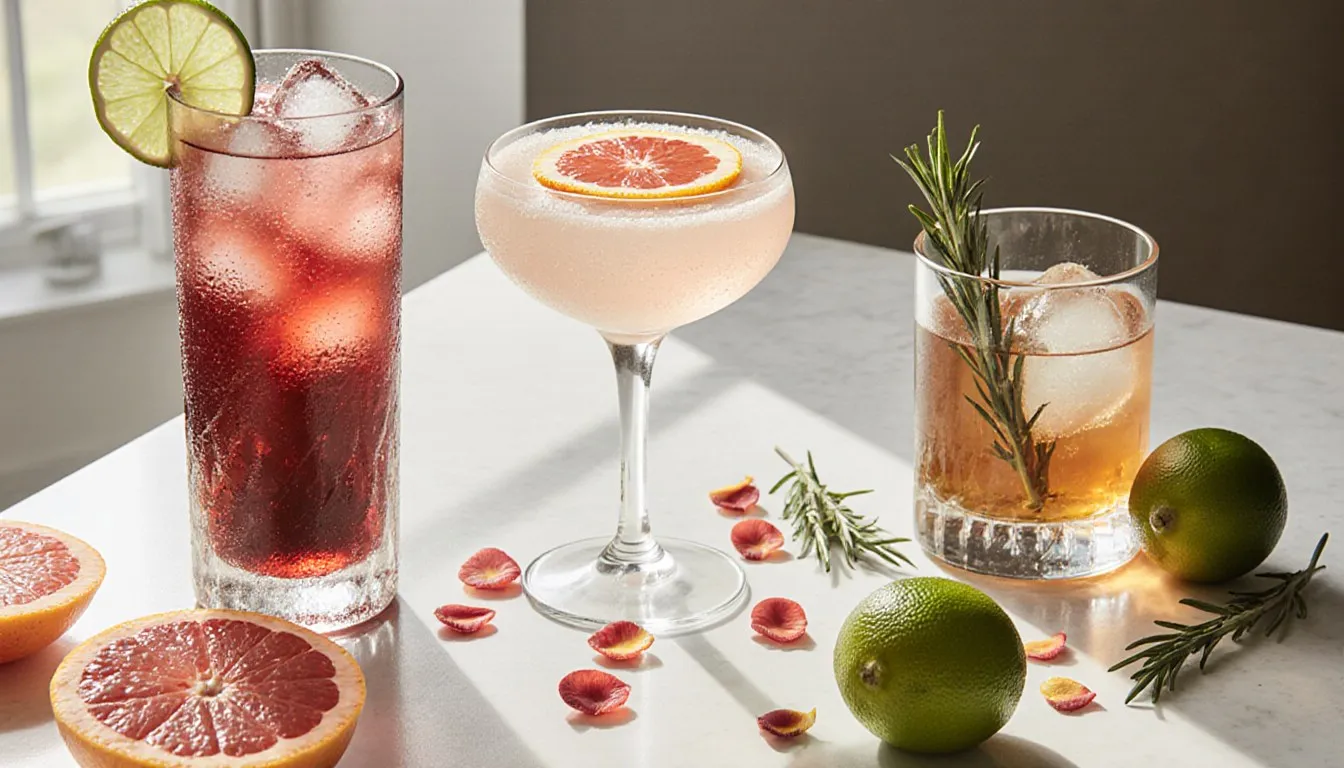
3 oz strong chilled hibiscus tea, 3/4 oz fresh lime, 1/2 oz ginger syrup (simple syrup simmered a hot minute with sliced fresh ginger, then strained), 1/2 oz aquafaba, pinch of salt. Dry shake, then shake with ice, strain into a coupe. Deep ruby with a pale pink cap, and the tea’s tartness means you need less lime than you would expect.
Smoky rosemary grapefruit fizz
3 oz fresh grapefruit juice, 1/2 oz lemon, 1/2 oz rosemary syrup, 2 dashes alcohol-free aromatic bitters, 2 oz soda. Char a rosemary sprig with a lighter until it just smolders, blow it out, drop it in the glass. Grapefruit already brings its own bitterness, so go light on the bitters here. If you want the salt-rim treatment on this one, the virgin margarita recipes go deep on rimming technique.
Spiced pear shrub soda
1 oz pear shrub (pear, sugar, apple cider vinegar, a cinnamon stick and three cloves in the steep), 3/4 oz lemon, 4 oz soda water, over a big cube. The vinegar is doing the sour work alongside the lemon, so no syrup. This is the one that converts skeptics at Thanksgiving.
Coffee cardamom cooler
3 oz cold brew, 1/2 oz lemon (trust me), 3/4 oz cardamom syrup, 2 oz soda water, orange twist. Coffee and citrus is a normal pairing in the coffee world and a shocking one in the drinks world, and the lemon makes the cold brew taste brighter rather than lemony.
Cucumber mint sparkler
Six cucumber slices and eight mint leaves pressed gently in the tin, 3/4 oz lime, 1/2 oz simple syrup, 2 oz cold green tea, 2 oz soda. Shake the first four, double strain over fresh ice, top with soda. The lightest of the five and the one people drink three of.
How do you make a mocktail look like a real cocktail?
Glassware, ice, garnish. That is the whole trick, and it matters more than it should. Hand somebody a zero-proof drink in a plastic tumbler and they will feel like they have been given the kids’ table option.
Use the same glasses you would for anything else: a coupe for shaken and strained, a rocks glass for anything over a big cube, a highball for anything topped with soda. Big clear cubes melt slower, which keeps a long drink from going watery over an hour of conversation. Silicone molds are cheap and worth it.
For garnish, express a citrus peel over the surface (pinch it skin-side down, you will see the oil spray) and then drop it in. That aroma hits before the first sip and does an outsized amount of the work. A slapped mint sprig, a thin cucumber ribbon, a grapefruit half-wheel on the rim: all fine, all free. Skip anything you would not eat.
Can you batch a mocktail ahead for a party?
Partly. Syrups, shrubs, and teas batch beautifully. Fresh citrus juice batches for a few hours, but it starts going flat and slightly bitter by the next day, so squeeze the morning of at the earliest. Carbonation does not batch at all, so anything with soda water gets topped in the glass, one at a time.
My approach for a crowd: mix the base, citrus, and syrup in a pitcher in the fridge, then pour four ounces over ice and top with two ounces of soda per guest. Nobody is standing at a shaker tin for twenty people. For full-crowd formats, big-batch bowls and ladles, look at party drinks and punches, which is built for that scale.
Batch the base a day ahead if you can. Tea, shrub, and syrup mixed together and left overnight in the fridge taste rounder than the same mix stirred to order, and it means you are only squeezing citrus on the day. The broader guide to cocktail recipes covers where all of this sits alongside the boozy versions.
How long do homemade syrups and shrubs keep?
Refrigerate everything in a clean, sealed jar, and label it with the date. A 1:1 simple syrup keeps a few weeks in the fridge; rich 2:1 syrup keeps considerably longer because the higher sugar concentration is less hospitable to spoilage. Herb and fruit syrups are the shortest-lived of the bunch, since you have added fresh plant matter, so treat those as a two-week proposition and make them in small batches.
Shrubs are the marathon runners. The vinegar keeps them stable for months in the fridge, and most of them taste better after the first week, once the sharpness settles down. Fresh citrus juice is a same-day ingredient. Brewed tea, refrigerated, is good for a few days before it goes dull. Cold brew holds about a week.
The discard rule is not negotiable and does not depend on the calendar: any cloudiness in a clear syrup, any film or fuzz on the surface, any smell that makes you hesitate, and the jar goes down the drain. Sugar syrups are exactly the kind of thing mold likes, and no drink is worth squinting at a jar and hoping.
Make one shrub this weekend, keep limes in the house, and you can build a drink for anybody who walks in without thinking about it. Ten minutes of prep on a Saturday buys you a month of good drinks.
Tessa Calloway
Staff Writer
Tessa Calloway has spent twenty years cooking dinner on a weeknight clock and testing the shortcuts that survive contact with a real kitchen. She believes the best recipe is the one you can make with what's already in the house, and she has strong opinions about what actually needs to be homemade (less than you think) and what always does (dressing).