Cocktail Recipes: The Six Bottles and Two Techniques That Cover Almost Everything
Most cocktail recipes come down to six bottles and two techniques. Here’s the short list, the ratios that build any drink, and where to start.
Six bottles, a jigger, and something to shake in will get you through most of the cocktail recipes worth knowing. That’s the whole secret. The drinks that have survived a hundred years are built from a small set of parts in a small set of patterns, and once you can see the pattern, you’re working from about five templates, and most of a bar menu is those five with a substitution or two.
I keep a home bar the same way I keep a pantry: a short list of things that earn their shelf space, bought at a price I don’t wince at, used often enough that nothing goes stale. What follows is the map. Where the bottles go, what the two techniques do to a drink, which classics teach you the most per drink, and how to build something from scratch once you know the ratios.
What do you need to start making cocktail recipes at home?
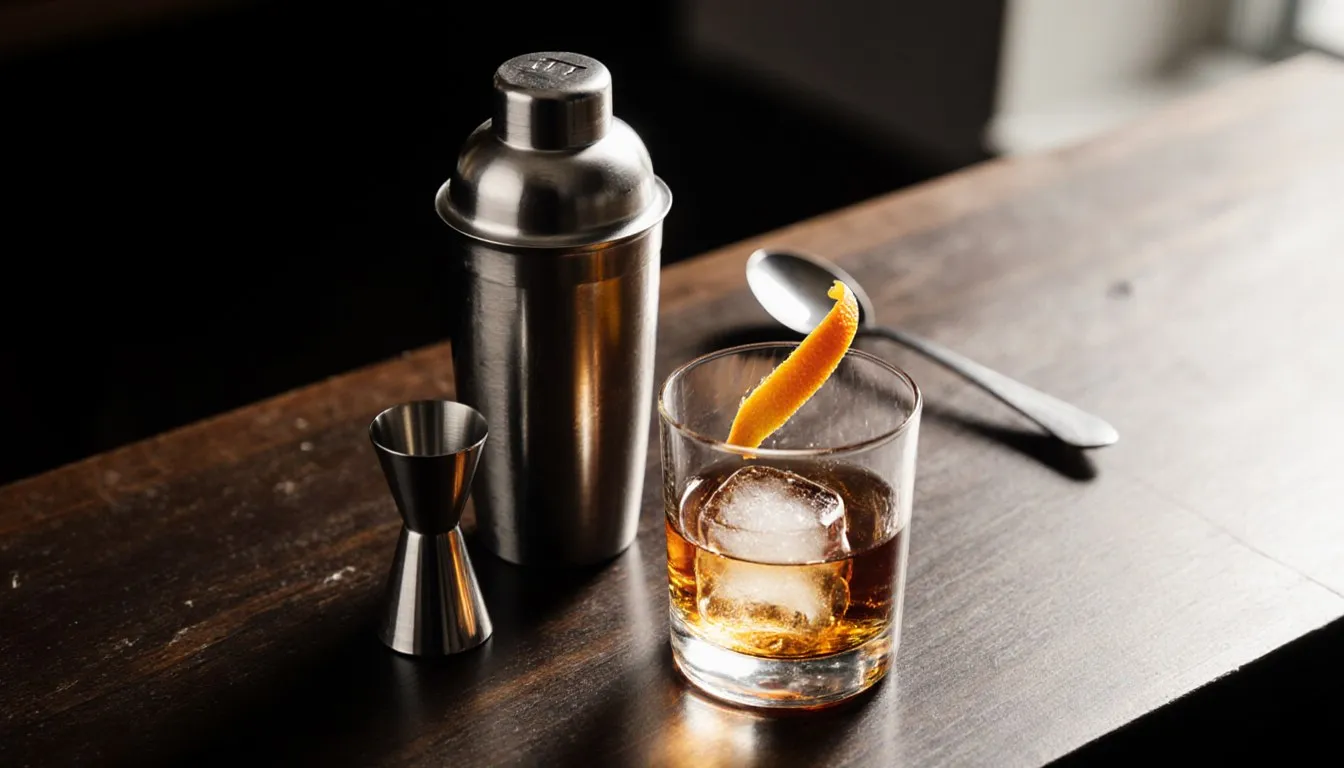
A shaker, a jigger, a strainer, and a citrus squeezer. That’s the tool list, and the jigger is the one that matters most. Free-pouring is a skill bartenders build over thousands of drinks, and every one of us who tried to skip straight to it has served somebody a Margarita that tasted like a lime-scented mistake. Measure. A double-sided jigger marked at 1.5 oz and 0.75 oz covers the standard pour and its half, which is most of what any recipe asks for.
For the shaker, you have two options. A cobbler shaker is the three-piece kind with a built-in strainer and a little cap, easy for beginners and prone to freezing shut when it gets cold. A Boston shaker is two tins, or a tin and a pint glass, and it needs a Hawthorne strainer to go with it. I use a Boston because it never sticks, but plenty of good drinks have come out of a cobbler. A mason jar with a tight lid works in a pinch, and no, nobody has to know.
Now the bottles. Six of them, plus bitters:
- Gin or vodka, whichever you actually drink. Gin opens more doors; vodka is friendlier to a beginner’s palate.
- Whiskey, bourbon or rye. Bourbon is sweeter and rounder, rye is drier and spicier. Either builds an Old Fashioned or a Manhattan.
- Blanco tequila, meaning unaged and clear. It’s the Margarita bottle.
- White rum, the Daiquiri bottle, and the one that runs your summer.
- Sweet vermouth. This is a fortified wine, not a spirit, and it’s the piece most beginners skip. Skipping it costs you the entire stirred-drink family.
- Orange liqueur, triple sec or Cointreau or a decent equivalent.
Add a bottle of aromatic bitters, the small dark one with the oversized paper label, and you’re done. Bitters last essentially forever on a shelf and turn up in more recipes than any other single ingredient in the collection.
You also need simple syrup, which is not a purchase. It’s equal parts sugar and hot water, stirred until clear, cooled, poured into a clean jar. It takes four minutes and it’s the difference between a cocktail that tastes balanced and one where the sugar sits in a grit at the bottom of the glass.
What you don’t need: a set of specialty glasses, a mixing beaker with cut crystal facets, eleven kinds of amaro, or a bottle of anything that costs more than your groceries. A coupe is lovely, a rocks glass is functional, and a wine glass has served in both roles at my house without complaint.
What techniques does every cocktail recipe come down to?
Shaking and stirring. Two techniques, and the choice between them follows one rule that almost never breaks: if the drink contains citrus, juice, cream, or egg, you shake it. If it’s all spirits, you stir it.
The reason is texture. Shaking beats air into the drink and shatters small chips off the ice, which gives you a cold, slightly cloudy, lively drink with a bit of froth on top. That’s exactly right for a Daiquiri. Do the same thing to a Manhattan and you get a bruised, murky drink with bubbles in it, which is why an all-spirits drink gets stirred instead: thirty seconds with a bar spoon, and it comes out cold, clear, and silky.
Both techniques also put water in the glass, and that meltwater is an ingredient with a proportion. Bartenders generally reckon it works out to something like a fifth to a quarter of the finished drink, which is the part that turns a hot, clenched mouthful of spirit into something you can sip.
That water is why a drink made in a blender full of ice and a drink shaken with ice are not interchangeable, and why the internet’s advice to “just stir it with a spoon in the glass” produces something that never quite arrives.
So the ice you use matters as much as the time you spend. Big, hard cubes straight from a full tray dilute slowly and predictably. The half-melted, freezer-burned scraps at the bottom of the bin are already wet, and they’ll water a Daiquiri down before the tin ever gets cold. A tray that’s sat open in the freezer for a month picks up the smell of everything in there, too, and that comes through in a drink with three ingredients. Fill the shaker to the top with fresh cubes, don’t be shy about it, and shake hard for 10 to 15 seconds until the tin is painfully cold and frosted on the outside. Your hands will tell you before a timer does.
Then there’s citrus, which I’d argue is the single biggest quality lever in the whole category. Squeeze it fresh. Bottled lemon and lime juice are shelf-stable because they’ve been cooked and preserved, and they taste like it, flat and slightly bitter in a way that no amount of good tequila covers up. A hand squeezer costs very little and pays for itself in the first Margarita.
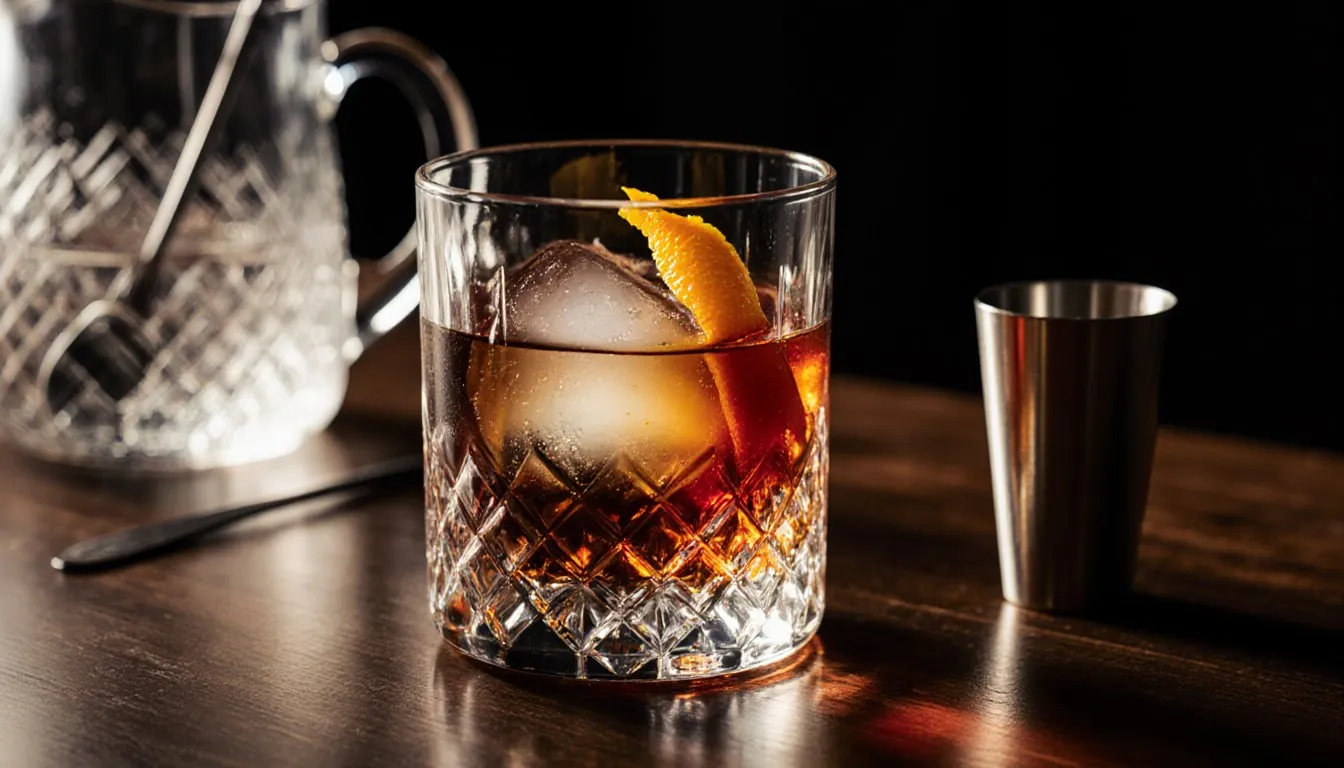
Garnish is the last piece, and it goes in your nose before it goes anywhere near your tongue. When you twist a strip of citrus peel over a drink, you’re spraying a fine mist of oil across the surface, and you smell that before you taste anything. Try an Old Fashioned side by side with and without the orange twist sometime. Same liquid, noticeably different drink. If you want the full walkthrough on grip, glassware, and the mechanics of a proper hard shake, bartending basics goes through it step by step.
Which classic cocktail recipes should you learn first?
Five. Learn these and you’ve learned the structural logic behind a few hundred others, because most of what’s on a modern menu is one of these with a substitution.
- Old Fashioned: whiskey, sugar, bitters, ice, orange twist. The oldest shape in the book and the one that teaches dilution, because there’s nothing else in the glass to hide behind.
- Daiquiri: white rum, fresh lime, simple syrup, shaken and strained up. Three ingredients, no garnish required, and the truest test of whether your balance instincts are working. Nothing to do with the frozen strawberry version, which is a different drink entirely and also delicious.
- Margarita: blanco tequila, fresh lime, orange liqueur. Same skeleton as the Daiquiri with the sweetener swapped for something that brings its own flavor.
- Manhattan: whiskey and sweet vermouth with a couple of dashes of bitters, stirred. This is where vermouth proves it wasn’t a wasted purchase.
- Negroni: equal parts gin, Campari, sweet vermouth, stirred over ice with an orange peel. Bitter, and unapologetic about it. Equal parts, three bottles, nothing to measure twice, and the quickest way to find out whether you like bitter drinks.
Notice what’s happening across that list. The Daiquiri and the Margarita are the same drink in different clothes. The Manhattan and the Negroni are both spirit plus vermouth plus a bitter element. The Old Fashioned is the ancestor of both branches. A Whiskey Sour is a Daiquiri with whiskey. A Gimlet is a Daiquiri with gin. A Sidecar is a Margarita with brandy and lemon.
My advice, and this is the part people ignore: build the same one four separate times before you move on, however long that takes. Better still, make one spec three ways in a single sitting, at half an ounce of syrup, three-quarters, and a full ounce, and taste them side by side with a straw before any of them get poured out. That’s where you start tasting the difference a quarter ounce makes, and that’s the skill you’re after. Full specs and the variations worth trying live with classic cocktails, along with the arguments about who invented what, which are more fun than they have any right to be.
What if you’re skipping the alcohol?
The structure transfers almost intact. A cocktail is a balancing act between something strong, something sour, something sweet, and water, and three of those four have nothing to do with alcohol. Take the rum out of a Daiquiri and you still have lime, sugar, dilution, and a shaking technique that works exactly the same way.
Two things change, and if you don’t adjust for them the drink tastes like sweetened juice.
First, sweetness. Alcohol carries a bite that offsets sugar, and with it gone, the same syrup measurement reads as cloying. Pull the sweet element back by roughly a quarter and taste from there. Second, body. Spirits give a drink weight on the tongue, and juice alone feels thin. Four fixes, in the order I reach for them. Brew black or green tea at double strength, two bags to a cup of water, cool it, and swap 1 oz of it in for an ounce of the juice; the tannin grips the tongue the way a spirit does, and it will tint a pale drink brown, so it’s wrong for anything meant to look like a Daiquiri. Verjus, the tart pressed juice of unripe grapes, does a similar job at 0.5 oz with no color, but it reads sour on top of your citrus, so pull the lemon or lime back by that same half ounce or the drink goes shrill. Saline solution, 1 teaspoon of fine salt stirred into 4 teaspoons of warm water, gives you three or four drops per glass and rounds off the thin edge; past about six drops it tastes like a mouthful of seawater and there’s no coming back from that. And a rich syrup, 2 parts sugar to 1 part water, pours noticeably thicker than the standard one-to-one, so use half as much of it or you’ve undone the sweetness correction you just made. None of the four will rescue a drink built on bottled juice. They add weight to something that already tastes good.
One thing to say plainly: standard aromatic bitters are alcohol-based, and while a few dashes contribute a very small amount, anyone avoiding alcohol for medical, religious, or recovery reasons should treat them as off the list. There are non-alcoholic bitters and, better yet, real flavor available from a bruised herb, a strip of grapefruit peel, or a splash of cold-brew coffee. If you’re building a menu for guests who aren’t drinking, mocktail recipes covers the ones worth serving in their own right rather than as a consolation prize. Tiki bars figured this out decades ago: the Hawaiian non-alcoholic drinks that came out of that tradition lean on pineapple, passion fruit, and coconut cream, all of which bring the body and acidity a spirit would otherwise supply.
Serve them in the same glassware, with the same garnish, and made with the same care. Chill the coupe, express the lemon peel over the top, hand it across with both hands the way you would anyone else’s drink.
What should you make when you’re serving a crowd instead of one drink at a time?
Batch it, and adjust the recipe before you scale it. Single-serve cocktail recipes assume ice is in the room doing two jobs at once, chilling and diluting, and a pitcher on a table does neither.
So: multiply the recipe by your headcount, then add water. That’s the step everyone skips. If the drink would normally be shaken or stirred, you’re replacing the meltwater it never got, and something in the range of a fifth of the total volume is a sensible starting point. Mix it, taste it, then chill the whole batch in the fridge for at least a few hours. Cold liquid also means the ice in the serving glass melts slower, which keeps the last drink from being weaker than the first.
Three more rules I’ve learned the hard way at my own parties:
- Anything carbonated goes in at serving time, never in the batch. Prosecco, soda, ginger beer, tonic. Bubbles do not survive an afternoon in a pitcher.
- Fresh citrus juice is best squeezed the same day. It starts turning dull and slightly bitter within hours, and by the next morning it’s a different ingredient.
- Freeze one big block of ice instead of using cubes. A loaf pan or a plastic container of water in the freezer overnight gives you a mass that chills the bowl without watering it down in twenty minutes. This is old punch-bowl practice, and it works.
Punch predates the cocktail by a long stretch, and the old mnemonic still floats around bar books: one of sour, two of sweet, three of strong, four of weak. It’s a rough guide with plenty of slack in it, and modern palates usually want less sugar than that verse suggests, but it’ll get you a serviceable bowl on a first attempt. Scaled-up recipes, sherbet punch with alcohol, and the ginger ale punch recipes people actually request at reunions all sit with party drinks and punches.
One more thing about serving a crowd, and I’ll only say it once. When you’re pouring for other people, you’ve taken on a bit of responsibility: serve guests of legal drinking age only, put out food and water alongside the drinks, make the non-alcoholic option as good as the rest of the menu, and never treat an empty glass as an obligation to refill it. Good hosting is knowing when the bar is closed.
What belongs on a summer or poolside menu?
Long, cold, and sour. Heat flattens a palate, so summer drinking rewards higher acidity, a bigger pour of something non-alcoholic to stretch it out, and a serving format that survives twenty minutes in the sun.
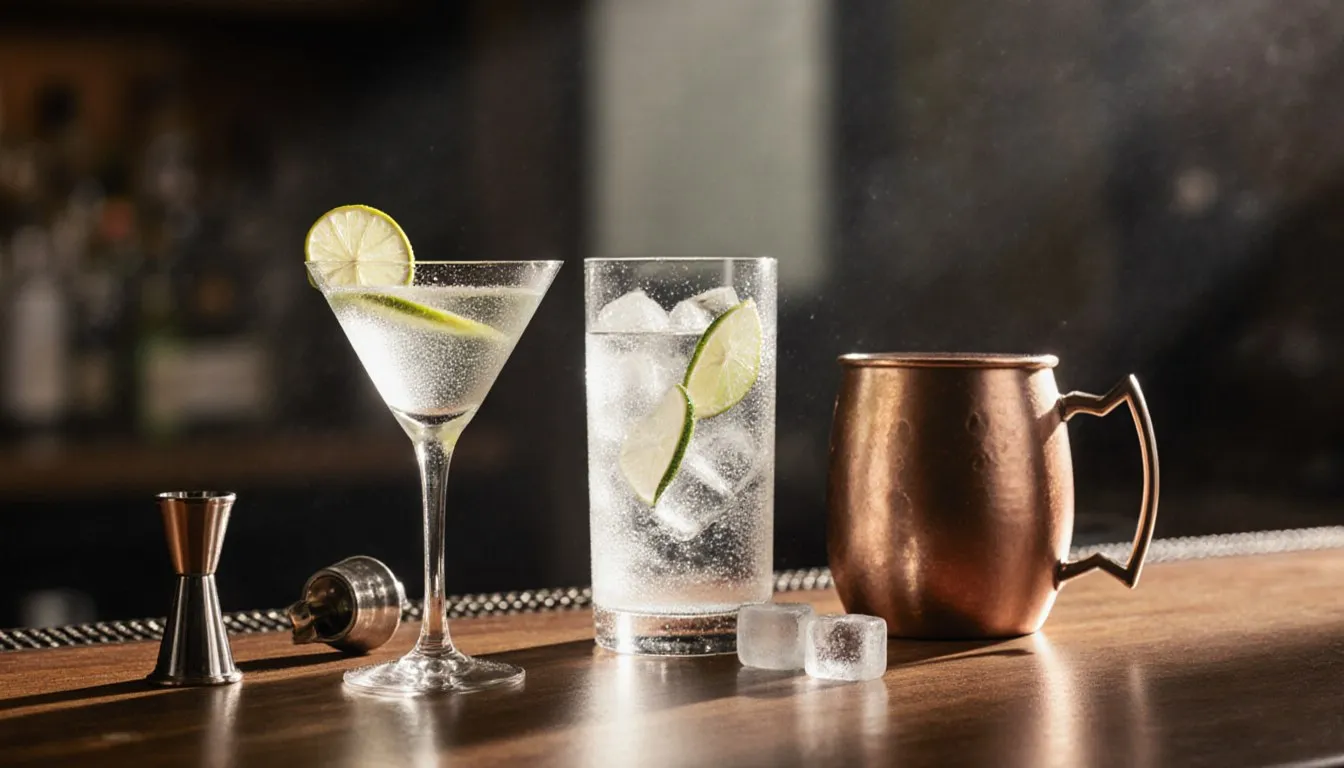
Highballs are the workhorse: one part spirit to three parts mixer over plenty of ice, in a tall glass. Gin and tonic, rum and soda with lime, whiskey and ginger. They take about eight seconds to make, which matters when you’re the one holding the tongs at a cookout.
Blended drinks are their own discipline and they trip people up, because cold mutes flavor. A Daiquiri that tastes perfect at shaken temperature will taste watery and vague once it’s frozen into slush. Frozen recipes are built sweeter and more sour on purpose to compensate, and that’s why a straight-up recipe doesn’t survive being poured into a blender. Freeze the fruit instead of adding more ice and you keep the flavor concentration up while still getting the texture.
Crushed ice is the third summer format, and it’s my favorite. Wrap cubes in a clean kitchen towel, hit the bundle with a rolling pin or the flat of a heavy pan, and you have the fluffy stuff that makes a Mint Julep or a swizzled rum drink work. It’s also the most satisfying five minutes of prep in the entire category, and it costs nothing but a towel you were going to wash anyway.
The frozen Bellinis, the mango riffs on a Mai Tai, the blue drinks that turn up in every poolside photo: all that lives with tropical and frozen drinks, along with the blender ratios that keep a batch from separating into syrup and snow while everyone is still finding a chair.
Why does vodka show up in so many cocktail recipes?
Because it doesn’t argue. Vodka is distilled to be neutral, so what it brings to a drink is strength, weight, and a clean cold texture, without a flavor of its own insisting on a role. Put gin in a drink and the juniper is now a co-star. Put vodka in and the cranberry, the espresso, the grapefruit, or the fresh ginger stays exactly what it was.
For a first home bar, that neutrality is genuinely useful. It’s the most forgiving bottle you own, the one where a slightly-off measurement doesn’t turn into a clashing flavor, and it mixes with nearly anything in the fridge. Ask what vodka mixes with and the short answer is almost anything sour, almost anything bitter, and most things sweet as long as you keep the sugar in check.
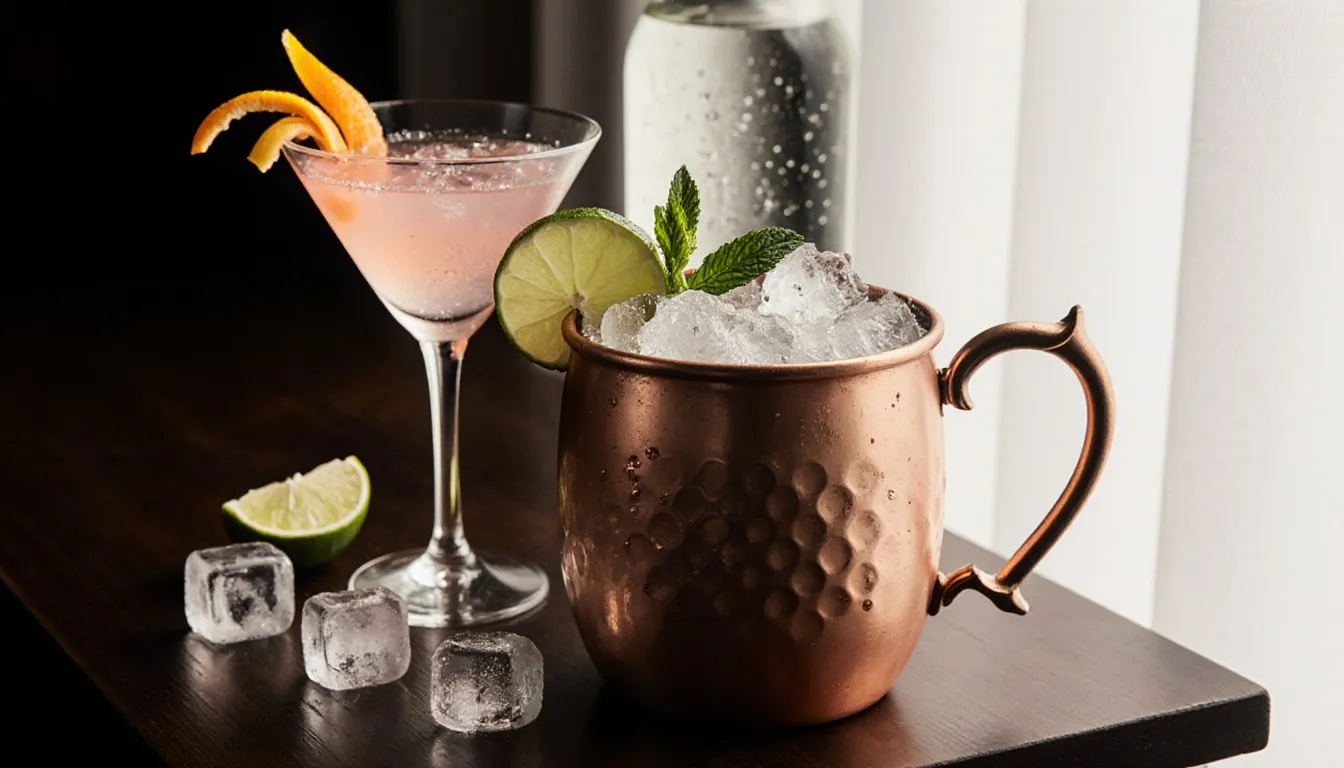
It’s also why vodka carries the well drinks list at every bar in the country, and why so many of the drinks people learn first are built on it. The Moscow Mule, the Cosmopolitan, the Espresso Martini, the Bloody Mary. None of those are asking the base spirit to lead.
Vodka’s the one category where I’d tell you the expensive bottle is hardest to justify, since the entire production goal is to remove character. Buy a mid-range bottle from a brand you’ve heard of, put it in a Mule, and see whether you can honestly tell it apart from something twice the price. Most people can’t, in a mixed drink, and there is no shame whatsoever in that result. The full run of recipes, from the sensible to the frankly ridiculous, sits with vodka drinks.
How do you build a cocktail recipe from scratch once you know the ratios?
Two formulas. Memorize these and you can improvise with whatever is in the house.
The sour formula: 2 parts spirit, 1 part sour, 1 part sweet. In practice that’s 2 oz spirit, 0.75 oz fresh citrus, 0.75 oz simple syrup, shaken with ice and strained. That single spec is a Daiquiri with rum and lime. Whiskey and lemon makes it a Whiskey Sour. Tequila and lime with orange liqueur standing in for the syrup gives you a Margarita. Gin and lemon gets you into Tom Collins territory once you top it with soda. One pattern, dozens of names.
The stirred formula: 2 parts spirit to 1 part fortified wine, plus a couple of dashes of bitters. That’s 2 oz whiskey to 1 oz sweet vermouth and you’ve built a Manhattan. Gin and dry vermouth at that ratio is heading toward a Martini. Push it to equal parts across three ingredients and add a bitter liqueur and you’re at a Negroni.
Now the adjustments, because those ratios are where you start and every bottle and every lime nudges them:
- Lime is sharper than lemon. A spec that tastes balanced with lemon can read as aggressive with lime, so pull the citrus back a touch.
- If your sweet element is a liqueur rather than plain syrup, it’s bringing flavor and alcohol along with the sugar, and it usually needs a slightly bigger pour to sweeten the same amount.
- A higher-proof spirit needs more of everything else, or more dilution, or both.
- Fruit varies. A midwinter lime is not a July lime. Taste the juice before you build the drink and adjust the syrup accordingly, the same way you’d taste a tomato sauce before salting it.
The habit to steal from professionals: taste the drink before you strain it. Dip a straw in the shaker, cap it with your finger, taste. Too sharp, add a bar spoon of syrup. Too flabby, a few drops more citrus. Too strong, shake five seconds longer. You get one chance to fix a drink and it’s before it hits the glass, which is exactly the same logic as tasting a pot of soup before it goes to the table.
Do you need top-shelf bottles to make a good cocktail recipe?
No, and the mid-shelf bottle is the right call for almost every home bar. The things that make a cocktail taste good or bad, in the order that matters, are: fresh citrus, correct measurement, enough good ice, and a vermouth that hasn’t gone off. Price of the base spirit comes somewhere after all of those.
There’s a real distinction between a sipping spirit and a mixing spirit, and it pays to understand it before you spend. A well-aged whiskey has layers you’re paying for, and those layers get largely painted over by lime juice and sugar. Save that bottle for a glass with one ice cube in it. For a Margarita on a Tuesday, a solid mid-range blanco does the job honestly.
Where the money is genuinely well spent:
- Orange liqueur. The cheapest triple sec tastes like orange candy and it shows in every Margarita and Sidecar you make. Moving up one tier here changes the drink more than an equivalent upgrade to the tequila.
- Vermouth. Buy the small bottle, and buy it recently. A mid-range vermouth opened last week makes a better Manhattan than an expensive one opened last spring.
Vermouth is wine. Fortified, yes, but wine, and it oxidizes after opening exactly the way a bottle of red does. That dusty bottle that’s been on the shelf beside the gin since a party two summers ago has turned, and it’s why so many people conclude they don’t like Manhattans. Once it’s open, it goes in the refrigerator, and it’s at its best within about a month. Buy the small bottle. Nobody needs a liter of vermouth going quietly stale in the name of looking well-stocked.
And no, you do not need a fancy-schmancy crystal mixing glass or a shaker set with a wooden stand. A jigger, a tin, and a strainer make the same drink as three hundred dollars of matched barware. Spend the difference on limes.
How do you keep a home bar running without waste?
Make your syrup and juice your citrus on the same day, in the same twenty minutes, and store both properly. That one habit prevents more waste and more disappointing drinks than anything else on this page.
Simple syrup at equal parts sugar and water keeps about a month in a sealed jar in the refrigerator. Toss it at the first sign of cloudiness, a film on the surface, or anything floating. A richer syrup made at two parts sugar to one part water is thicker and sweeter by volume, so use less of it, and the higher sugar concentration does some preservation work: give it two months refrigerated at the outside, and don’t push past that. If it clouds or grows a film, it goes down the sink. Neither syrup belongs on the counter, and neither one improves with age. Either way, label the jar with the date. Trust me on this. A jar of unlabeled clear liquid in the back of a fridge is a mystery nobody wants to solve at seven on a Friday.
For citrus: juice the whole bag at once, keep what you’ll use in a day or two in a sealed jar in the fridge, and freeze the rest in an ice cube tray. Frozen lime juice loses some brightness, but it’s still a country mile better than the bottled stuff, and having cubes on hand means a Daiquiri is never more than a few minutes away. Zest the fruit before you cut it, always. A peel strip goes in the freezer flat in a bag and comes out perfectly usable as a garnish.
The rest of the maintenance is quick. Vermouth and any wine-based bottle live in the refrigerator once opened. Spirits and bitters are stable on a shelf away from heat and sun, standing upright, with the cap on properly. Cream liqueurs go in the fridge and have a real expiration date on the label, so check it. If you’re making the same drink every weekend, batch a week’s worth of the spirit-and-syrup portion in a bottle and add fresh citrus at pour time.
Keep a running list of what you’re drinking, too. After a couple of months you’ll find that four of your six bottles turn over steadily and two haven’t moved, and that’s your answer about what to buy next. Replace the two workhorses, let the strangers go, and put the shelf space toward another bottle of lime-adjacent something you’ll finish by August.
Start with the Daiquiri tonight. Two ounces of white rum, three-quarters of an ounce of fresh lime, three-quarters of an ounce of simple syrup, shaken hard and strained into whatever chilled glass you own. It costs almost nothing, it takes ninety seconds, and it will teach you more about balance than a shelf full of bottles ever could. Use it up, use it well, as my mother said about everything from lemons to leftover ham.
Tessa Calloway
Staff Writer
Tessa Calloway has spent twenty years cooking dinner on a weeknight clock and testing the shortcuts that survive contact with a real kitchen. She believes the best recipe is the one you can make with what's already in the house, and she has strong opinions about what actually needs to be homemade (less than you think) and what always does (dressing).